Going all in on sanctions, Trump limits how much he can squeeze out of Iran
Without military pressure, a wide deal covering Iran's nuclear program, missiles and more is out of reach, experts say, but financial penalties may still create enough leverage for accord on Hormuz
On Monday, US Treasury Secretary Scott Bessent stood onstage at the Treasury Department in Washington to publicly unveil the Trump administration’s latest move against the Islamic Republic.
Since US President Donald Trump’s April ceasefire halted the joint US-Israeli bombing campaign against Iran, Washington and Tehran have been locked in a cycle of failed diplomacy and intermittent escalation. To break the stalemate, Bessent told reporters, the US would now unleash “an economic onslaught against Iran’s financial connections around the globe.”
“Our objective is to sever every economic lifeline that sustains this tyrannical regime until Tehran stands alone,” the secretary told reporters, warning that countries not joining US sanctions would “share in the isolation” of Iran and that Trump was already calling world leaders on the matter.
Prime Minister Benjamin Netanyahu welcomed the move and said Tuesday that he had urged Trump during their July meeting to “tighten the siege” on Iran by targeting regime support networks.
Some have asked whether the bombast will truly be backed up by strict imposition of the promised economic straitjacket. But even if the measures are fully enforced, it’s far from certain whether the sanctions will push Iran toward meaningful concessions, bring the regime closer to collapse, or simply cause the regime to dig in further, entrenching the standoff.
For Washington, the effectiveness of economic pressure, like any future military or diplomatic strategy, depends on what endgame with Iran it is pursuing.
Recent Israeli and international reports signal that the US has no plans to return to full-scale fighting, reflecting Trump’s desire to avoid a prolonged war. His administration has made clear that it sees the sanctions as a way to get Iran to come to the table with significant concessions, paving the way for a diplomatic deal good enough for Trump to call a victory.
But meaningful Iranian concessions have proved elusive even after the initial weeks-long bombing campaign. Washington may be able to secure a narrower arrangement over the Strait of Hormuz, but that would leave unresolved the broader nuclear, missile and regional threats that originally drove the war.
Sanctions, renewed military pressure and diplomacy can all create leverage, but their effectiveness depends on what Washington wants that leverage to achieve. A strategy aimed at securing a face-saving deal requires a different mix of pressure and compromise than one that would force deeper strategic concessions, and a different strategy again if the goal is simply to weaken the Islamic Republic as much as possible or bring it down for good.
“I think the Trump administration doesn’t have a clear sense of what it is trying to achieve,” said Sanam Vakil, director of the Middle East and North Africa Program at Chatham House.
Until the administration defines that endgame, more pressure risks producing more of the same deadlock.
Compromise over capitulation
If Trump’s immediate goal is a negotiated exit, then pressure from Washington will need to be paired with a reasonable off-ramp for Tehran.
Iran won’t admit defeat. Though it suffered tremendous damage, the Islamic Republic sees the fact that it survived unprecedented military pressure from the US and Israel as a major victory, not the basis for capitulation.
Any deal it will agree to “has to be a negotiation that is built around compromise rather than submission,” Vakil said.
Iran is unlikely to hand over remaining nuclear or missile capabilities without economic incentives, security guarantees or reciprocal concessions, she said, adding that additional pressure may help bring Tehran to the table, but only if Washington offers an outcome that the regime can survive politically.
If concessions appear equivalent to surrender, she said, a regime whose overriding objective is survival has every reason to keep resisting.
That does not mean the new sanctions cannot generate useful leverage.

Richard Goldberg, who coordinated the administration’s maximum pressure campaign at the National Security Council during Trump’s first term and now works at the Foundation for Defense of Democracies, argued that Iran is entering this round of economic pressure from a radically weaker position than during previous campaigns.
Months of conflict have depleted Iranian revenues and reserves even as civilian economic demand has resumed, making this “the moment to seize on financial warfare,” Goldberg said.
He noted that on top of the country’s depleted finances, it is also dealing with restrictions on oil revenue and a naval blockade. Any breathing room it may have hoped it could create via major foreign facilitators should dissipate due to the threat of secondary sanctions being levied against those doing business with Iran.
The sanctions will only work, however, if Washington is willing to enforce them against politically difficult targets such as China, Gulf partners, and major state-owned companies.
Doing so has proved effective in the past, Goldberg argued, pointing to the 2019 sanctions on subsidiaries of China’s COSCO shipping company. Those measures disrupted global tanker markets and, according to him, ultimately pushed Beijing into an arrangement limiting support for Iranian oil shipments.
If the objective is a relatively limited agreement, the central question is not just how much pain Washington can inflict but whether that pain makes a specific compromise more attractive to Tehran than continuing to resist.
If, however, Washington seeks deeper concessions on Iran’s nuclear program, ballistic missiles, or regional capabilities, “sanctions alone are unlikely to force surrender,” argued Saeid Golkar, an Iran expert and associate professor at the University of Tennessee.
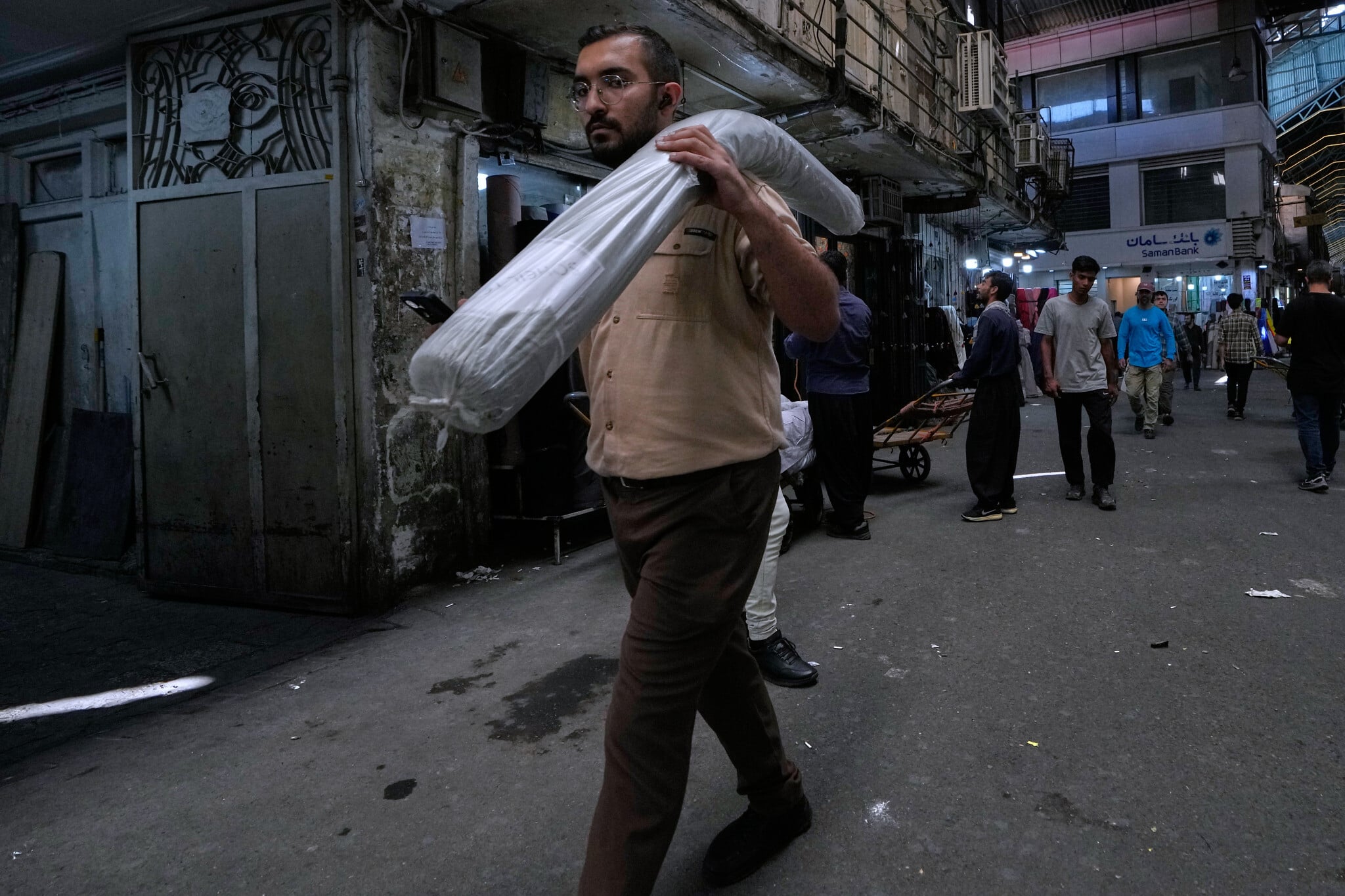
Iran has decades of experience surviving and circumventing sanctions while protecting the institutions that keep the regime in power, he said, explaining that pressure has to reach the regime itself rather than the broader economy.
That, Golkar said, would require a credible threat of renewed military attacks and continued degradation of Iran’s military, intelligence and coercive networks, with the objective “to convince Tehran that continued confrontation poses a greater threat to regime survival than meaningful concessions.”
Such pressure comes with risks, however, as it may convince Tehran that Washington seeks its destruction regardless of what it concedes.
The goal should just be persistent pressure and weakening of the regime in every way possible.
Decades of pressure have often strengthened regime cohesion and empowered hardliners, Vakil said, warning that, given the Trump administration’s history, additional pressure only reinforces the belief that Washington’s ultimate objective is regime change, leading to greater resistance rather than greater flexibility.
No deal
If Washington concludes that it cannot extract the minimum concessions it needs from Tehran, the strategy shifts again.
Rather than structuring policy around the hope for a deal, the US may gain more from pursuing the long-term weakening of Iran, argued Michael Makovsky, president of the Jewish Institute for National Security of America think tank.
“The goal should just be persistent pressure and weakening of the regime in every way possible,” he said.
Under that strategy, success would not be defined by reaching an agreement, but by reducing Iranian revenue, military capability, and regional influence while increasing the regime’s internal vulnerability.
Golkar noted that “the elimination of senior [Iranian] military and security commanders can disrupt command networks and increase the costs of rebuilding the regime’s coercive apparatus.”
But a strategy of sustained military and economic weakening requires time, and belief in Tehran that Washington will not blink first.
Iran is keenly aware of how Trump’s fear of spiked oil costs, reluctance toward US casualties, political pressure from upcoming US midterms, and aversion to prolonged military escalation have halted past escalations.
To make such a strategy work, Trump “would have to show a persistence and a patience” that, as of now, “he seems to lack,” said Makovsky.