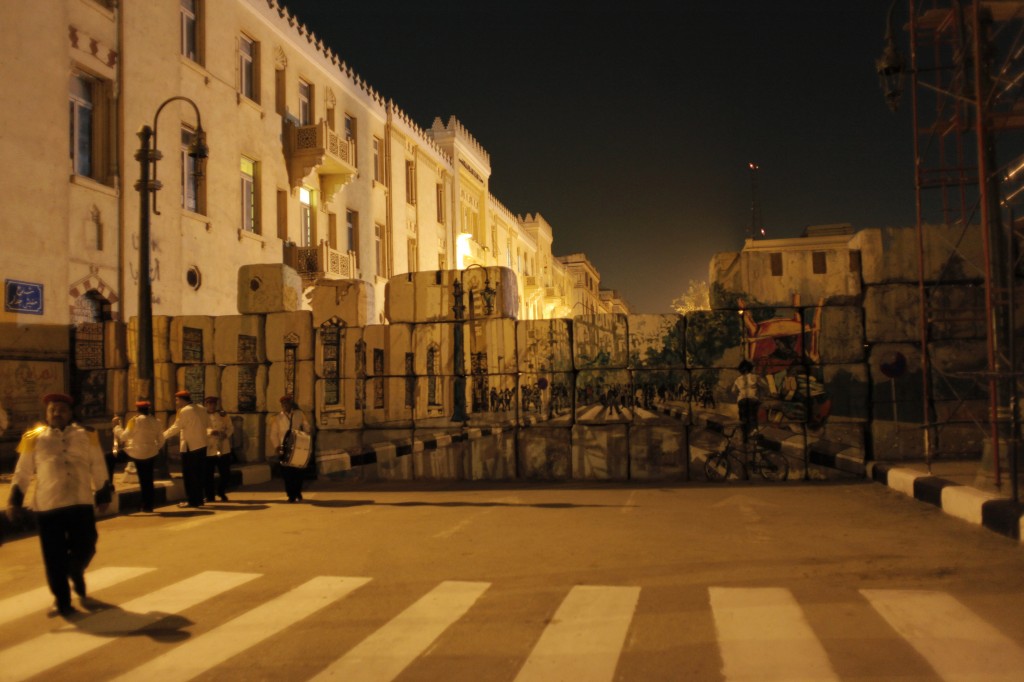
CAIRO (AP) — After Egypt’s ruling military sealed off streets around Cairo’s Tahrir Square with walls of imposing concrete blocks, a group of artists decided to reopen the avenues on their own — in the public imagination, at least.
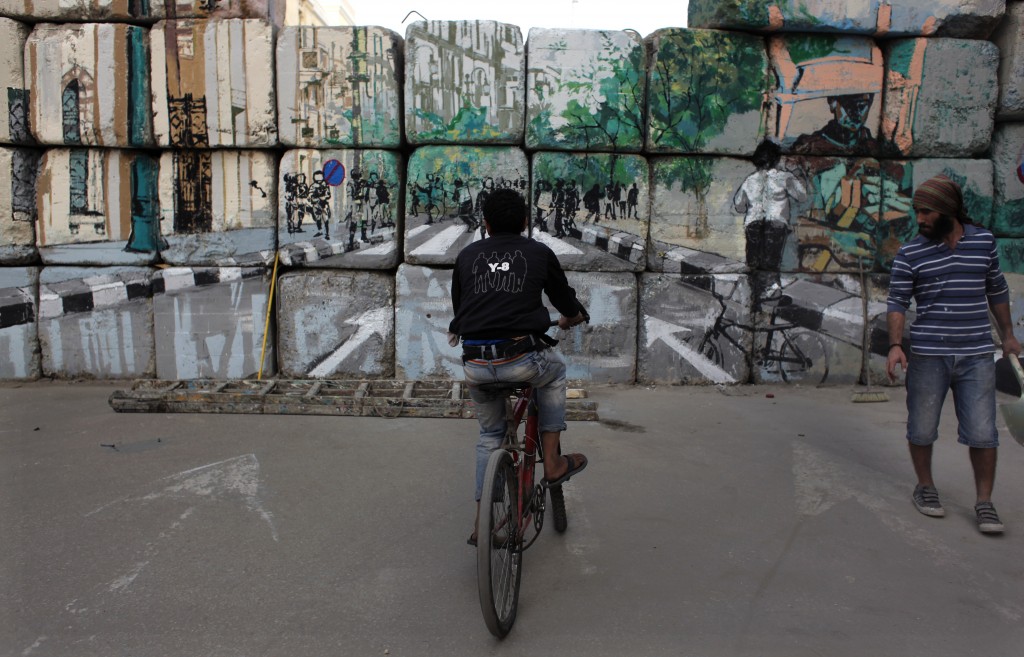
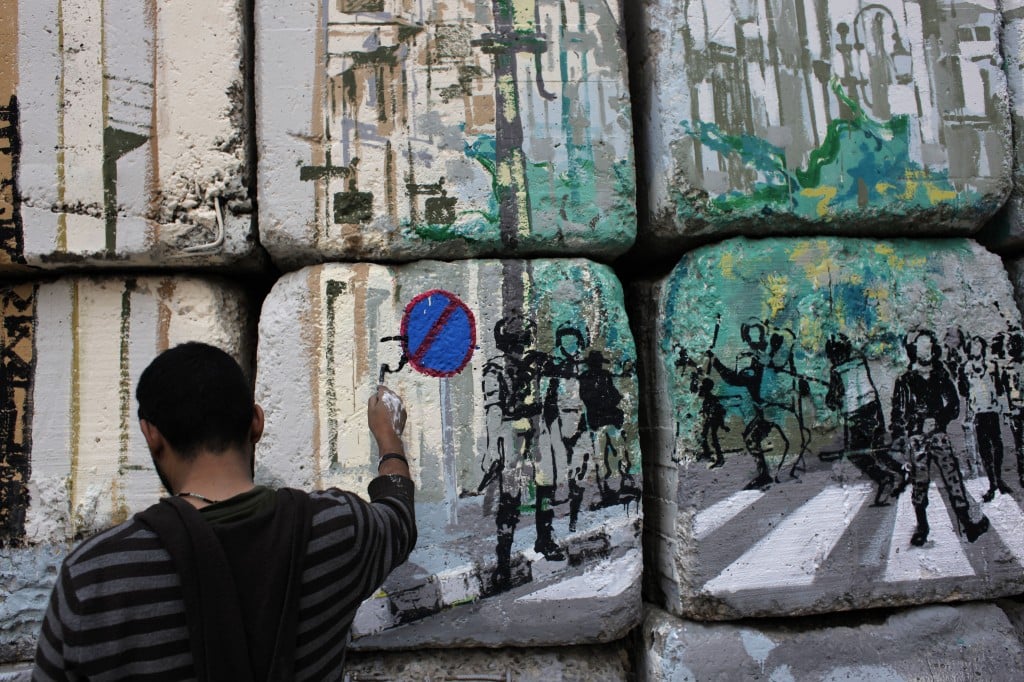
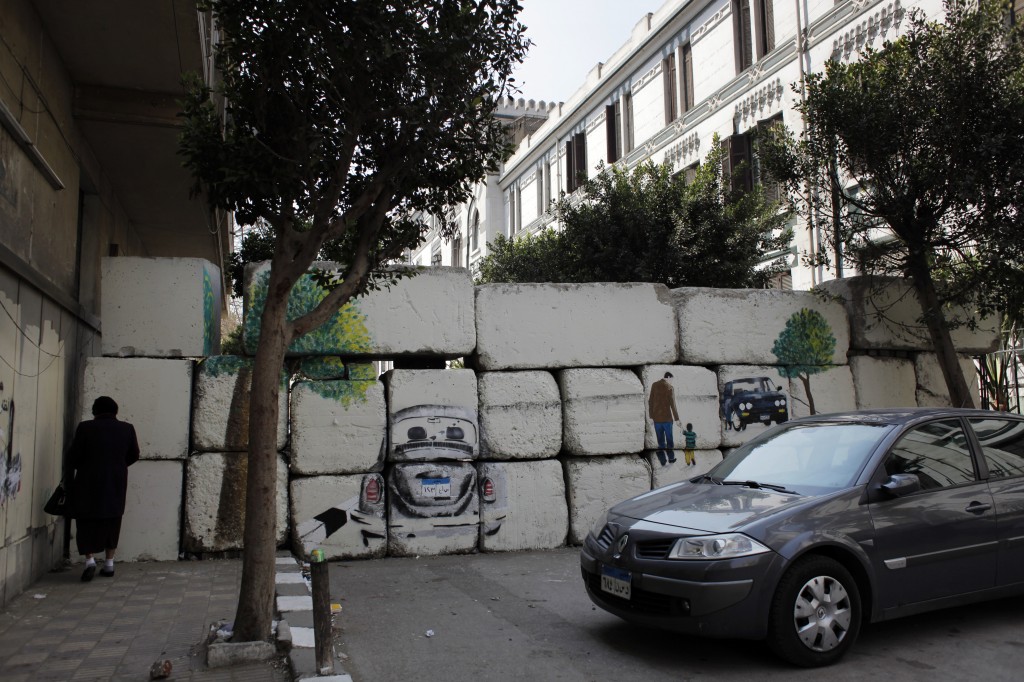
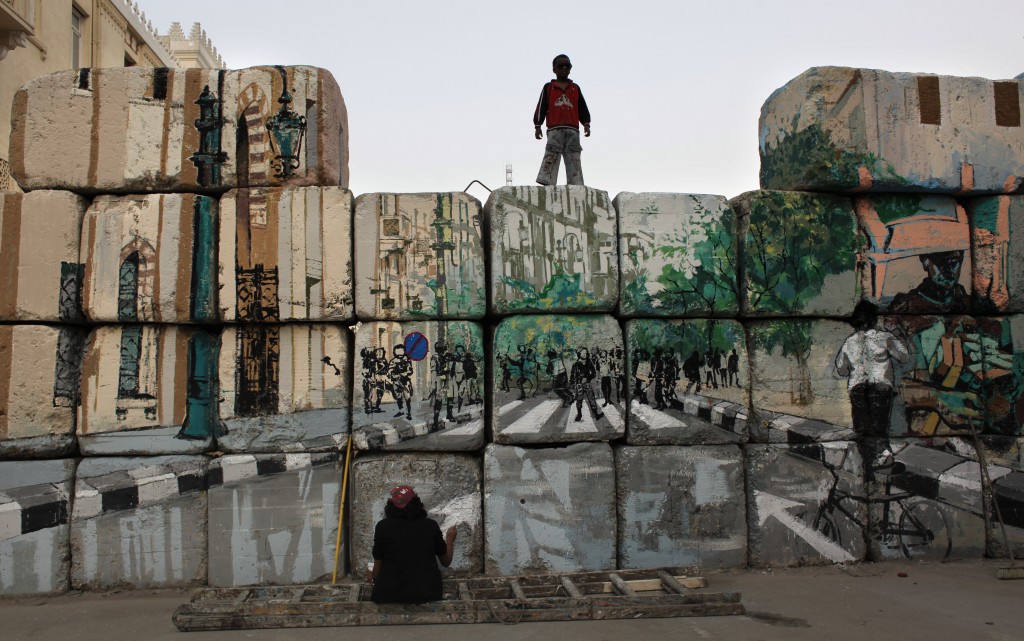
On one of the walls, they painted an exact trompe-l’oeil reproduction of the street behind it, as if it were open. The perspective painting matches up with the architecture of the neighboring buildings and even has some “pedestrians” strolling along the boulevard. The street’s new name is “No Walls Street.”
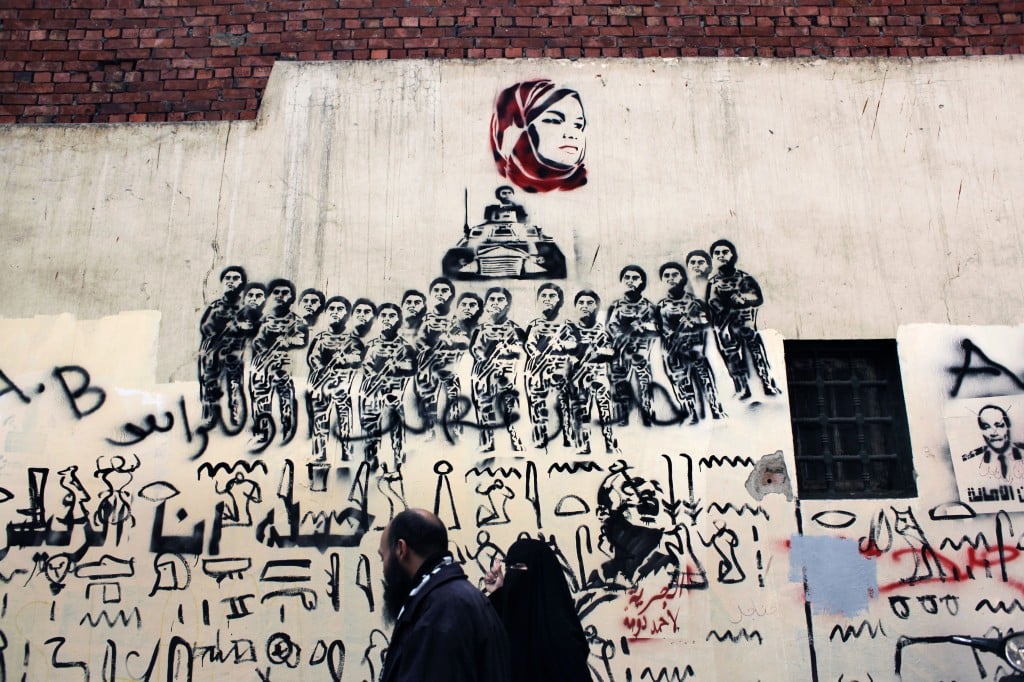
An Egyptian couple walks under a mural depicting female activist Samira Ibrahim, who was forced to undergo a ‘virginity test’ while in detention by the military. (photo credit: AP/Nasser Nasser)
An Egyptian boy rides his bike next to an artist working on ‘No Walls Street.’ (photo credit: AP/Nasser Nasser)
Get The Times of Israel's Daily Edition
by email and never miss our top stories
By signing up, you agree to the
terms
The email address is invalid or missing
Please try again.
The email address is invalid or missing
Please try again.
An Egyptian artist and activist works on the ‘No Walls Street’ during the graffiti campaign. (photo credit: AP/Nasser Nasser)
An Egyptian woman walks toward the painted concrete blocks wall that was part of the graffiti campaign in Cairo. ((photo credit: AP/Nasser Nasser)
Members of a traditional Egyptian musical band prepare to perform during a ceremony to celebrate the imaginary opening of the ‘No Walls Street.’ (photo credit: AP/Nasser Nasser)
A boy watches an Egyptian female artist and activist at work on the ‘No Walls Street’ during the graffiti campaign. (photo credit: AP/Nasser Nasser)
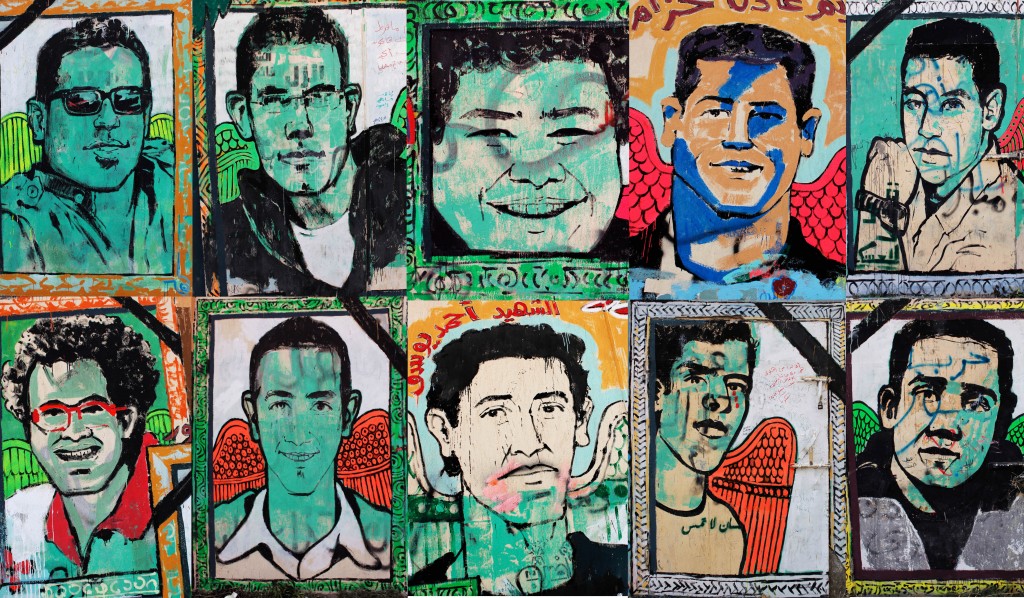
A combo image made from ten photos shows graffiti paintings depicting slain soccer fans that are part of a campaign carried out by activists following a soccer riot earlier this year with dozens of deaths. (photo credit: AP/Nasser Nasser)
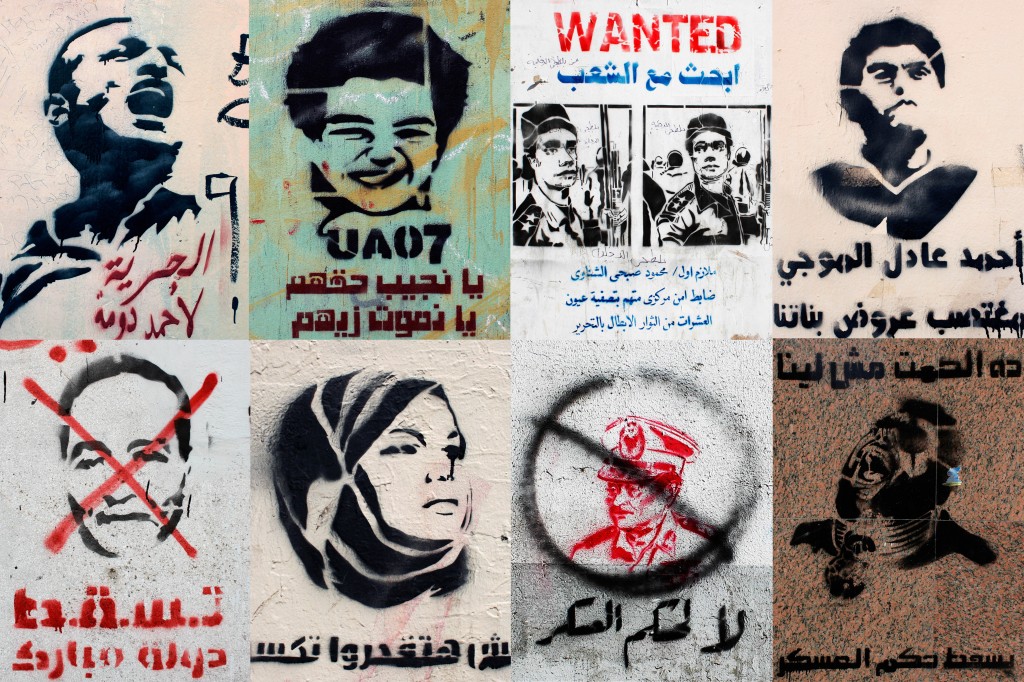
A combo image made from eight photos shows logos of part of the graffiti campaigns carried out by activists depicting activists and military officers are seen on the streets of Cairo. Arabic on the logos reads, “Freedom for Ahmed Abu Doma, We get their rights or we die like them, Ahmed el-Mogi the rapist of our daughters, down with the military rule, you will not break me and silence is not for us.” (photo credit: AP/Nasser Nasser)
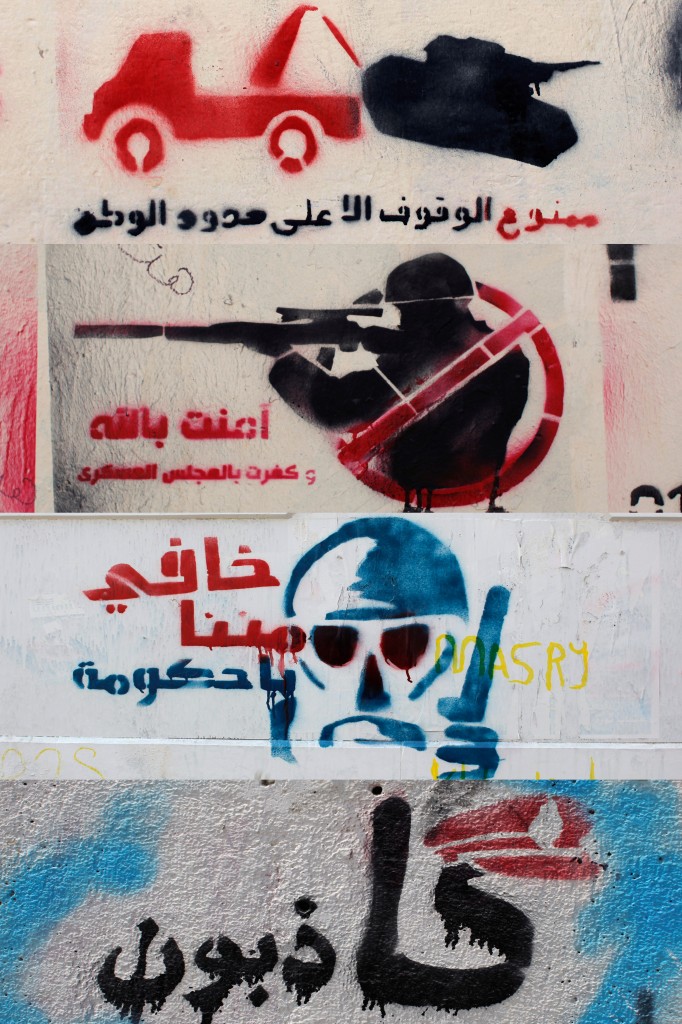
A combo image made from four photos, logos of part of graffiti campaigns carried out by activists with Arabic that reads, from top to bottom, “parking is allowed only at the borders, I don’t believe in the military council, Beware of us government, Liars” are seen on the streets of Cairo. (photo credit: AP/Nasser Nasser)
The graffiti piece is the work of the Revolution Artists Association, a group of young Egyptian artists who say the uprising against authorities in the country continues a year after the fall of president Hosni Mubarak.
They have covered walls around Tahrir Square, the epicenter of the anti-Mubarak uprising, with graffiti art, including portraits of protesters killed by security forces or the military.
Other graffiti pieces campaign for the rights of women or against humiliating “virginity tests” that soldiers conducted on detained female protesters. Others denounce military rule.
In recent days, protesters have taken to the streets to denounce Islamists’ domination of an assembly created to write the next constitution and to protest authorities’ slowness in prosecuting those accused in dozens of deaths during a soccer riot earlier this year.
Copyright 2012 The Associated Press.