Haredi UTJ says it won’t vote to replace Knesset speaker, rejecting opposition push
Party head says speaker should be switched only after government formed; Eisenkot, Liberman meet to form 'stable' coalition; returning MK lined up to head key Knesset committee
Yaakov Asher, chair of the ultra-Orthodox United Torah Judaism party, rejected an offer by Gadi Eisenkot’s Yashar party on Monday to join the effort to replace the Knesset speaker, which would allow the opposition to pass legislation before forming a government.
The current speaker, Amir Ohana, is a member of Prime Minister Benjamin Netanyahu’s Likud party. UTJ has broken its longtime alliance with Netanyahu, but Asher said the speaker should be replaced only when a new government is formed.
The snub came one day after Eisenkot officially received the mandate to form a government, a task that is far from assured because his opposition bloc numbers only 48 seats in the Knesset, short of a 61-seat majority.
Yisrael Beytenu party chair Avigdor Liberman, who met with Eisenkot on Monday, has called on the bloc to negotiate with ultra-Orthodox parties to secure a majority and unseat Netanyahu. Netanyahu’s coalition lost its majority in the October 27 election, though he is still pushing for another term.
In a sign that Eisenkot’s party may be considering partnering with the Haredim, its incoming lawmaker Roy Folkman invited UTJ and fellow ultra-Orthodox party Shas, which is allied with Netanyahu, to join the opposition in voting out the speaker at the inaugural session of the new Knesset on Tuesday. UTJ has seven seats, and Shas has six.
There is already a majority in the Knesset against Ohana, as the two Arab-led parties, which together control 19 seats, have said they will also vote to replace him. Ohana has said he will schedule the vote if a majority of the Knesset requests it. The speaker wields considerable influence over parliamentary proceedings and, together with his deputies, controls the legislative agenda.
Installing their own lawmaker as speaker would allow the opposition parties to advance legislation that Netanyahu has blocked, including the establishment of a state commission of inquiry into the October 7, 2023, Hamas-led massacre, or a bill mandating prime ministerial term limits.
But Shas is not expected to vote against Ohana, and Asher wrote to Folkman in response that “the fundamental position of the United Torah Judaism faction is that the Knesset speaker should be replaced alongside the formation of a new government, and not when the Knesset convenes.”
He said this policy follows past practice, with one exception, and is meant to prevent “an absurd situation in which the Knesset speaker could be at odds with the government that is formed.”
Asher’s letter opposed holding the vote for the time being, but did not rule out replacing Ohana when a new government is formed. UTJ has reportedly been considering helping an Eisenkot-led government take office, amid growing frustration with Netanyahu over his failure to secure military draft exemptions for yeshiva students.
Folkman reportedly heading to chair Arrangements Committee
Folkman is also set to head the powerful Knesset Arrangements Committee following the swearing in of the Knesset on Tuesday, according to Hebrew media reports.
The temporary committee, which oversees much of the Knesset’s business until a new government is formed, wields considerable power over the parliamentary agenda.
Crucially, it can establish temporary and special committees to advance legislation before the Knesset’s permanent committees are formed, typically after a new government takes office. This could allow the anti-Netanyahu bloc to pursue some of its legislative priorities even without forming a government.
The chairmanship of the committee is held by a member of the party tasked with forming a government, meaning Folkman’s tenure could be short-lived if Eisenkot fails to assemble a coalition within the allotted maximum of six weeks.
Folkman, 51, is a former lawmaker who first entered the Knesset in 2015. A social activist and strategic consultant, he co-founded the Jerusalem-based Hitorerut movement and holds the No. 17 spot on Yashar’s Knesset slate.
Eisenkot, Liberman meet in push to form ‘stable’ coalition
Eisenkot met with Liberman on Monday for what Yashar described as a “constructive and productive discussion,” amid disagreements over the formation of the next government.
“Both expressed full confidence in their ability to form a stable government for a full four-year term,” Yashar said in a statement following the meeting.
The talks came amid tensions between the two leaders over Eisenkot’s coalition-building options. Liberman has ruled out a minority government relying on Arab-led parties, while signaling a willingness to negotiate with Haredi factions. Eisenkot campaigned on mandating universal military service, which the ultra-Orthodox staunchly oppose.
The Yashar statement did not indicate whether the two have resolved their differences or reached any concrete agreements.
Netanyahu repeats call for unity government he would lead
Shortly after that meeting ended, Netanyahu made his own statement again calling for a unity government including Haredi parties under his leadership, saying it is a “vital need.”
“I don’t rule anyone out, and no one else should be ruling others out,” he said in the video statement released by his office.
“We must join forces in the face of the challenges in front of us,” said Netanyahu. He argued that the largest party, his Likud, with 27 seats, should lead the government. Eisenkot’s Yashar won 21 seats, but the bloc of his supporters is bigger.
Netanyahu said he is ready to immediately enter talks with any party willing to discuss his proposal, even though Eisenkot was tapped to form a government.
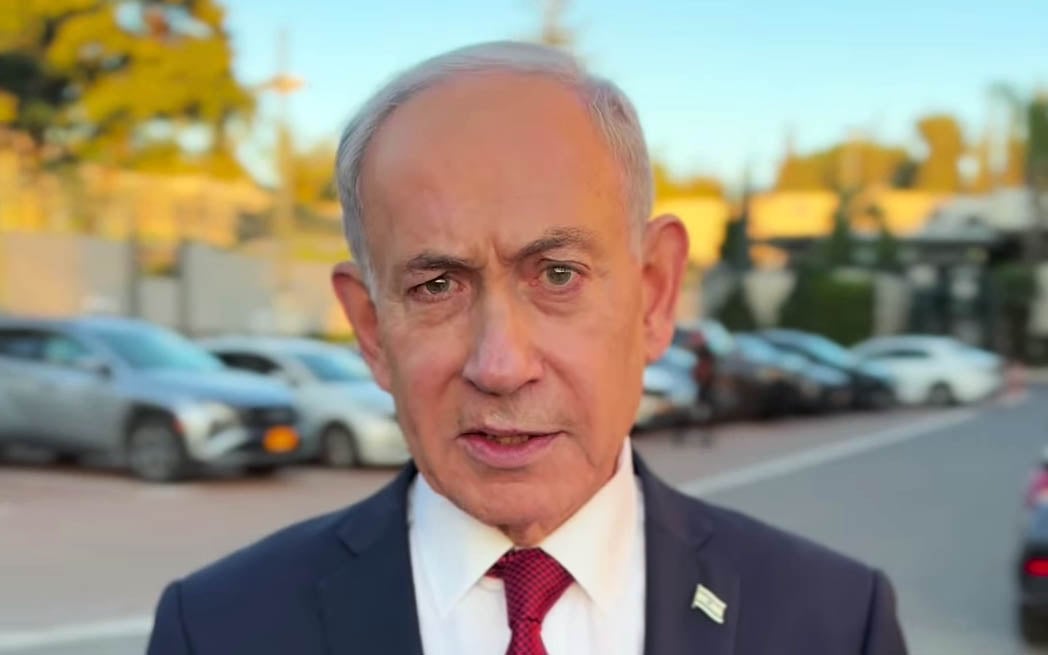
Netanyahu reiterated his line, referring to Arab-led parties, that “it is impossible to create a government with Hamas supporters, a government that depends on Hamas supporters.”
“It is impossible to fight Iran and its other radical Islamic followers if you depend on radical Islam in the government,” he said.
While some of his partners oppose partnering with the Arab parties, Eisenkot has consistently maintained that any party willing to accept his four governing principles is welcome to join his coalition. It remains unclear how an agreement could be reached with the Haredi factions given that one of those principles calls for universal military or civilian national service. Another principle, recognizing Hamas as a terror group and committing to its destruction, could meet opposition from Arab lawmakers.
Among those insisting on a law mandating universal military service are members of the opposition B’Yachad party. Incoming freshman MK Yonatan Shalev told the Ynet outlet that “we will do everything to bring about a [military] service revolution; we will not compromise on the matter.”
Fellow B’Yachad MK Keren Terner Eyal said that those serving in the military “need to be the top priority.”