Herzog slams PM for spending over Green Line
Zionist Union leader says NIS 10 billion invested in settlements outside blocs could have gone toward solving housing crisis
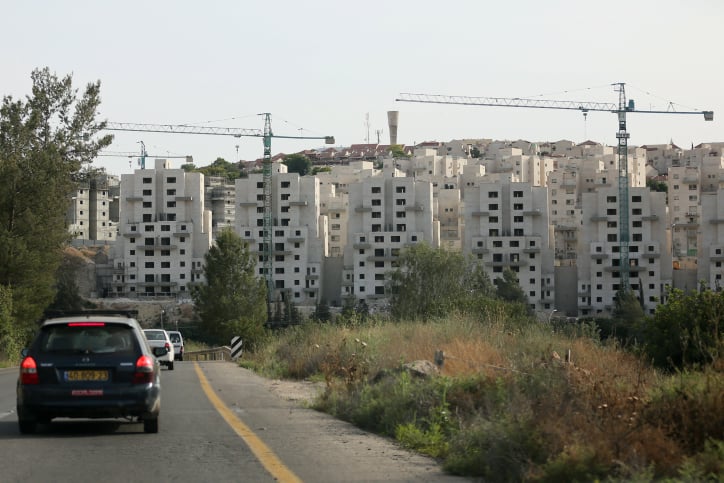
Zionist Union party leader Isaac Herzog accused Prime Minister Benjamin Netanyahu on Thursday of investing in isolated West Bank settlements over the Green Line rather than helping solve the housing crisis, based on information revealed in a special report by State Comptroller Yosef Shapira on Wednesday.
“The state comptroller’s report revealed what we all already know: NIS 10 billion invested in settlements outside the blocs under Netanyahu’s failed rule,” Herzog said.
“Ten billion that had they been invested in housing, the comptroller’s report would have looked entirely different.”
Politicians on Wednesday evening had traded accusations over who was responsible for Israel’s housing crisis and vowed to fix the problem in the wake of the report, which placed blame for runaway housing costs squarely on government agencies.
The report painted a stark picture of a stifling bureaucracy and political gridlock that led to a shortage, driving home prices up by 55 percent between 2008 and December 2013.
“This is a very important report,” officials from the ruling Likud party said in a statement. “We will study the report and implement the necessary conclusions.”
Much of the criticism following the report was aimed at Netanyahu, who was accused of inaction as he held power for four out of the five years studied.
Netanyahu, while vowing to address the recommendations in the report after returning to office following elections, cautioned against losing sight of what really mattered: Iran’s nuclear program.
“We’re talking about housing prices and cost of living. I do not forget about life itself, living,” he said in a tweet. “The greatest challenge standing before us and our lives as Israeli citizens and of this state is the threat of Iran being armed with a nuclear weapon.”
In his statement Thursday, Herzog accused Netanyahu of trying to divert the discussion to Iran instead of taking responsibility for his actions.
“Fear-mongering is the only weapon he has left, but his manipulations don’t convince anybody,” Herzog said. “The public is fed up with the prime minister, who all day drips with fears and anxieties.”
Likud officials chose not to focus on the rising housing prices, and instead highlighted the prime minister’s achievements and efforts to curb the rise in apartment prices.
Likud “increased the amount of construction from 32,000 [housing units] to 47,000 a year,” the Likud statement read. “We have increased dramatically the marketing of land for housing, and this year we will have reached 60,000 units. We have canceled the decision that prevents new construction in the center of the country, and this year, we will plan an additional 80,000 units.”
Representatives from the Interior Ministry, which was singled out in the report for a lack of coordination and other failings, echoed the Likud’s official statement, pointing to statistics that showed an increase in the approval of construction sites across the country. The ministry is headed by Likud’s Gilad Erdan.
“Comparative data shows a significant increase in the number of housing units approved by planning institutions,” a statement released by the ministry read. “For example, in 2011 planning institutions approved a mere 33,000 units, and in 2012 the process of dealing with housing plans was significantly shortened, so that in 2012 64,000 units were approved, in 2013 75,000, and in 2014 64,000. The goal for 2015 is 80,000 units.”