Herzog’s TV show was a desperate push for a unity government most MKs bitterly oppose
The president turned an archaic electoral procedure into a political talk show, pressuring parties to partner with Netanyahu. But he hit a brick wall in the form of the pro-Eisenkot majority
Anyone arriving at the President’s Residence in Jerusalem on Wednesday or Thursday might have been forgiven for thinking they had accidentally walked onto the set of “Meet the Press.”
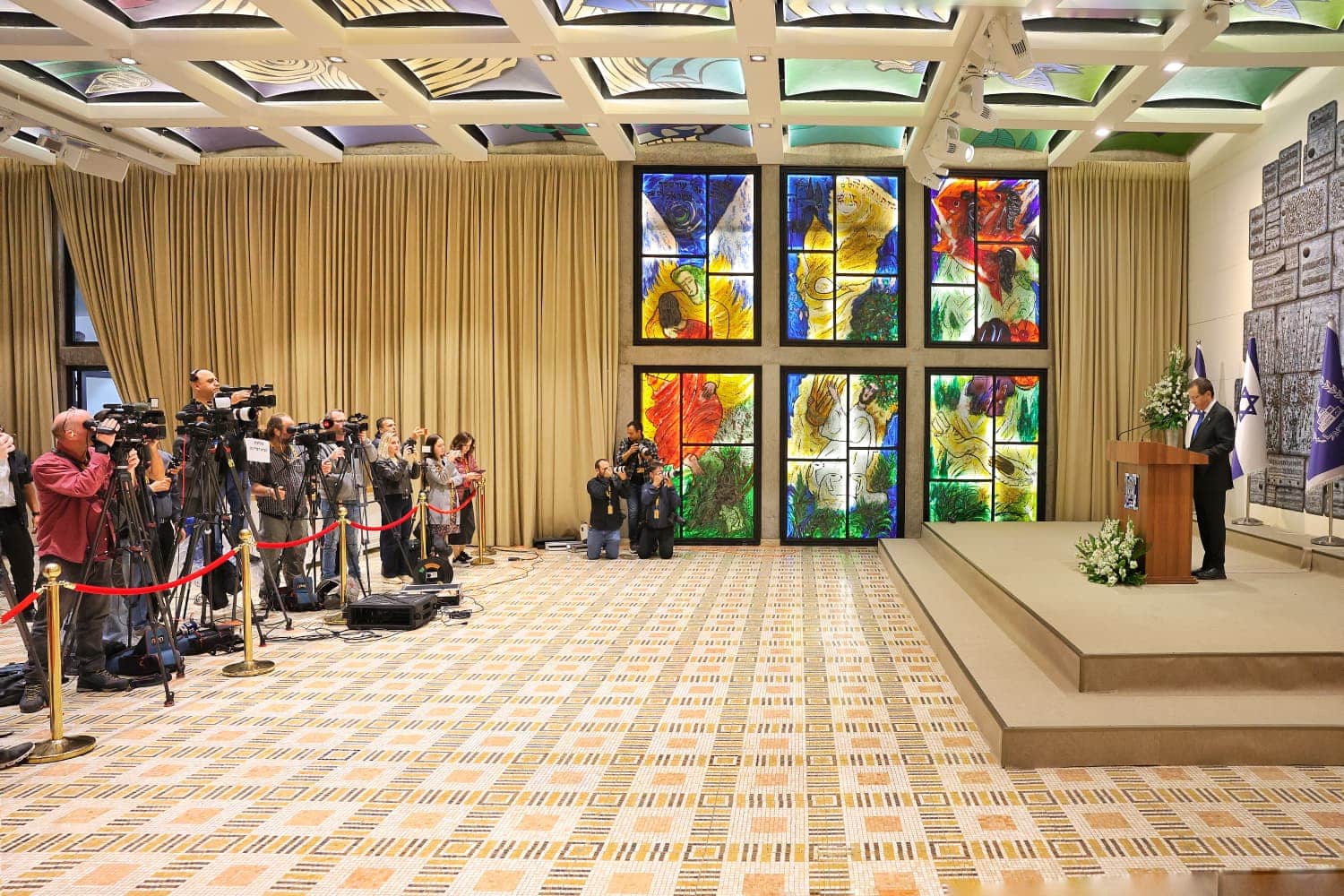
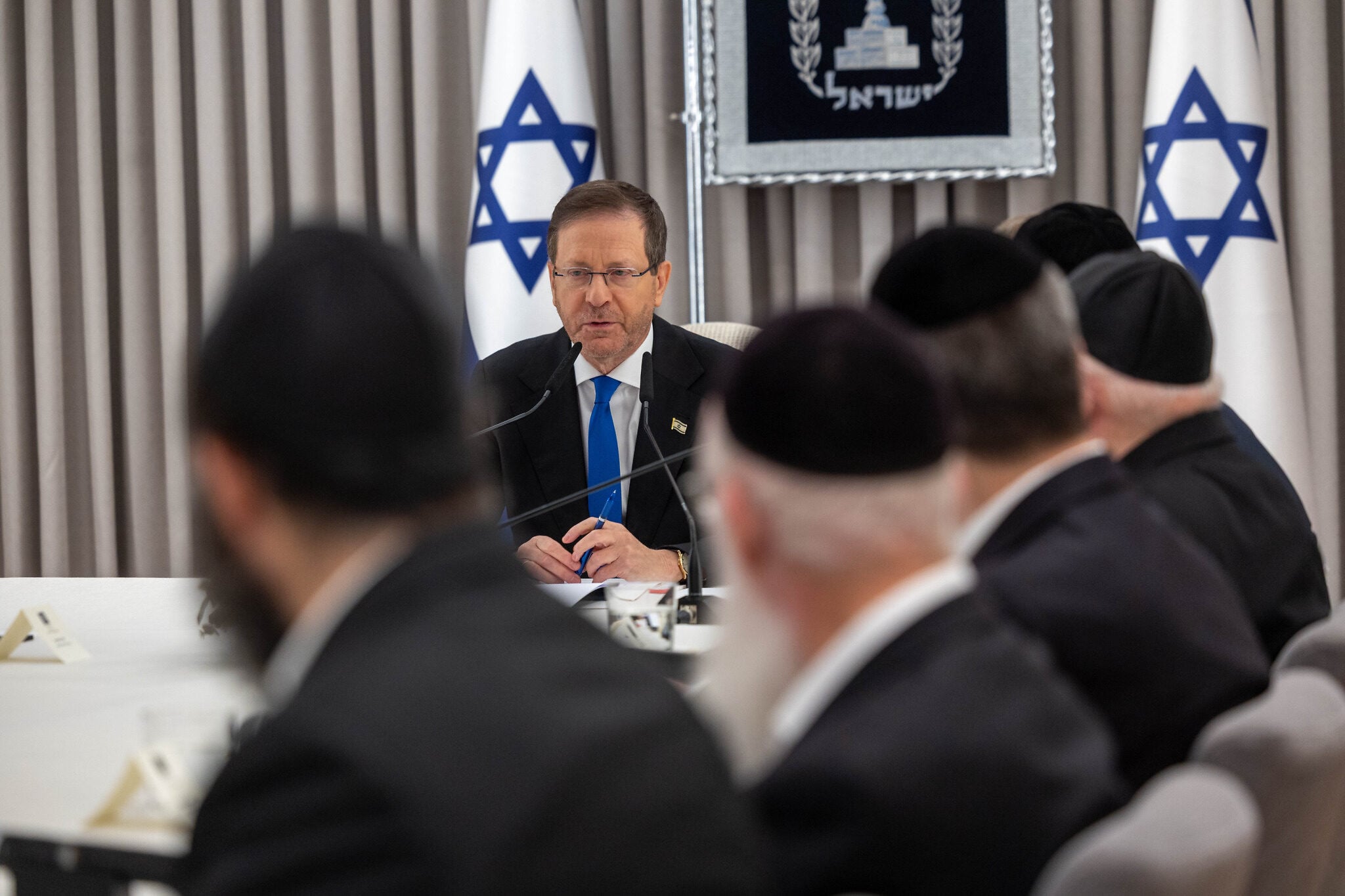
Isaac Herzog played the role of TV host, with politicians from newly elected Knesset factions invited as guests on one side of the studio table, and the president’s aides serving as in-studio commentators on the other.
Herzog bombarded the party representatives with questions straight out of the journalistic playbook. The aggressive questioning was transparently designed to generate headlines recycled from earlier radio and television broadcasts, artificially injecting some excitement into an electoral event that is, ultimately, purely ceremonial and unnecessary to broadcast.
In principle, the institution of live presidential “consultations” — the mandatory post-election process where representatives of each party meet the president to formally recommend their candidate for prime minister — has become an archaic spectacle.
The parties arrive to tell the president whom he should officially task with forming a government but the political math is already settled, and everyone knows exactly what they will say.
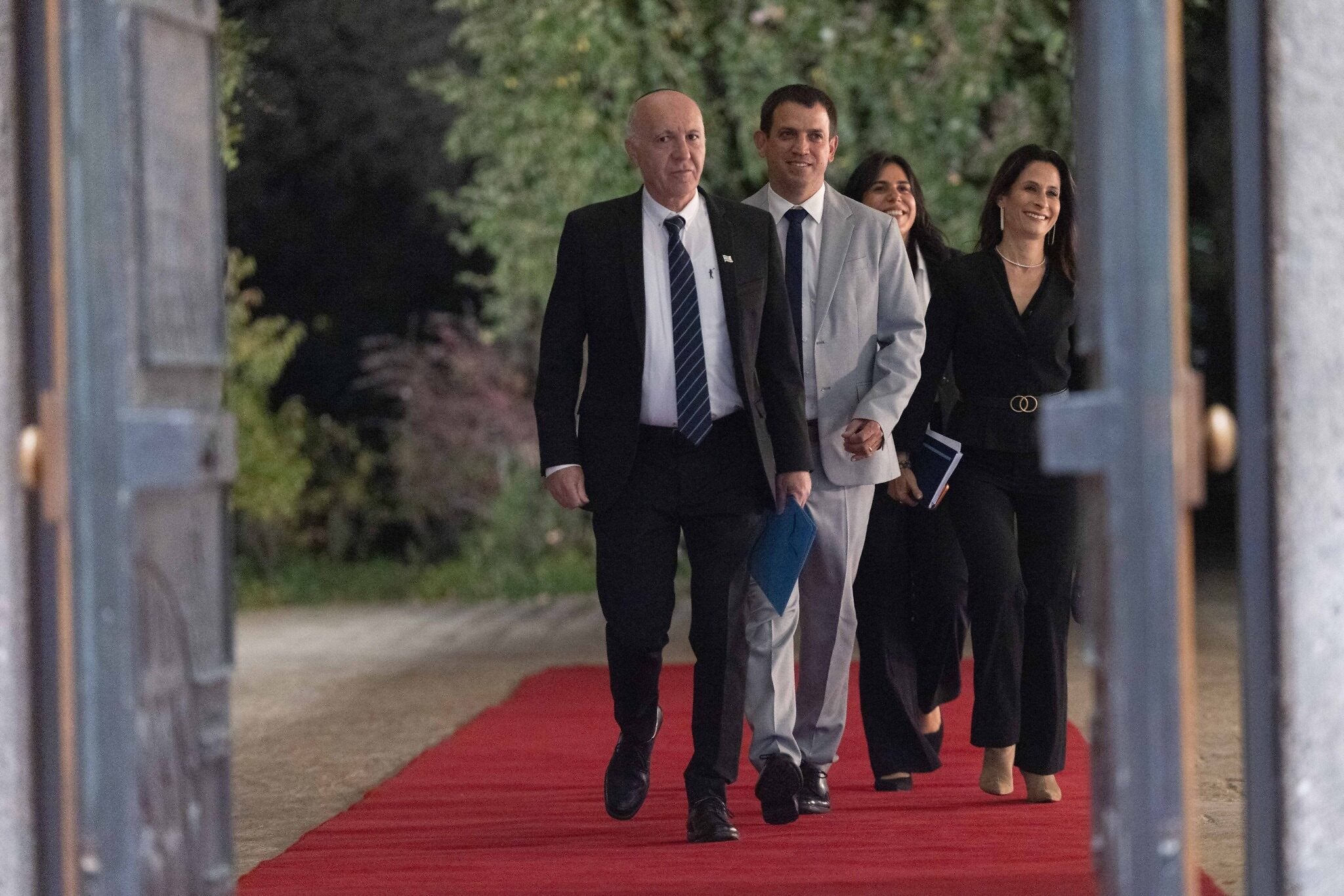
Each party could have informed the president of its position in a standard WhatsApp message, and Herzog could have done the parliamentary arithmetic that any child can manage without a calculator. That quiet approach would have been far more authentic than the parade of politicians along the red carpet stretching from the entrance steps to the grand foyer of the President’s Residence, with dozens of television cameras helping manufacture false drama around an outcome easy to assess.
Herzog will ultimately task former IDF chief of staff Gadi Eisenkot with forming the next government. This is already a historic moment for the centrist leader, who emerged from the consultation process as the candidate recommended for prime minister by a clear majority of the Israeli public’s representatives — 67 of the 120 elected members of Knesset.
The president intends to announce his decision on Sunday, rather than waste the country’s time and drag the bureaucratic process out for a full week, as the law technically allows. However, Herzog clearly detests the prospect of Eisenkot forming a narrow minority government supported from the outside by the two mainly Arab parties.
If it were actually up to him, Herzog would have stood at the President’s Residence on Thursday with Likud’s Prime Minister Benjamin Netanyahu on his right and Eisenkot on his left, happily announcing that the two bitter rivals had miraculously agreed to form a broad national unity government.
That has not happened and likely will not happen — but Herzog is not giving up. In fact, he is currently working overtime on Netanyahu’s behalf, trying to paint a target around the arrow he fired long ago.
“What will happen when Netanyahu retires?” the president angrily demanded of the representatives from the left-wing Democrats party on Thursday morning. “Is everything strictly about yes or no to Netanyahu?”
Herzog dispensed compliments and reprimands to his guests from the various parties in a blatant effort to steer them toward his political objective: a unity government.
MK Gilad Kariv explains to President Isaac Herzog why there cannot be a unity government with Prime Minister Benjamin Netanyahu, 5 November 2026. (Video: President’s Residence)
He was visibly impatient with anyone who stood in the way of that personal mission — from the representatives of Itamar Ben Gvir’s far-right Otzma Yehudit, to the Democrats, to the Arab factions. Along the way, he made several peculiar, out-of-touch remarks.
“How will you form a minority government? In the ‘change’ government [from 2021-2022], you couldn’t even plant saplings in the Negev,” Herzog challenged the Democrats’ representatives.
The president was referring to a 2022 political crisis during the 18-month Bennett-Lapid government, when the Islamist Ra’am party temporarily boycotted the coalition over Jewish National Fund tree-planting in unrecognized Bedouin areas. It almost seemed as though Herzog had been briefed by Netanyahu beforehand, since the prime minister often reaches for that same episode to mock his rivals.
Herzog also had something quite bizarre to say to the representatives of United Torah Judaism (UTJ), who are playing political games by declining to recommend Netanyahu for the premiership.
“The Tal Law was struck down by the High Court by a very narrow majority. I regret that,” Herzog told the Ashkenazi ultra-Orthodox politicians, attempting to curry favor with them. They deeply regret it, too.
The Tal Law, as Herzog well knows, was a controversial 2002 piece of legislation that provided sweeping, institutionalized military draft exemptions to Haredi yeshiva students. It was struck down by the High Court of Justice in 2012 for violating the principle of equality — and it is the last thing a depleted IDF desperately needs as it struggles to replenish its combat ranks. It is a very good thing the court killed it, and most Israelis can only hope it is never revived.
The fiercest opposition to Herzog’s dream of a unity government came from representatives of the centrist B’Yachad (Together) party, who arrived at the residence/studio on Thursday afternoon.
“I don’t do business with scorpions,” MK Meirav Cohen told the president to his face, paraphrasing the fable of the scorpion and the frog.
For Cohen, the scorpion is Netanyahu. In 2020, Netanyahu persuaded Benny Gantz’s centrist faction to join an emergency COVID-19 unity government, with a binding rotation agreement under which Gantz was to take over as prime minister late the following year. “No tricks,” Netanyahu solemnly promised. Netanyahu then broke his promise, exploiting a loophole in the deal by refusing to pass the state budget, collapsing his own government rather than handing over power.
Cohen had good reason to remember the saga; she was a minister for eight months of that government’s term.
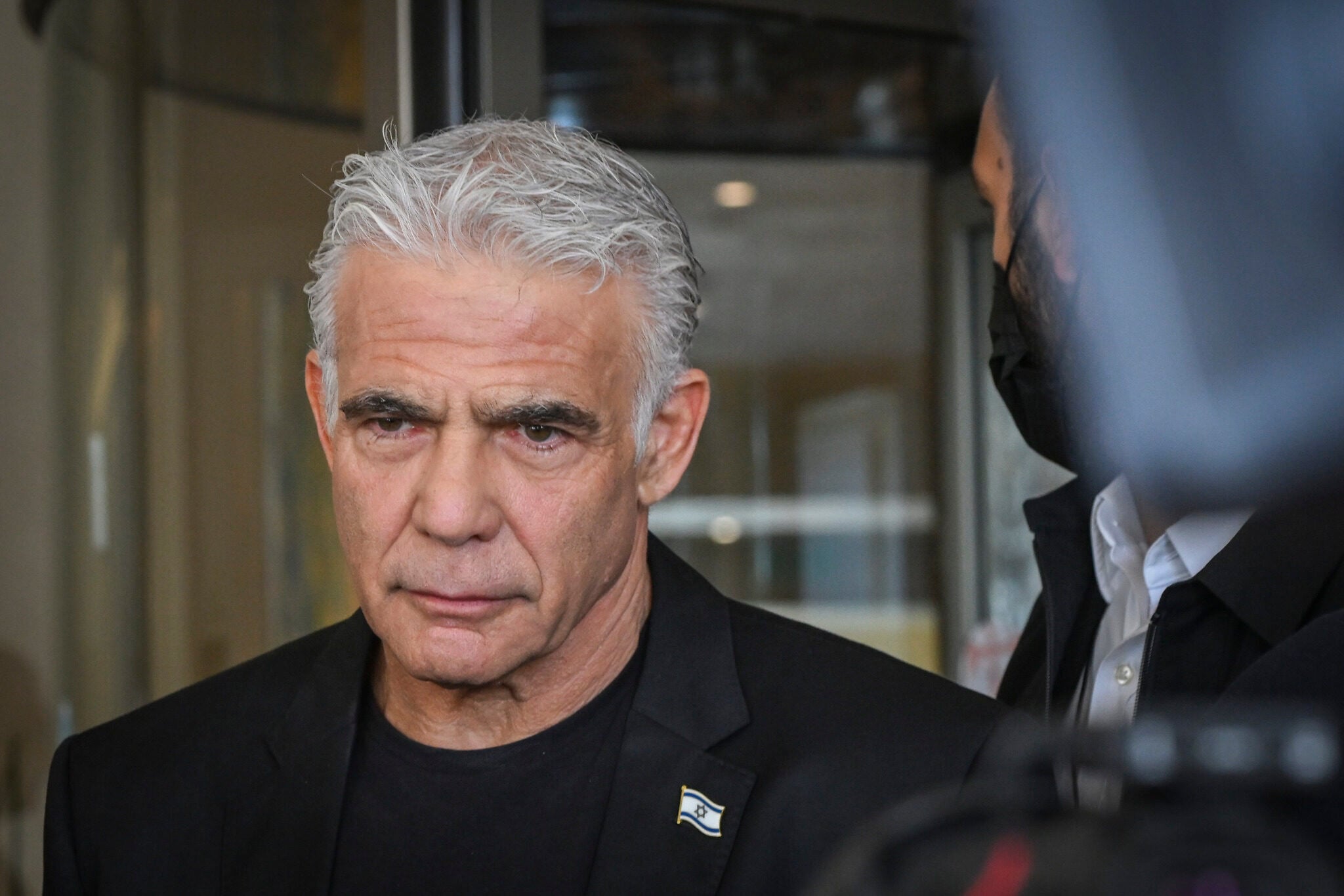
Opposition leader Yair Lapid refused to be part of that arrangement, knowing Netanyahu would not honor it, and split from Gantz over it. On Thursday, Lapid told his B’Yachad party colleagues, “There is no government with Netanyahu, and there never will be. It’s a fairy tale that only President Herzog believes in.”
For now, it remains unclear whether Eisenkot will succeed in forming a functional government dependent on a hesitant ultra-Orthodox party and on the Arab parties. The situation is fraught with extreme difficulties, and the chances are slim.
Eisenkot and his colleagues’ current plan is to swiftly take control of the new Knesset when it is sworn in on Tuesday, begin acting as the sovereign parliamentary authority by utilizing its majority to advance vital legislation, and hope that an alternative government can eventually emerge from that position of power.
“We have to take it step by step,” one of the bloc’s leaders summed up on Thursday. “This is a highly complex undertaking. Anyone who tries to jump to the final stage too early will cause damage.”
And that intended final stage, despite Herzog’s efforts, is certainly not a government with Netanyahu.