Hezbollah claims victory in east Lebanon local elections
State media, however, says early results show rival coalition gaining control of council in capital city Beirut
BEIRUT — Lebanon’s Shiite Hezbollah organization and its allies won a vast majority of seats in areas where they competed in Sunday’s local elections, the group’s deputy leader said Monday
The municipal elections took place in just two areas of the country — the capital Beirut and the eastern Bekaa Valley region — in the first vote in Lebanon since 2010, and a key test of grassroots support in the two regions.
Meanwhile, the head of Beirutis, a local coalition of different political groups, said it would most likely win control of the capital’s municipality.
That importance of the vote was underscored by the fact that the government has postponed Lebanon’s parliamentary elections, citing security concerns linked to the conflict in neighboring Syria. Lebanon’s parliament has also failed to elect a president since May 2014 due to a lack of a quorum amid political disagreements.
Perhaps reflecting wide urban disillusionment with the political limbo, the turnout was low in Beirut — only 20 percent, just slightly higher than the 18 percent who voted in 2010.
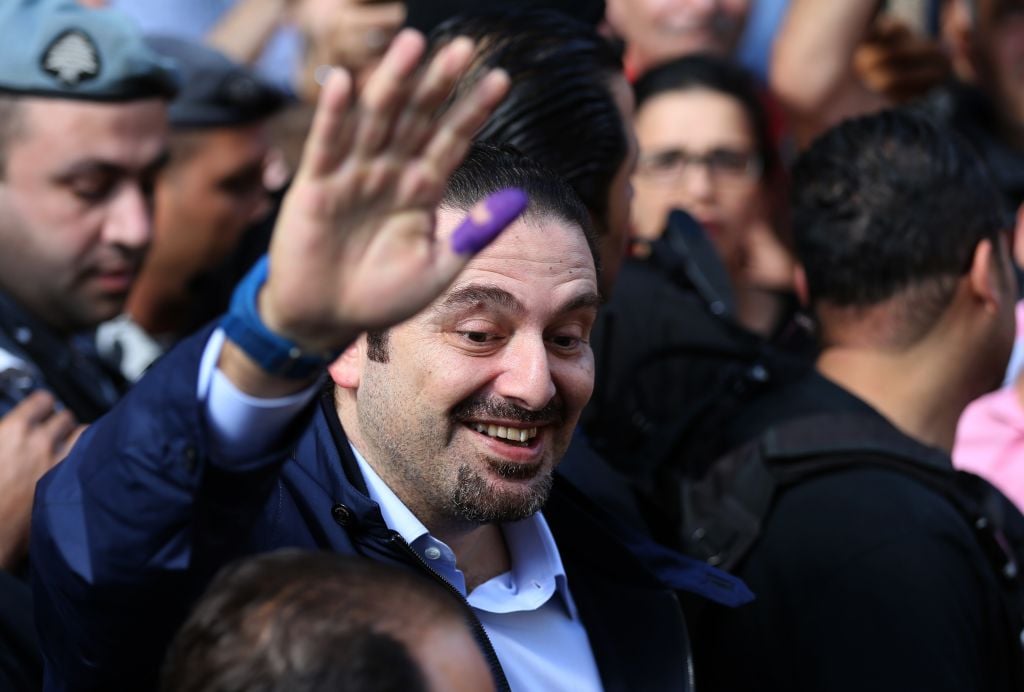
The Lebanese capital is known for a usually low turnout, with many of its eligible voters living outside both Beirut and Lebanon, and some residents expressing disinterest in politics. Many in Beirut also did not expect the elections to be held, thinking the vote would be delayed like other elections.
Hezbollah’s deputy chief, Sheikh Naim Kassem, said Monday that the group and its allies ran in 80 municipalities out of 143 in the Bekaa Valley and won almost all the seats. That number included all the municipal seats in the historic city of Baalbek and the major town of Brital along the Syria border, where Hezbollah competed against a list backed by prominent families.
“It was a complete victory,” Kassem said of the Baalbek and Brital vote. He added that Hezbollah’s opponents secured some seats in six towns in the area.
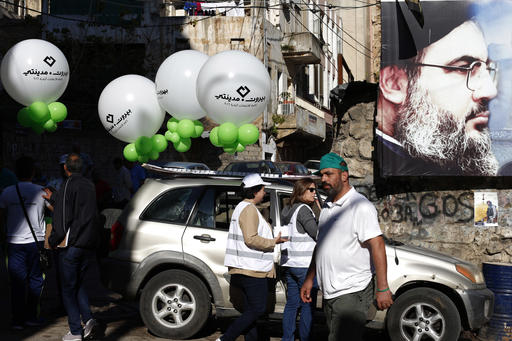
Turnout was higher in the Hezbollah-popular east, with the figure reaching 48 percent in Baalbek.
In Beirut, Beirutis said early results show it won all of the capital’s 24-seat municipal council, the state-run National News Agency reported. The coalition is headed by Jamal Itani and is backed by several political groups, including the powerful predominantly Sunni Future Movement of former prime minister Sa’ad Hariri, the Shiite Amal group and the country’s three main Christian groups.
Beirutis ran against several other lists, mainly the Beirut Madinati (Arabic for “Beirut, My City”) that has vowed to clean up both the city’s streets following a major trash crisis and its politics. Beirut Madinati said on its official Facebook page that it would not make any statements until the official results are known.
Municipal elections will be held in other parts of Lebanon in the coming weeks.
Copyright 2016 The Associated Press.