How Erdogan went to sleep with dogs, woke up with beasts
For years, Turkey's president ignored the IS fighters slipping into Syria across his border. Then he started to tackle the terror group. And now he's the enemy
Exactly two years since Abu Bakr al-Baghdadi announced the establishment of the “Islamic State,” Baghdadi’s life project looks less like a country and more like the most vicious and sophisticated terror group the world has ever known. And that’s even taking al-Qaeda into account.
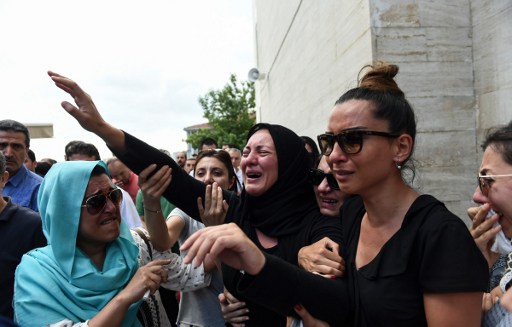
Time after time, IS proves capable of carrying out massive attacks at resonant targets (like Turkey’s busiest airport), with major potential consequences (such as a drastic fall in tourism).
The reach of IS has extended recently to Lebanon, where eight terrorists blew themselves up within 24 hours in a village called al-Qaa, located on the Syrian border; to Jordan, where IS operatives succeed in killing Jordanian soldiers in a well-planned ambush; and now to Turkey, where it has deployed no fewer than 35 suicide bombers, at least according to American intelligence information as reported by one US network on Tuesday.
Its ambitions are not limited to the Middle East, either. IS is doing all it can to export terror attacks across the Bosphorus, to Europe and also to the United States. One or more of these attempts is likely to succeed sooner or later.
At the same time, IS’s capacity to function as a state is eroding.
In the military sphere, it is enduring veritable fiascoes, losing territory by the week in Syria and in Iraq. Sometimes it is the Kurds who inflict these defeats, sometimes the Iraqi army along with Shiite militias, and sometimes one or more rebel groups. It has been forced to withdraw, with its tail between its legs, from major cities it had controlled for two years.
Beyond the loss of territory, IS’s ability to run state institutions is also diminishing.
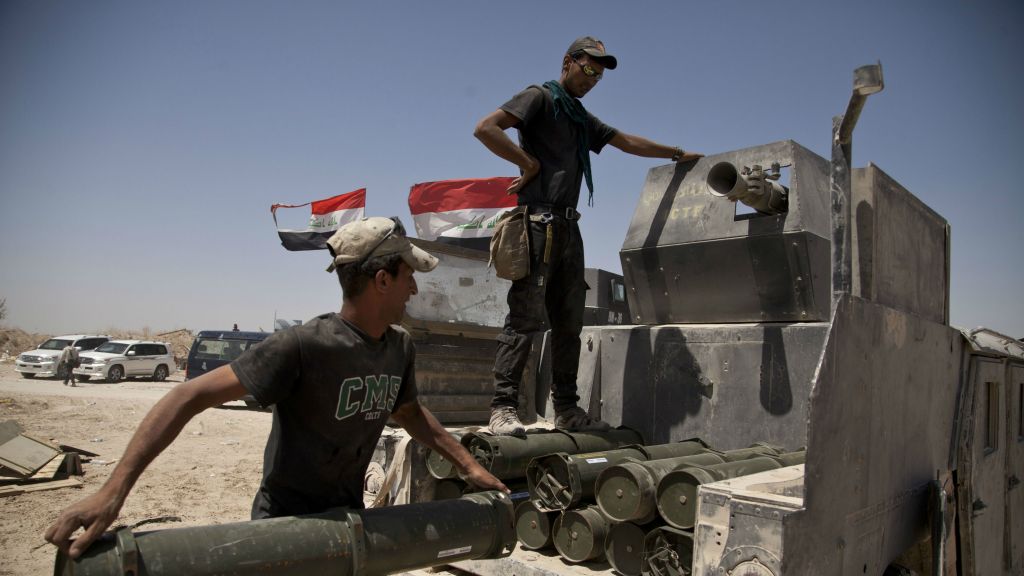
Then there is the blow suffered in recent months to IS finances. Its reserves are depleted; it can no longer pay its fighters as well as in the past, which has affected the number of volunteers joining its ranks.
The decrease in revenues is a result of the campaign by the US and its allies against the group’s cash holdings, its oil fields and the convoys of smugglers who somehow managed to sell tens of millions of dollars worth of its oil each month to countries in the region.
And here is where Recep Tayyip Erdogan’s Turkey enters the picture.
The president and his government for years ignored the stream of fighters that traveled through their country to territories controlled by the Islamic State. They preferred to concentrate their military efforts against the Kurds. They preferred to cooperate with IS, the Nusra Front and others by looking the other way, hoping to weaken their other enemy – Bashar Assad, the president of what is left of Syria.
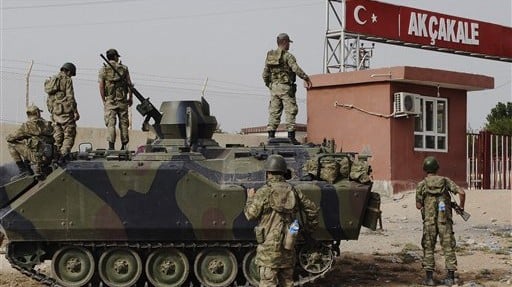
More recently, however, US pressure bore fruit, and Erdogan instructed Turkish intelligence to try to stop the flow of IS volunteers from Turkey, and to tackle the black market for IS oil.
That’s how Erdogan, an Islamist from the Muslim Brotherhood ilk, an overt supporter of the Hamas terror group, became the man who went to sleep with dogs and woke up with beasts, how he became the enemy of Islamic State.
What now can he, and the rest of us, expect from IS? Its military grip is likely to continue to weaken. And therefore, it will attempt further, graver terrorist attacks — seeking to shake up the West and the Islamic world, and preserve, at any and all horrific cost, its image as a “winner.”