Herzog’s coalition challenge amid election deadlock, and what a caretaker government can and can’t do
The president must decide who'll get first chance to form a new government. In the meantime, the outgoing administration is in charge, but could be partially stymied if the opposition unites
As the results of Israel’s election firmed up Wednesday, it became increasingly clear that barring any unexpected changes, the country was heading toward another period of prolonged political deadlock that could, if not resolved with a new government, result in another round of elections.
With just over 85% of the vote counted by Wednesday afternoon, Prime Minister Benjamin Netanyahu’s bloc had 53 seats, while the Zionist opposition bloc led by Yashar leader Gadi Eisenkot had 48 seats. The Arab parties have 19 seats, a historic high (the previous record was 15, in 2020).
At least 61 seats are required for a majority.
So who would be in charge amid a political stalemate?
In such a situation, the outgoing government would continue to rule as a caretaker government, and the Knesset would operate in a limited capacity.
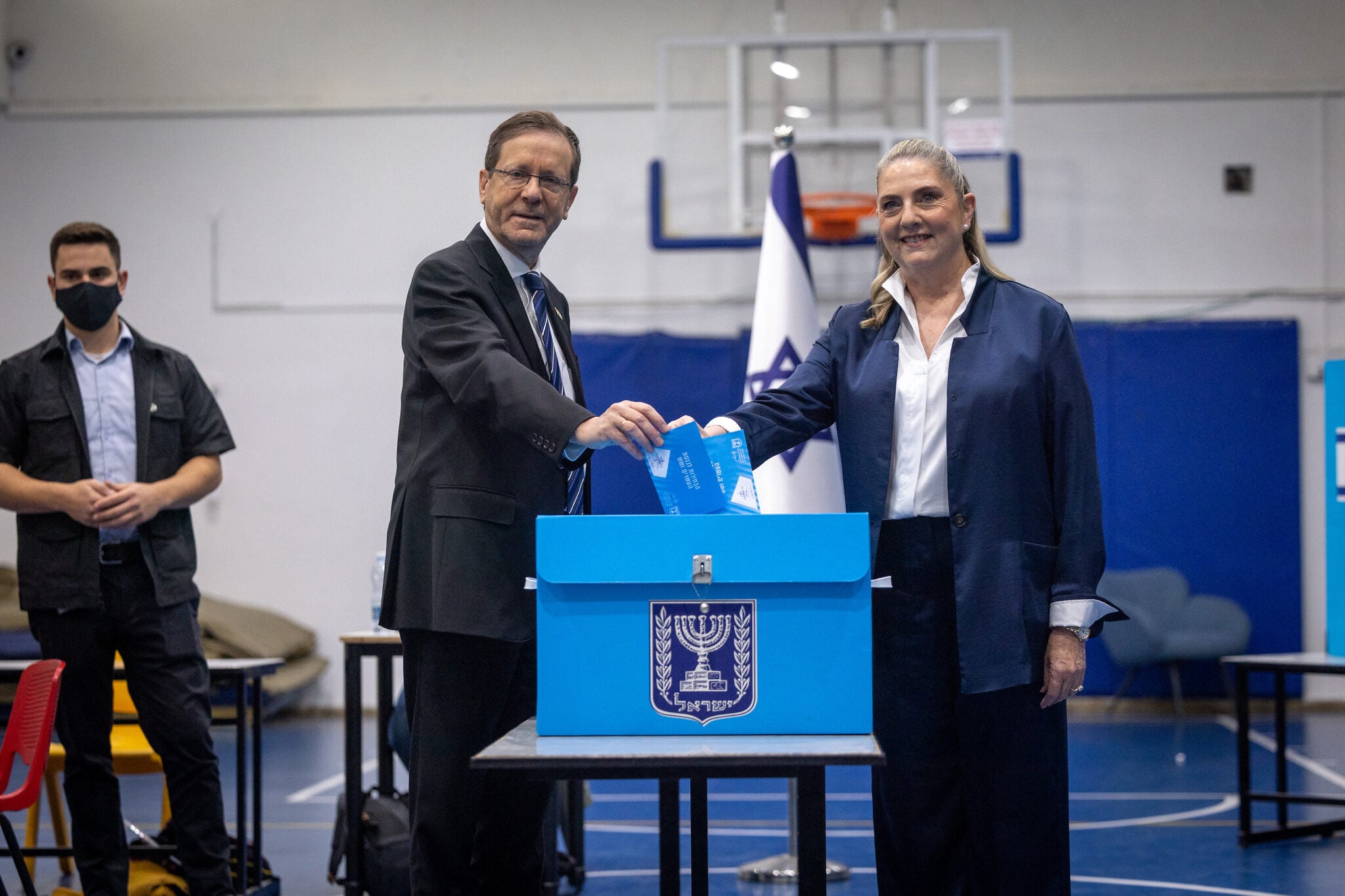
As always after election results come in, the president — in this case, Isaac Herzog — will have to decide which party leader gets the first chance to try to form a government.
Netanyahu will almost certainly not have 61 Knesset members to form a new coalition. At the same time, although the anti-Netanyahu parties will have a majority in the Knesset, Eisenkot and most of his allied party leaders have largely ruled out a government with the Arab parties, meaning the Jewish-led opposition parties will be far short of 61 MKs.
Herzog’s role
Under the Basic Law: The Government, the president, Herzog, is empowered to choose who gets the first chance to form a government.
The law is vaguely worded and gives the president broad leeway in choosing who goes first, though it requires him to consult with the heads of all Knesset parties before deciding.
Historically, presidents have chosen the head of the largest faction to go first, likely in this case the Likud party.
But the High Court of Justice has said that the law’s requirement to consult with party heads means the guiding principle for the president is who has the best chance of forming a government. Such a situation arose in 2009, when President Shimon Peres gave Netanyahu the first chance, even though Tzipi Livni’s Kadima party was the largest party.
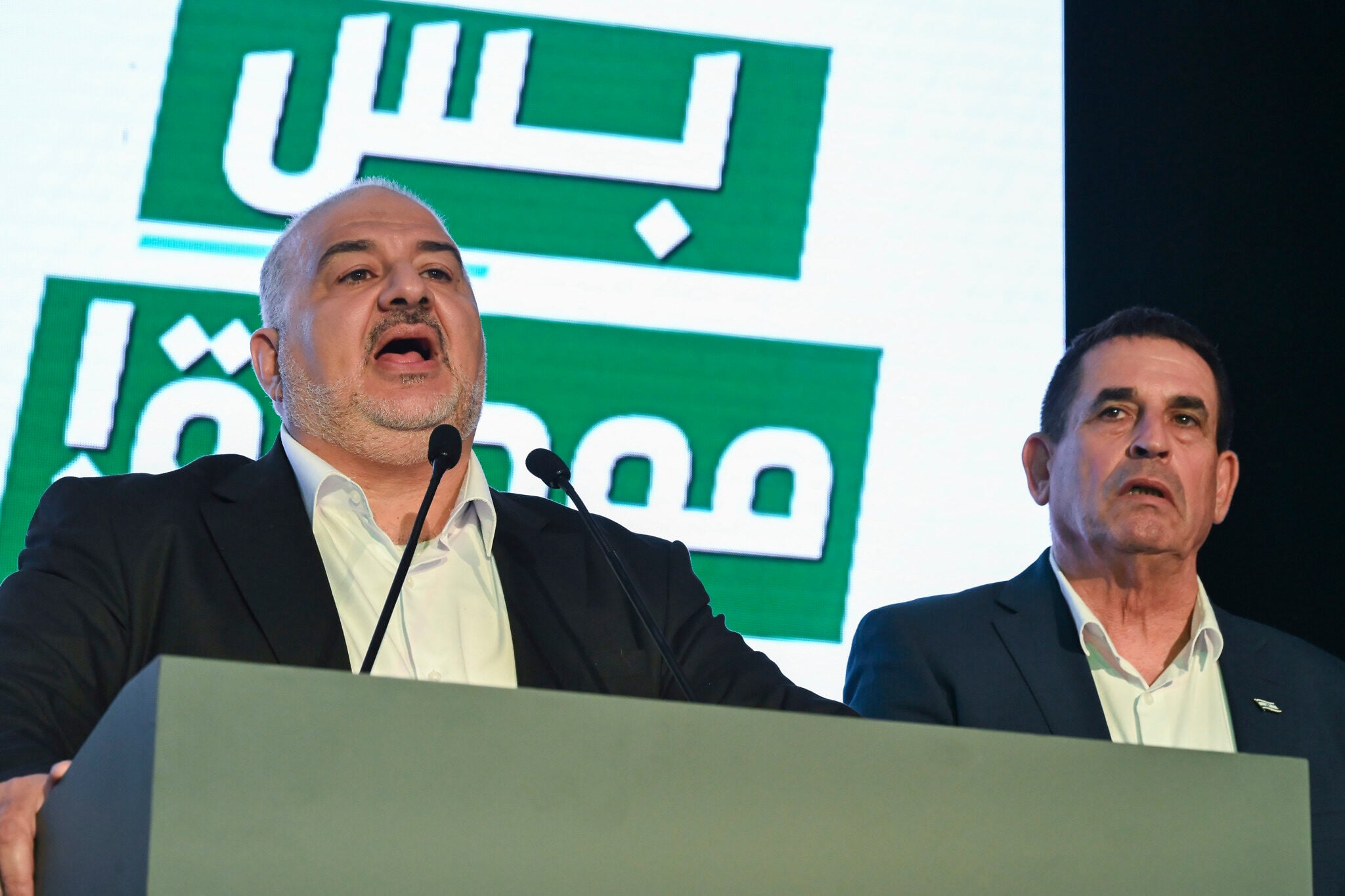
Were the Joint List of Arab parties and Ra’am, a more moderate Arab party, to recommend Eisenkot, then the Yashar party leader would have the support of a majority of MKs to get the first stab at forming a government.
Whomever the president chooses, that party leader would have 28 days to cobble together a government, and could request another 14 days if he said he needed more time to finalize a coalition.
If those efforts failed, Herzog could give the mandate to form a coalition to another candidate, and that person would then have 28 days to form a government, with no potential extension.
Failing that, there is one last opportunity for a government to be formed: A 61-MK majority could recommend to the president yet another candidate to try to form a government, with a maximum of 14 days for such an effort. If that didn’t work, new elections would be called.
The caretaker government
During this potential 12-week period, outgoing cabinet ministers would continue to serve as the country’s caretaker government.
Under the law, a caretaker government has the same powers and authorities as a permanent government, and can make legally binding decisions, including waging war, conducting diplomacy, and the entire gamut of policy-making.
At the same time, several past High Court of Justice rulings have established that caretaker governments must act with greater restraint because they lack a democratic mandate from the Knesset, said Guy Lurie of the Israel Democracy Institute.
“Though it has the legal authority to do anything any other government can do, a caretaker government’s discretion is more narrow, and it has a duty of restraint,” said Lurie.
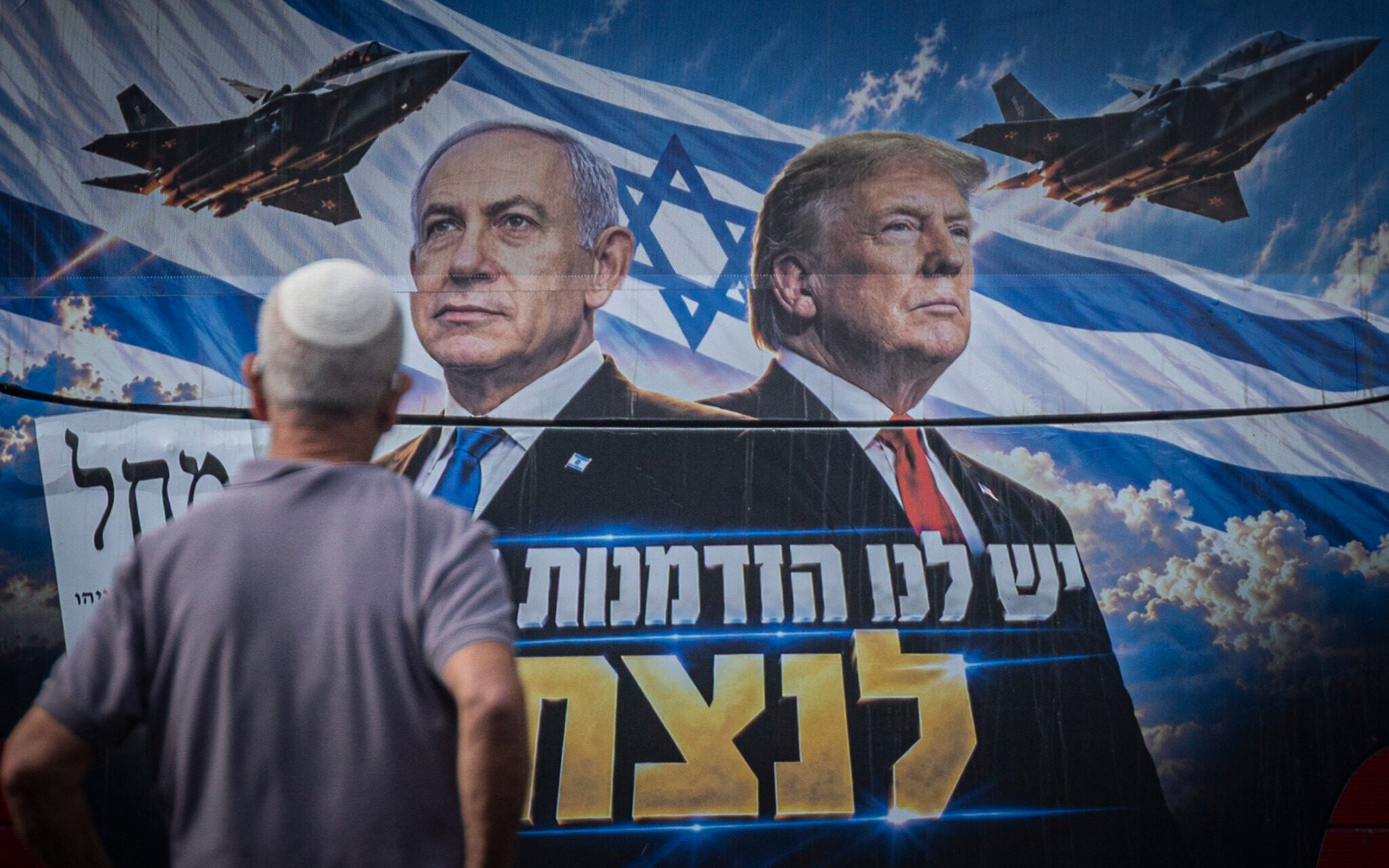
This could become particularly pertinent, with Netanyahu having indicated that he wants to resume the war with Iran.
Old Knesset, New Knesset
A new Knesset must be sworn in within 14 days of the election. Until then, the outgoing Knesset members continue to serve under the terms of the Knesset election recess that began when elections were called.
In every election recess, a Consensus Committee is formed comprising one member of the coalition and one member of the opposition.
Both members of the Consensus Committee have to agree to allow Knesset committees to convene to prepare legislation, should the government request it, meaning it is highly unlikely that legislation will be passed in this period.
Knesset activity, and all the more so legislation, is generally unusual and would be extremely controversial in the post-election lame-duck Knesset.
After the new Knesset is sworn in, all Knesset committees must be formed anew through what is called the Arrangements Committee, which itself is comprised of all Knesset parties, proportionate to their size. Once the committees are formed, legislation can be advanced and passed into law, even before a government is sworn in.

This happened after the previous Knesset election in November 2022, when Otzma Yehudit leader Itamar Ben Gvir demanded legislation be passed increasing the national security minister’s authority over the police before the government was formed.
This situation presents an opportunity for the opposition Zionist parties and the Arabs parties to cooperate and use their majority to thwart Netanyahu in some respects, even as he remains interim prime minister.
Channel 12 has reported that the anti-Netanyahu parties, including the two Arab parties, are looking to use their overall majority of seats to replace Knesset Speaker Amir Ohana, a member of Likud.
The parties have not yet agreed on a candidate, according to the report, though Yisrael Beytenu MK Oded Forer, and Elazar Stern of Yashar, were named as options being discussed.
By choosing a new Knesset speaker, the opposition parties would then be able to control the legislative agenda. This could allow the opposition to advance parts of its agenda, such as establishing a state commission of inquiry into the events of the October 7, 2023, Hamas-led massacre, which Netanyahu has blocked for the past three years.
Times of Israel staff contributed to this report.