If the violence dies down, rely on Hamas to reignite it
Abbas speaks of nonviolent protest, but calls to defend al-Aqsa, and his Fatah group is central to anti-Israel incitement. Hamas is much more direct. It is working to uproot both the PA and Israel
NABLUS — Wednesday seemed like just another day in the new security situation in the territories and in Israel. A 17-year-old Palestinian grabbed a gun from a soldier in Kiryat Gat and holed up in an apartment until he was shot to death. A Palestinian woman stabbed an Israeli man in the Old City of Jerusalem. Stones were thrown at a bus in Jaffa. There was an attempted stabbing in Petah Tikva, an attempted vehicular attack near Ma’ale Adumim, a woman was ambushed with a barrage of stones near Jerusalem’s Har Homa neighborhood and hundreds of Palestinians clashed with Israeli troops near the IDF’s Judea and Samaria headquarters at the northern entrance to Ramallah. Business as usual. The violence and the casualties have become a daily occurrence.
But traffic was moving at the southern entrance to Nablus from the direction of the Hawara checkpoint, and there was no evidence of the clashes as I passed through. Only bits of the tires that had been set ablaze here in recent days remained as mute testimony that Nablus, too, has been participating in the “war effort.” That, too, is business as usual — albeit a pattern of action that was unknown until now.
These are not mass demonstrations attended by tens of thousands of people, in the style of the First or Second Intifada, nor are they suicide attacks typical of the Second intifada. What has been unfolding, rather, is a combination that includes Palestinian terror attacks of limited lethality committed by lone perpetrators (mainly armed with knives), deadlier and more sophisticated attacks in the style of the Hamas cell that killed Naama and Eitam Henkin near Itamar and a popular protest of limited scope.
These attacks have no guiding hand or set of rules. At the same time that Nablus was so quiet, hundreds of Palestinians north of Ramallah came out to clash with Israeli troops. Bethlehem was also quiet at noon on Wednesday, but in the days preceding it more than a thousand people came out to demonstrate against Israel near the security barrier.
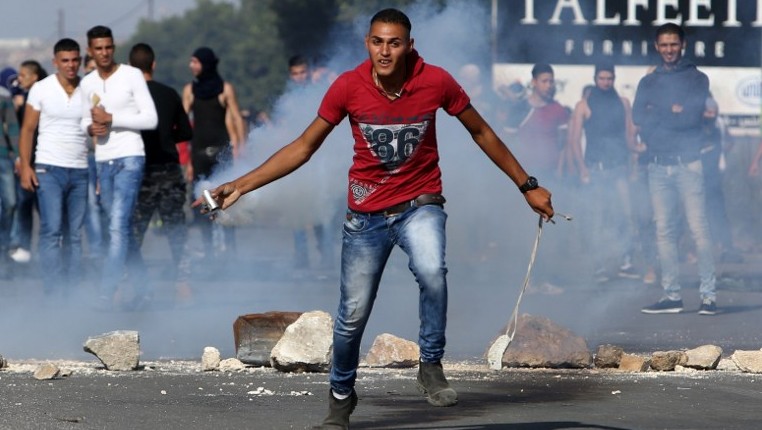
Currently, the territories look like a series of small blazes ignited and extinguished one after another. The fact that Nablus or Bethlehem was calm at noon on Wednesday did not mean that they would stay that way. The same goes for the other cities. The protest breaks out from time to time and is extinguished once again immediately afterward. A sort of intifada.
What next?
No one knows where things will go from here. The Israeli defense establishment plainly wants to calm things down. Palestinian Authority President Mahmoud Abbas (Abu Mazen) tried to tell the Palestinian and Israeli populations, in various interviews Tuesday, that he had no desire for an intifada or for violence. The previous day, he issued an order to the heads of his security agencies to work for the restoration of calm.
Whether or not he really wants to, it is not certain that Abbas — accused by Prime Minister Benjamin Netanyahu of inciting Palestinian violence — can stop the violence at this point. One example of that is Bethlehem, adjacent to southern Jerusalem. Bethlehem has never been known as particularly radical or more violent than the other Palestinian cities. But it was there that the largest clashes took place last week, with casualties including a 13-year-old boy who was killed by Israeli troops.
The Palestinian Authority has only limited ability to stop such incidents in the city. A large public protest against the PA and its agencies took place after videos were posted online showing Palestinian police officers behaving violently toward citizens who were protesting “the damage to the al-Aqsa Mosque.”
PA security chiefs in Bethlehem have announced that they have no intention of dispersing demonstrations near Rachel’s Tomb, and Palestinian crowds will be able to reach that flashpoint unhindered. In some other areas, it is evident that the Palestinian security agencies have more impressive means at their disposal, which is why fewer people have been demonstrating in the northern West Bank. Thus far.
The possibility of a major escalation is ever-present, potentially sparked by any major incident, on either side. Netanyahu will come under increasing pressure to revoke the permits allowing tens of thousands of Palestinians to work in Israel — pressure he was resisting as of Friday — which would embitter and free-up vast numbers of potential protesters.
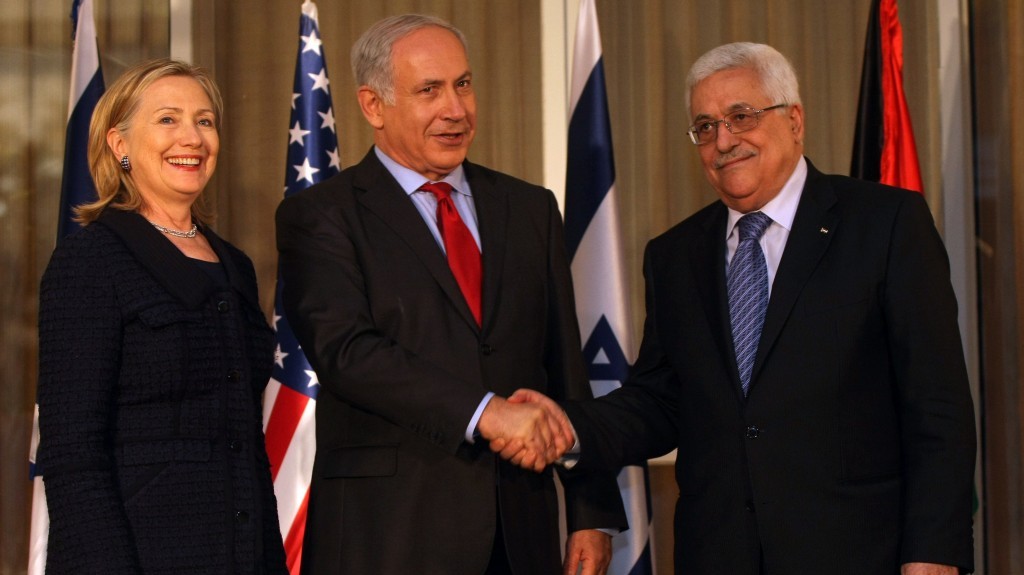
As for Abbas, he speaks about a nonviolent struggle on the one hand, but calls for the defense of the al-Aqsa Mosque on the other, and his Fatah faction centrally participates in incitement against Israel. While the security agencies and their commanders are formally maintaining security coordination with Israel, their members were ordered to lie by saying that they did not meet with their Israeli counterparts this week even though they did, and they have been conspicuous by their absence at several hotspots in recent days.
Even if relative calm is restored over the next few days — an increasingly big “if” — Abbas has no diplomatic “horizon” to work towards. No talks with Israel are taking place, nor is there any possibility of reconciliation with Hamas. The majority of the Palestinian public wants him out; the inhabitants of the refugee camps speak openly against him. Even the seemingly simple things he tried to do, such as convening the PLO National Council and resigning from the Executive Committee in order to reshape it, failed. His speech at the UN was no bombshell, no milestone.
He does not want to do, but he may yet choose to step down. Quite a few consultations took place in the Israeli defense establishment anticipating “Black September” and the possibility that Abbas would announce his resignation. Now the talk is of December, when the Palestinian National Council will convene, Abbas may really resign from the PLO’s Executive Committee, and there may be another attempt to push a resolution through the UN Security Council seeking recognition of a Palestinian state.
Even if the current wave of violence should ebb, we could see the next outbreak at the end of this calendar year — along the lines of what happened in 2000, when Nakba Day violence in May constituted a large-scale rehearsal for what became the al-Aqsa Intifada. The events of this period would then be remembered as the little storm before the bigger one, “Black December.”
And then there is Hamas
The terror attack near Itamar in which Eitam and Naama Henkin were murdered stood out as unusual among the “spontaneous” attacks. I visited the site of the shooting on Wednesday. Israeli soldiers were deployed, and police officers performed random inspections of Palestinian vehicles at the entrance to Nablus from the Beit Furik checkpoint.
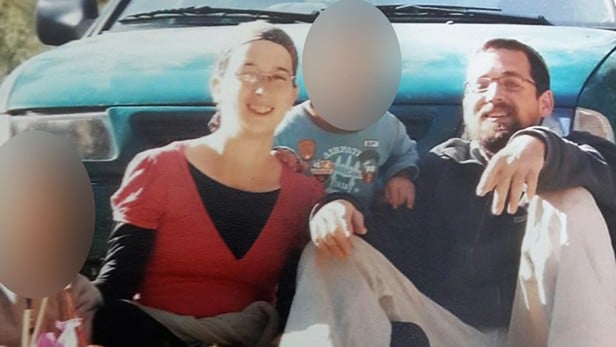
Hamas was behind the attack. Like the kidnapping and murder of the three teenage boys last June, IDF intelligence officials say that this time, too, the perpetrators were not members of a cell that took orders from abroad or from Gaza, but were “home-grown.” Several of my fellow reporters and commentators believe that the intelligence assessment is wrong, since several members of the five-man cell now in custody had participated in attempted terror attacks in recent months.
But a visit to the homes of the families of two of the cell members shows how complicated, indeed, almost impossible, the Shin Bet’s job is. One of them, Ghareb Aliwi, is a cleric and a muezzin at the mosque. He is also a former inmate of an Israeli prison, though he has kept a low profile over the past six years. His family, including his wife Da’a, told me during my visit to their home in a southern neighborhood of Nablus that Aliwi, 37, has worked for years in the neighborhood mosque and avoids any “problematic” activity. She said that on the day of the attack, Aliwi was in the mosque at morning prayers, and attended evening prayers that day as well.
“He was even at the mosque for the nighttime prayer, during which we saw the lights of the Jews after the ‘operation,’” she said. “The accusation is false. He could not have been part of the terror attack at all.” There are signs of adherence to Islam in their home, but no signs of support for Hamas.
The second member of the cell whose home I visited is far from a typical Hamas member. He is the Palestinian man who was kidnapped from a hospital in Nablus by Israeli undercover agents after it was claimed that he had been wounded by accidental gunfire from his fellow cell members in the course of the terror attack. His name is Karam Rizk. His uncle Ashraf and his wife Hanadi say that he is a “fine young man.” He worked in the family construction business together with Ashraf, who says that he poured concrete several times on the day of the attack.
According to his nephew, he was hospitalized with a broken arm that resulted from the penetration of a sharp object, “but it wasn’t a bullet,” Ashraf said. “I tell you that they are wrong. They said that he had used a fictitious name, Al-Masri, which is our actual family name. They said he had fled to the hospital after being wounded by the gunfire. So I ask you: If he had gotten into that kind of trouble, would we have let him go to the hospital? I would have brought him home and had a physician come in special, so that nobody would know that he had been wounded.”
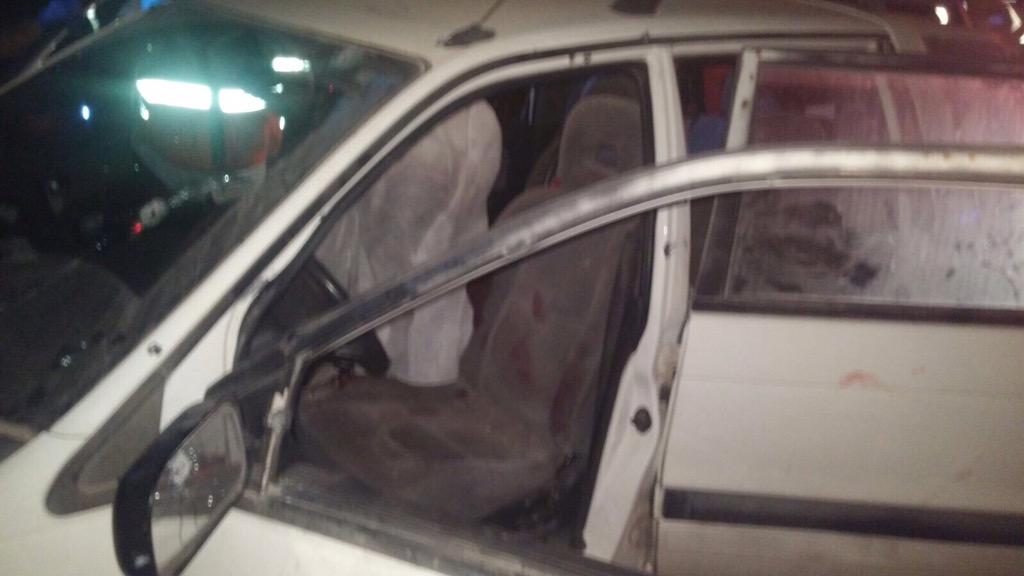
On Thursday evening, IDF troops went to the family home in the Jabal Shamali neighborhood. They measured the rooms and the windows, evidently in preparation for demolishing the house. Dozens of young Palestinian men clashed with them there. The house contained no religious symbol or sign of Hamas.
Karam Rizk was not known as a “security risk,” his family said. They claimed that he has visited Israel more than once with the authorities’ permission.
Hence the question arises as to whether Hamas might have set up “sleeper cells” in various places throughout the West Bank, with operatives whom no one knows are members of the group, but who go out at zero hour to perpetrate terror attacks and bring about a general deterioration in relations between Israel and the Palestinian Authority. The answer seems to be yes. Such cells, whose purpose is both to damage the status of the Palestinian Authority and to strike at Israelis, have been uncovered in the past.
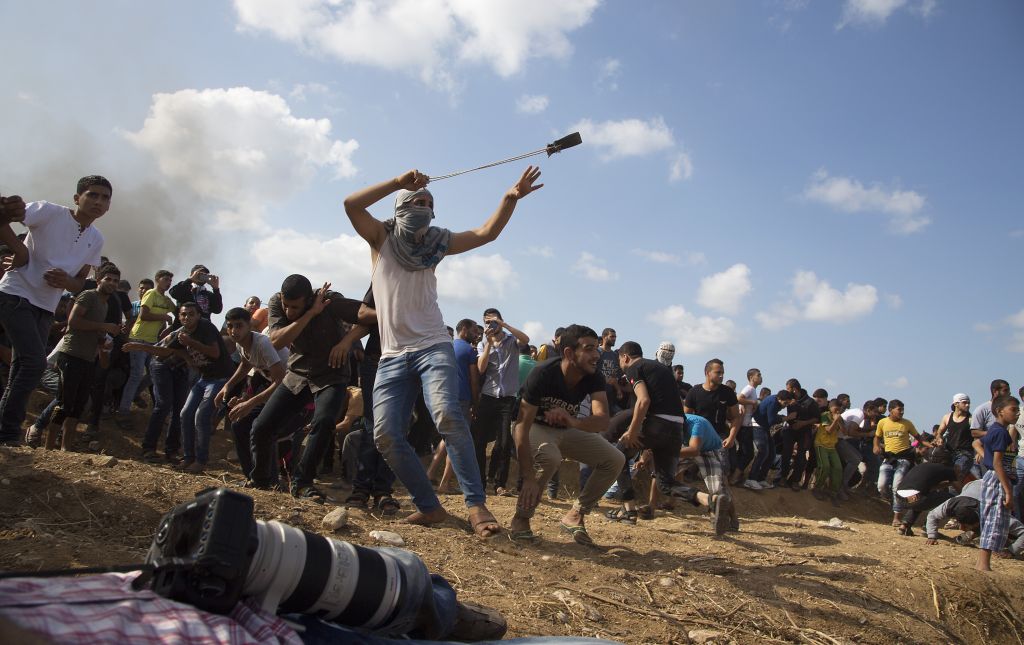
Resolutely opposed to the very fact of Israel’s existence, Hamas is trying to encourage more terror attacks and more escalation in every possible way. Its mission is to spread security-related chaos in the West Bank in order to get rid of the Palestinian Authority as well. Its Gaza leader Ismail Haniyeh called to “strengthen and increase the intifada” Friday; hours later, at least six Gazans — Hamas and Islamic Jihad members, according to Palestinian media — were shot dead by the IDF at the border.
If the “spontaneous” terror attacks are not sufficient, we can guess that the Hamas military wing will intensify its attempts to carry out more organized attacks like the murderous attack on the Henkins.