In furious speech demanding ‘unity government,’ Netanyahu claims Arab MKs want Israel’s destruction
Eisenkot slams PM's ‘hate-filled speech’ at Knesset swearing-in, says it proves Netanyahu unfit for office; opposition MKs demand answers over aides' Qatar ties, lack of Oct. 7 probe
Caretaker Prime Minister Benjamin Netanyahu on Tuesday delivered a furious address to the newly sworn-in Knesset, demanding a national unity government and warning his rivals against setting up a “narrow” government backed by either or both of the Arab parties, whose members he accused of seeking Israel’s destruction and supporting terrorism.
Yashar leader Gadi Eisenkot said Netanyahu’s “hate-filled” speech only further proved that he was unworthy of remaining in office, while Arab lawmakers panned him as a “racist” and said his words only made them more determined to help oust him from office. Later, Eisenkot’s Yashar party canceled talks it was set to hold on Wednesday with Likud representatives.
Having lost his parliamentary majority in last month’s elections, and after President Isaac Herzog on Sunday handed Eisenkot the mandate to form a government, Netanyahu has continued a campaign he pursued throughout the election season to delegitimize the Arab parties and portray them as supporters of terrorism, in an apparent effort to undermine the ability of Eisenkot and his allies to form a government with their backing.
At times in his speech, opposition lawmakers interrupted Netanyahu, demanding answers over his aides’ alleged ties to Qatar and his refusal to establish a state commission of inquiry into the October 7, 2023, Hamas-led massacre.
Netanyahu delivered his incendiary speech in the parliament’s Chagall State Hall soon after the swearing-in of the new Knesset, at what is customarily a celebratory event that concludes with Knesset party leaders gathering for joint photos.
He began by highlighting the threat Iran still posed to Israel despite two wars against its regime, but devoted much of his address to denunciations of Arab Knesset members and of the opposition Zionist parties for contemplating partnering with them.
“After we staved off the immediate existential threat of the Iranian nuclear program, Iran is working to renew this program. The only way to remove this existential threat permanently is by toppling the regime of the ayatollahs,” Netanyahu declared. He then listed achievements in the wars since the Hamas-led October 7, 2023, massacre, claiming, “We changed the face of the Middle East.”
Amid the ongoing threats faced by the country, Netanyahu insisted: “We must do one thing: set aside every other consideration and form a national unity government. Only such a government will be able to meet challenges of this magnitude. It is impossible to handle them with a narrow government.”
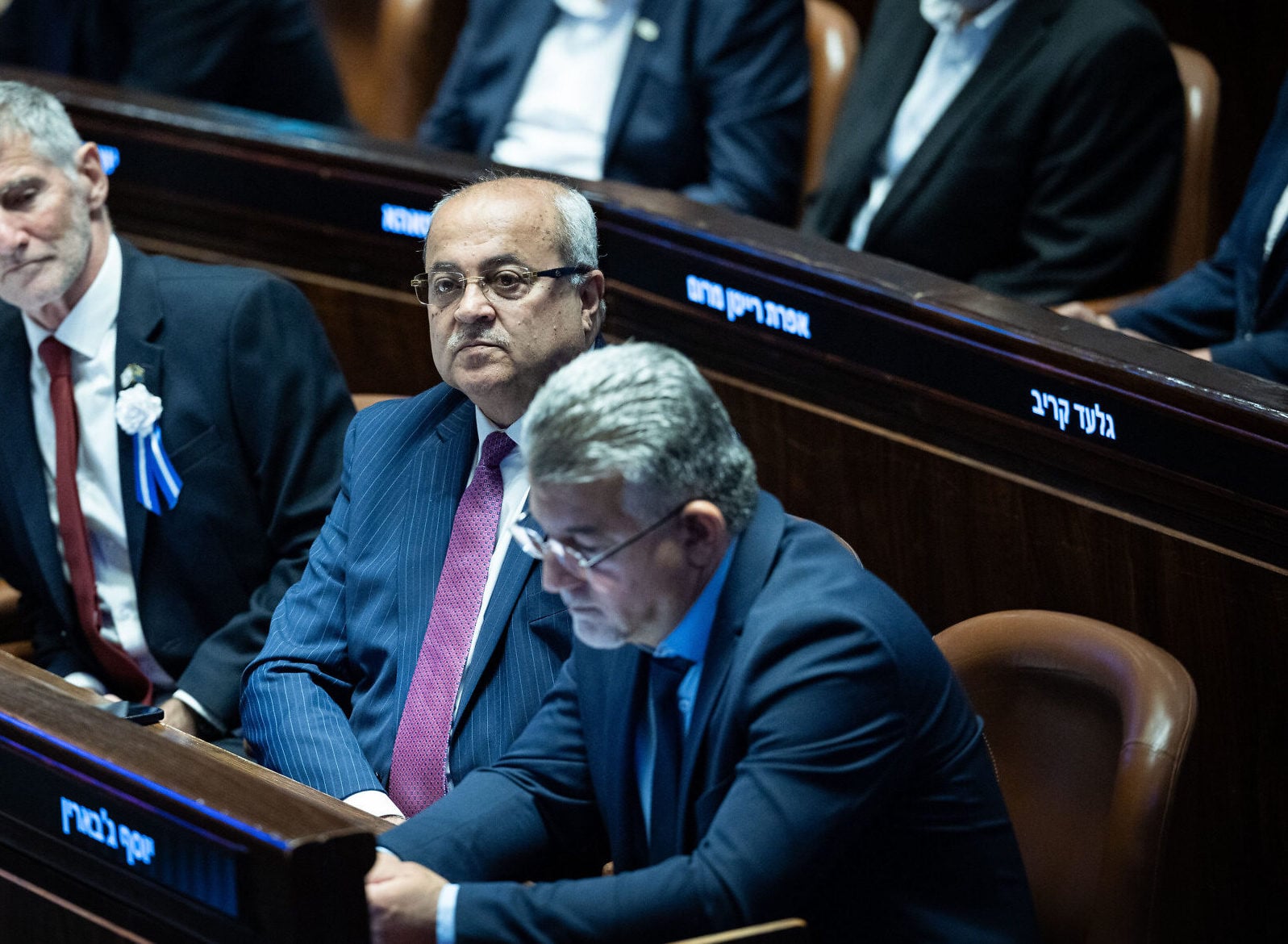
He then attacked his opponents for considering forming a coalition with the support of Arab lawmakers, whom he branded “terror supporters, haters of Israel.”
“I am not talking about Arabs. Arabs vote Likud, vote for all the parties. I am talking about people whose ideology is hatred of Israel and the destruction of the Jewish state. People who say Hamas is just a charitable organization. Excuse me: Not a terrorist organization at all,” he said, referencing comments made by Ra’am MK Yasser Hujirat in a recent i24news interview ahead of the election.
Hujirat clarified in a statement on Tuesday that his words were edited and presented in a “tendentious and distorted” way, insisting he did not believe Hamas was a charitable group and condemned its actions.
“Are you prepared to be dependent on those whose purpose is the destruction of the Jewish state?” Netanyahu asked. “You would place the fate of our country into their hands? You would prefer them over Zionist parties that represent a vast Zionist public — a public of warriors, of heroes, of IDF wounded, of bereaved families, a public that sacrifices so much, that is so loyal, powerfully, that gives so much of itself?”
Netanyahu went on to reject the distinction between Ra’am, which has expressed willingness to join an Eisenkot-led coalition, and the Joint List, accusing both parties of opposing Israel’s existence as a Jewish state.
“As regards their attitude to the Jewish state, there is no difference… The two both agree that the Jewish state must be destroyed. They are only at odds on the question of which kind of Palestinian state will arise here on the ruins of the Jewish state — whether an Islamic state in the Muslim Brotherhood mold, like Hamas in Gaza, or a nationalist Palestinian state in the Fatah mold. That is the whole difference,” he claimed.
The accusations come as Eisenkot seeks to translate the anti-Netanyahu bloc’s 67-seat parliamentary majority into a governing coalition, with the question of cooperation with Arab parties emerging as a central point of contention among his prospective partners.
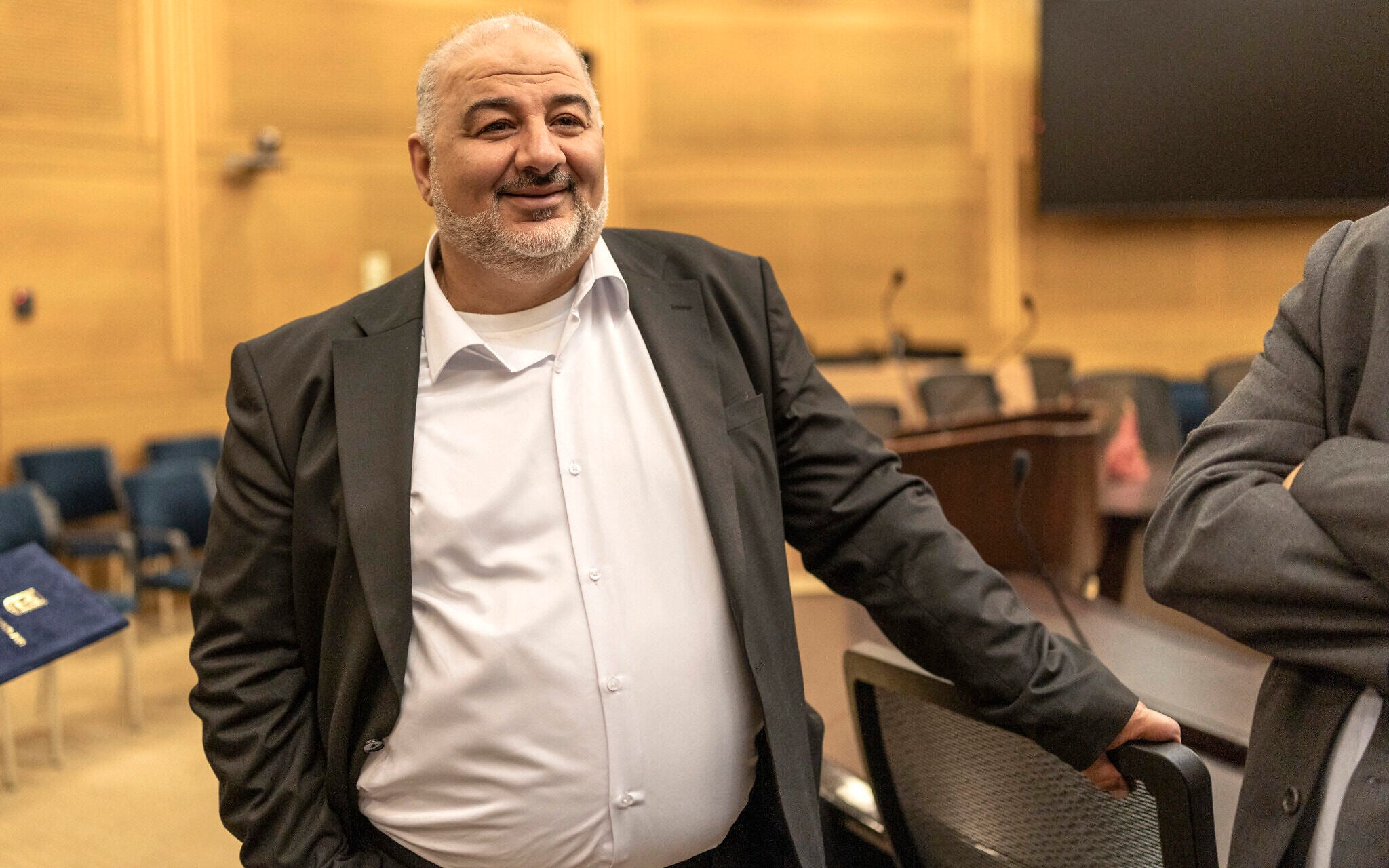
Ra’am chair Mansour Abbas has repeatedly said Netanyahu reached out to him in 2021 to form a government, which ultimately failed, with the Islamist party instead joining the Bennett-Lapid government.
Netanyahu also brought up allegations of foreign election interference, of which police are said to have found there is little evidence. Judicial officials have said the scope of the allegations, even if proven, would not impact the results.
“We must, simply must, investigate until the very end the serious suspicions of the involvement of foreign actors with massive funds, who are suspected of influencing the election results. All the restrictions that the attorney general placed on [investigating] these serious suspicions must be lifted,” Netanyahu said.
Netanyahu heckled
B’Yachad party chair and former prime minister Naftali Bennett interrupted him, apparently shouting: “What about a State Commission of Inquiry [into October 7]? Why don’t you declare Qatar an enemy state? What about your Qatari advisers?”
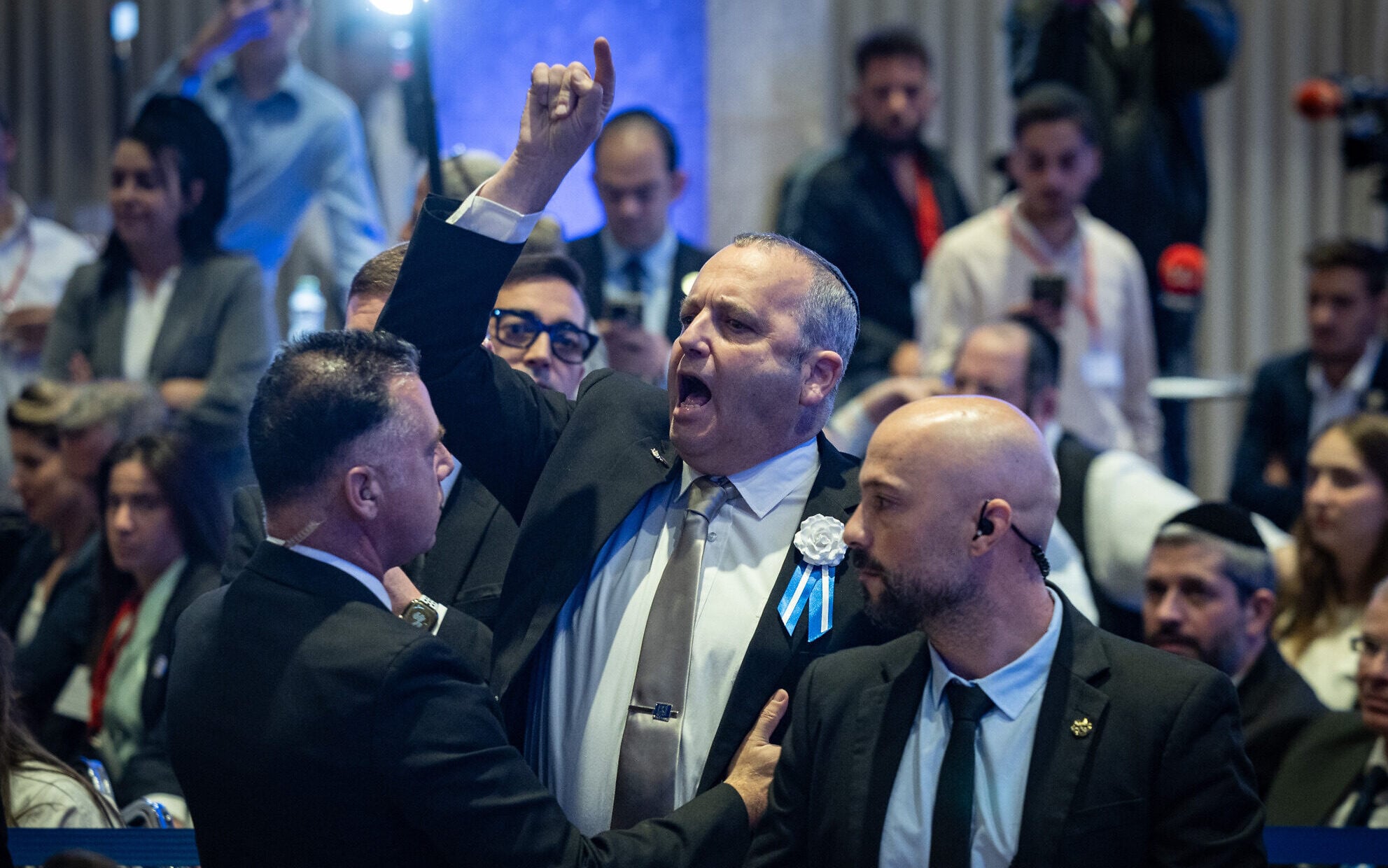
Likud faction chairman Ofir Katz fired back at Bennett: “Investigate it together with your Tibi and Abbas,” referring to Joint List lawmaker Ahmad Tibi and Ra’am’s Abbas.
Bennett was also seen in footage arguing with Netanyahu’s wife, Sara, during the interruptions.
שרה נתניהו vs נפתלי בנט pic.twitter.com/aNYWzKT8TB
— מיכאל שמש Michael Shemesh (@shemeshmicha) November 10, 2026
Meanwhile, Democrats chairman Yair Golan and members of his party walked out of the hall in protest, while Democrats MK Gilad Kariv shouted: “How much money did you receive from Qatar?”
“Ever since the balcony in Zion Square, you haven’t stopped inciting,” Kariv yelled, referring to an October 1995 rally addressed by Netanyahu, at which protesters chanted “Death to Rabin,” a month before prime minister Yitzhak Rabin was assassinated by a Jewish extremist.
Netanyahu pursued a policy for years of facilitating the transfer of Qatari funds into Hamas-ruled Gaza, while several of his closest advisers are being investigated for alleged payments to promote Doha’s interests while working for the prime minister.
His longtime adviser Jonatan Urich recently reportedly admitted during police questioning that he received hundreds of thousands of shekels for work connected to Qatar that continued after the October 7 attack. Urich continues to work for the prime minister.
Netanyahu has also refused calls to establish a state commission of inquiry into the failures surrounding October 7 and has never accepted direct responsibility for the attack.
A warning to the ultra-Orthodox
As Eisenkot works to piece together a government — potentially with the support of ultra-Orthodox parties — Netanyahu told Haredi lawmakers in his speech not to trust the bloc trying to unseat him, arguing that Israel’s Jewish identity was at stake.
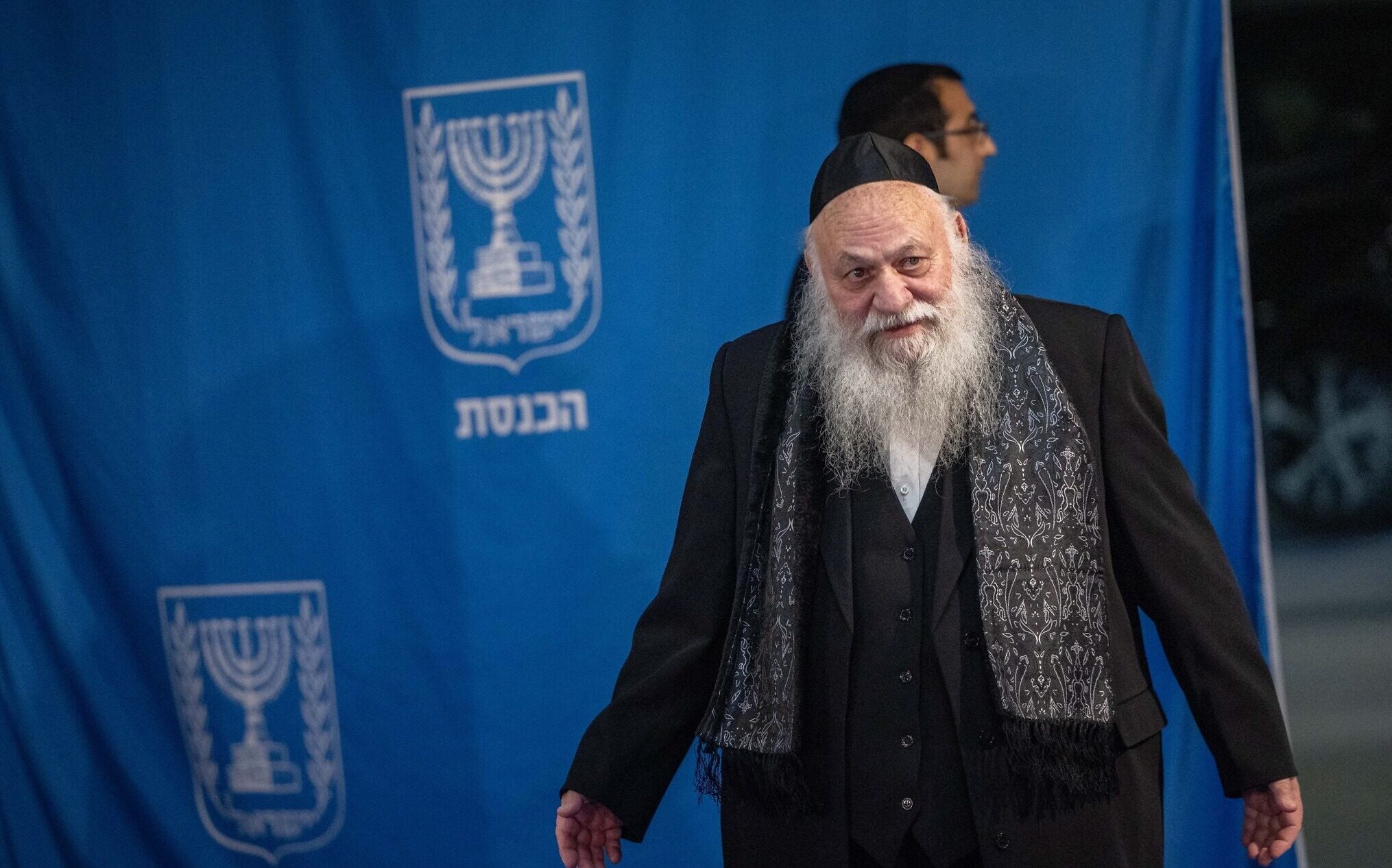
“And I say to our Haredi brothers,” Netanyahu exhorted, “a narrow government [led by Eisenkot] must not rise either. Because I know what is at stake — not only the enormous security challenge, but also the great internal challenge of preserving the Jewish identity of the State of Israel.”
Netanyahu told Haredi lawmakers that they “represent a large public that is deeply concerned about the state’s Jewish identity, a public that loves Israel and that settles in the heart of the Land of Israel.”
He said that his bloc has “guarded and will continue to guard Israel’s sanctities — and you know perfectly well who your partners would be in a narrow government, and what their attitude to Israel’s sanctities would be.”
“Our shared task is to complete the regularization of the status of Torah students, and to pass a conscription law, by broad consensus, together with your spiritual leadership,” said Netanyahu of legislation on ultra-Orthodox enlistment and exemptions that he has been promising for over a decade.
Haredi party United Torah Judaism has been frustrated with him for not passing legislation exempting yeshiva students from the draft, and declined to recommend him to Herzog for another term. Shas has remained in Netanyahu’s camp.
“I don’t need to tell you — you know perfectly well — they will promise you mountains and hills,” he said of the Eisenkot camp, which is working to form a government without Netanyahu. “But a minute after a government headed by the left is formed, God forbid, all those promises will evaporate. They will have a safety net from the Arab parties. They’ll appoint whoever they want to appoint. They will do as they please.”
Netanyahu’s bloc holds just 53 seats, compared to the 67 held by parties opposed to him, including Ra’am and the Joint List. However, Eisenkot’s path to assembling a coalition is unclear, with three of the Jewish-led opposition parties thus far refusing to partner with the Arab parties.
It is also unclear if he can secure a partnership with UTJ, which rejects Eisenkot’s principle of mandatory national service for all.
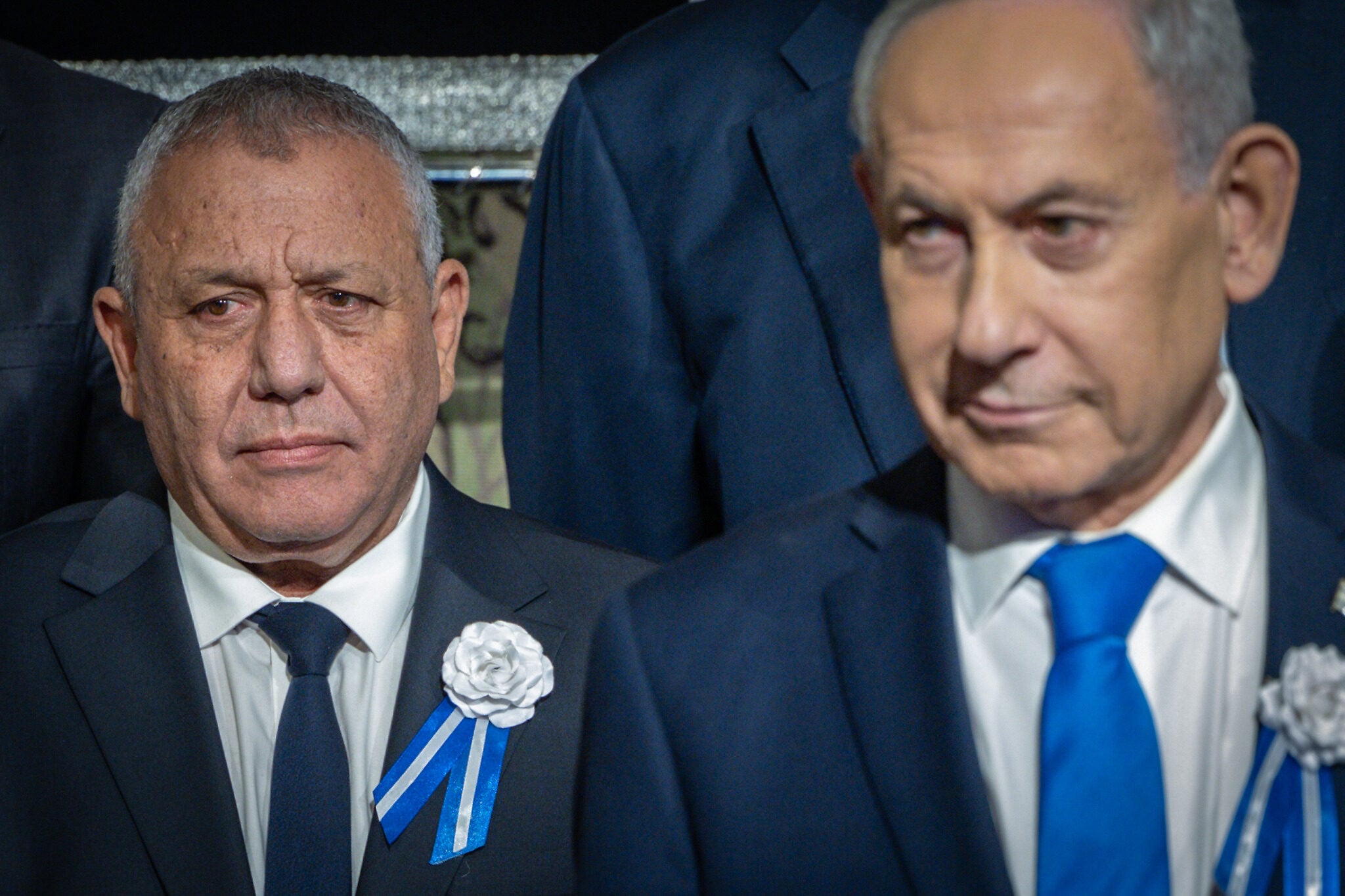
Eisenkot: Netanyahu’s ‘hate-filled speech’ leaves me even more certain he’s unfit for office
Netanyahu’s rancorous speech drew sharp retorts from his opponents.
In a post on X, Eisenkot slammed the address, saying it only strengthened his view that the Likud leader is unfit for office.
“I sat and listened to the delusional, divisive, hate-filled and shameful speech of the outgoing prime minister, in which he exploited a state occasion at the swearing-in of the 26th Knesset,” Eisenkot wrote.
“I became even more convinced that he is unfit to remain in office for even one minute more.”
The Yashar chair repeated his pledge to establish a “national emergency government,” saying Netanyahu’s “rule is dividing Israel and endangering its security.”
Meanwhile, the Joint List said it would work to remove Netanyahu, calling his speech “deranged, inciting and racist.”
“The bloodthirsty and criminal prime minister is in a state of complete hysteria,” the party said. “There is no other way to explain the deranged, inciting and racist speech he delivered today.”
“We will fulfill, as soon as possible, the will of our people: more than half a million citizens of this country who want to remove Netanyahu, the Speaker of the Knesset and his Kahanist government [referring to the ideology of slain extremist rabbi and politician Meir Kahane], and consign them to the dustbin of history,” the Joint List statement continued. “We are committed to doing everything in our power to make this happen, as soon as possible.”