In spectacular flip-flop, Liberman has become the architect of a minority government
Yisrael Beytenu leader is ready to pay any price to see Netanyahu replaced; having reversed himself on the Haredim and on Ra'am, he has been handed the defense and justice portfolios by Eisenkot
If a minority government is formed next week, it is Avigdor Liberman who should be submitting the invoice for it. The Yisrael Beytenu leader has turned a minority government backed by the Haredim and Ra’am — a prospect nobody believed in — into a genuine political proposition, and he is pushing it with everything he has and at any price. Including a personal price he appears perfectly happy to pay.
Liberman is not being dragged into government; he is the man loading everybody onto the wheelbarrow and hauling it all the way to the President’s Residence. He is the pacesetter, showing the so-called change bloc’s leaders how to shed every value they hold and turn 180 degrees, to produce a government that will push the right, far-right, ultra-Orthodox, Benjamin Netanyahu-led coalition out of office.
Liberman, who has been the crudest and most brutal opponent of the Haredim, would apparently today be willing to head up a Jerusalem Faction demonstration at the Geha interchange and block roads in the campaign against conscripting them. And his determination is proving infectious — both to his colleagues in the change bloc, who are ready to capitulate regarding their previous commitment to an equal sharing of the military burden, and to the Haredim, who have seemingly come to believe that his new intentions are sincere.
On Thursday, United Torah Judaism MK Yitzhak Goldknopf related excitedly in an interview with the Haredi radio station Kol Chai that Liberman had met him and declared that he owed the Haredi public a sweeping apology. No less.
The Haredim, or at least UTJ, are showing signs of being swept toward Liberman’s envisioned government. He is promising them the world, and they are thrilled by the incoming defense minister’s pledges. Those who have battled with all their strength for decades against military conscription are now being handed a green light to regularize the status of yeshiva students — the prelude to a blanket exemption from IDF service for every young Haredi man.
On Thursday, attorneys Raz Nizri (representing prime minister-designate Gadi Eisenkot’s Yashar party) and Boaz Ben Zur (representing UTJ) began working in earnest on a conscription law designed to satisfy the High Court of Justice. It is a complicated assignment, and one that could bring the whole enterprise down.
ממשלת השינוי קורמת עור וגידים.
נתניהו ינסה לטרפד את הקמתה בכל מחיר. אני לא פוסל אפשרות שיציע לגדי איזנקוט רוטציה, שבה נתניהו יהיה שני, אבל לכולם צריך להיות ברור: זהו תרגיל בלבד.
במיוחד אחרי ההתפתחויות אתמול בבית המשפט, נתניהו רוצה יותר מכל בחירות חדשות. לכן הוא ימשוך את המשא…
— אביגדור ליברמן (@AvigdorLiberman) November 26, 2026
The Haredim are deeply anxious about this, but they are counting on the court’s justices not rushing to strike down an exemption law presented by the leading figures of the change bloc and the left in the Knesset. They may be forgetting that the justices are, as a rule, primarily concerned with upholding the law — not politicians hungry for revenge and power, on the right or on the left.
Liberman’s spectacular capitulation is proving every bit as swift and as emphatic in the Arab direction. I have been covering the political beat for many years, and I cannot recall a double flip-flop quite like it.
Having promised the Haredim a draft-evasion law like no other, Liberman is now imploring his colleagues to rely on Ra’am — a party he tried in vain to prevent from so much as running in last month’s election, through petitions he filed with the Central Elections Committee.
This move, too, has taken his colleagues in the change bloc by surprise. Liberman’s associates, for their part, are trying to render it less remarkable and more palatable, recasting both the terminology and Ra’am’s intentions.
“We will come to the president with 55 seats and a solid Jewish majority,” one of those associates told me. “Ra’am will do whatever they like. Let them support us, let them abstain — whatever they want. We will give them the rights they are entitled to. What’s the problem? Mansour Abbas is a moderate. He says ‘live and let live.’ If he doesn’t want to stand for Hatikvah, he doesn’t have to. What do I care?” (Abbas, in fact, did stand for the national anthem, unlike all other Arab MKs from Ra’am and the Joint List, when the Knesset was sworn in earlier this month.)
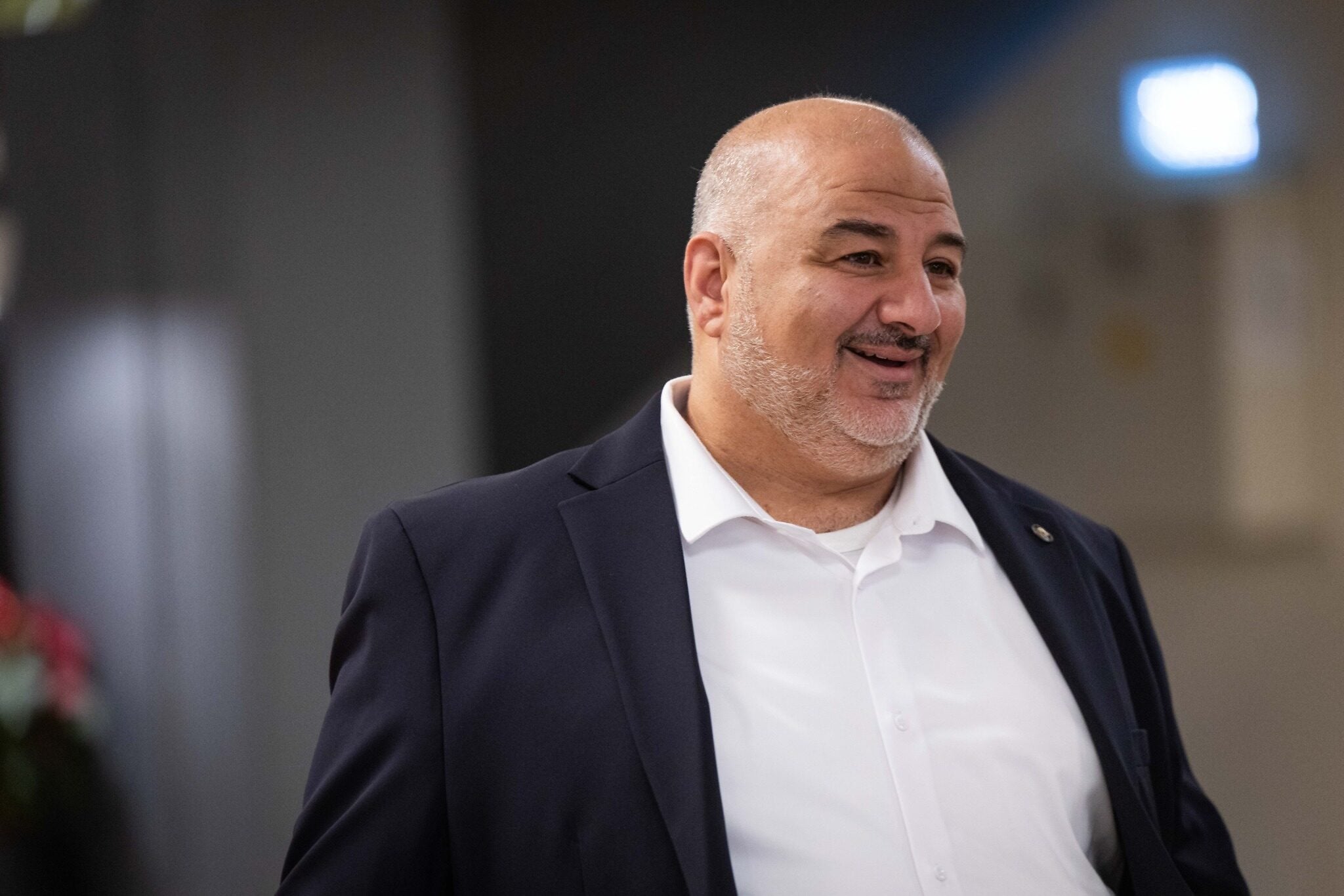
It is safe to assume that prime minister-designate Eisenkot is pleased with Liberman’s groundwork, which is clearing away a good many mines. In the coalition agreement signed on Tuesday, Eisenkot handed Liberman the defense and justice ministries — and the security cabinet seats that go with them — even though his Yisrael Beytenu is the smallest faction in the change bloc.
Taking Liberman’s place in the troublemaker slot is Naftali Bennett. Liberman is leading the bloc against any move toward unity with Netanyahu, and published a sharply worded post on the subject on Thursday. (“What Netanyahu wants more than anything is new elections,” he warned. “That is why he will drag out negotiations over a ‘unity’ government until the last moment, look for a pretext to blow them up, and even if such a government is formed, he will try to engineer a crisis within a few months to drag Israel back to elections.”) But Bennett keeps pulling stubbornly in that direction and no other.
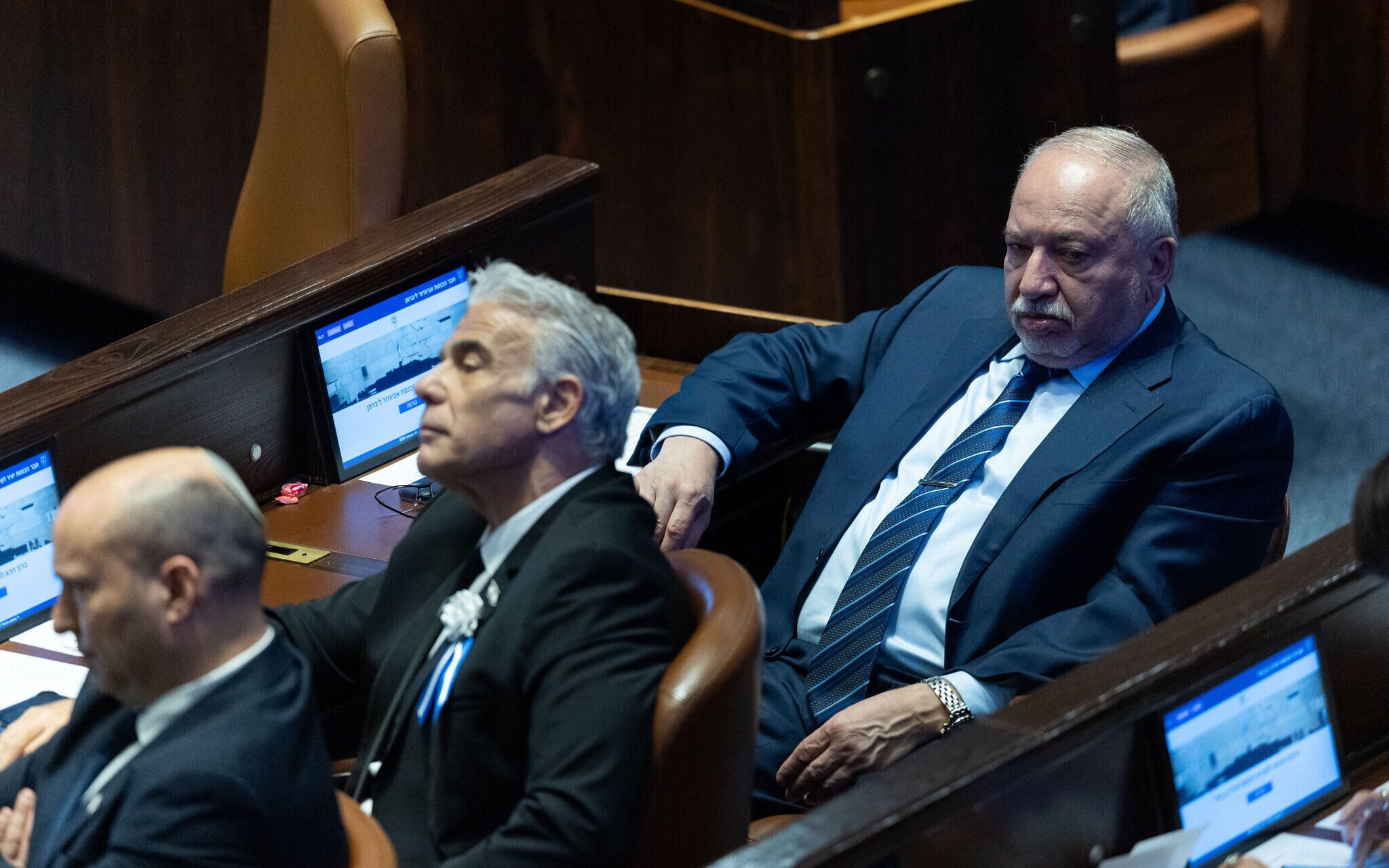
As Bennett sees it, a minority government is tantamount to disaster: It requires degrading compromises, it relies on the support of extremist Arabs, and it will not be able to function for any length of time. “It’s a crappy government,” Bennett has told his colleagues.
And so Liberman’s next assignment, together with Eisenkot and Bennett’s B’Yachad party No. 2 Yair Lapid, is to soften up Bennett.
A senior figure in the change bloc reckons Bennett will compromise in the end, once he grasps that a serious unity government with Netanyahu is not remotely feasible. But persuading him will be hard going and could drag Eisenkot and the coalition negotiations beyond the 28 days allocated by President Isaac Herzog, which end on December 9, and into the extension period of up to 14 days that Herzog is entitled to give him.