In the PA, Ramadan festivities come with an undercurrent of concern
The relative quiet in the West Bank is largely due to a security coordination with Israel that -- despite Abbas's combative proclamations -- is tighter than ever
RAMALLAH — It’s Ramadan here, and one would be hard-pressed to note any change in the general atmosphere due to the “lone-wolf intifada.” The streets are full of people, the markets are bustling, and the stores are announcing sales and discounts. The Ramadan shopping frenzy is at its peak. Every so often, a sign pops urging a boycott of Israeli goods, but no one seems to observe them or get all that excited over them.
The halwiyat, or cake shops, are working overtime, turning out one kataif — the special cake eaten to break the daily fast — after another. For approximately 16 hours of every day it is forbidden to drink, eat, smoke or engage in sexual relations, and the kataif is one of the high points of the iftar, or break-fast, meal that marks the end of those prohibitions. It’s a kataif rush.
Under the surface, though, the situation for Palestinians remains bleak and volatile. Despite the decline in the level of violence in the conflict with Israel, almost nothing has changed. The political horizon is blocked, and the tension between Hamas and the Palestinian Authority remains in place as well. Another round of talks in Qatar between Fatah and Hamas delegates ended last week with a whimper. There is no intra-Palestinian reconciliation. Fatah officials were furious over the photograph that the Qatari regime published from the iftar meal featuring officials from both groups, including Fatah delegate Azzam al-Ahmad enjoying a plate of mutton. Hamas and Fatah went back to attacking one another, and in the West Bank and Gaza, the security forces of both groups went back to arresting and hunting the members of the underground movements. It’s business as usual.
The bottom line of all this, for Israel, is that security coordination with the Palestinians continues. Indeed, despite the PLO Executive Committee’s decision to end the coordination, some say it has even improved, and is stronger than ever. Despite PA President Mahmoud Abbas’s tough speech in the European parliament on Thursday, during which he accused Israel of mass-murdering Palestinians, Hamas websites are publishing near-daily reports of more and more raids and arrests of Islamic Jihad and Hamas operatives by his security forces. And despite the attempts of some spokesmen of these organizations to deny the existence of the coordination, it seems that, in reality, relations between the Israeli and Palestinian security establishments are blossoming at all levels: the army, the Shin Bet, and the District Coordination liaison offices.
Just recently, for example, a Palestinian regional commander whose wife gave birth to a son invited his Israeli counterpart to the celebration. While this may sound far-fetched given the diplomatic and political situation, Israelis and Palestinian commanders have been known to form personal relationships on many occasions. In addition, in recent months the PA succeeded in preventing a significant number of terror attacks against Israeli targets, whether by keeping an eye on social media or by following specific intelligence, which often comes from the Israeli side.
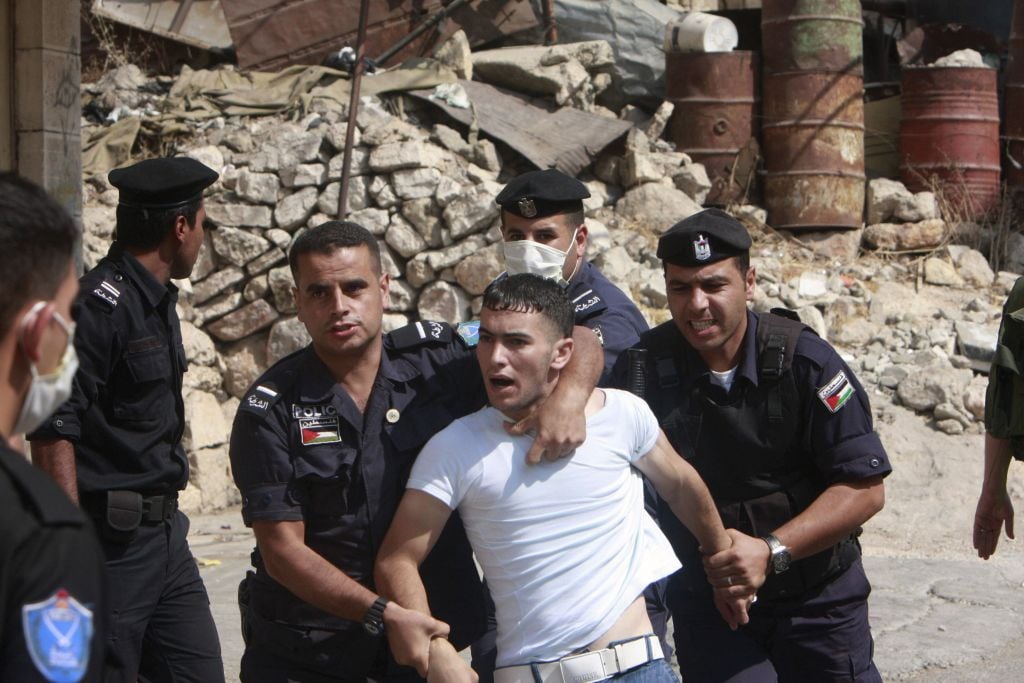
The PA’s security services also made sure to neutralize the usual “points of friction” between young Palestinian men and Israeli troops. At the same time, there has been a decrease in the IDF’s threshold of activity inside West Bank cities, which has led to a reduction in the number of confrontations between the sides. Unexpected incidents of “non-classic” coordination take place as well. One outstanding example of this is the village of Beit Ummar, between Bethlehem and Hebron. In the past, during almost every funeral that took place there, Palestinians threw rocks at Israeli cars traveling along Route 60, leading to gunfire from the Israeli side, wounded Palestinians, and yet more funerals. This went on until the head of the local authority took action: He stood, with his own car and his friends, between the young men and the soldiers, and prevented more people from being wounded and killed. Once the number of casualties decreased, the number of rock-throwing incidents also declined to an extent.
Some might point out that this coordination isn’t the fruit of any great Palestinian fondness for Israeli Jews. They are probably right. The PA’s mode of operation has changed, mainly as a result of its rivalry with Hamas and the realization that the Al-Quds Intifada, as the PA has termed it, served Hamas’s interests while undermining its own status. That is why the PA decided to confront the terrorists and demonstrations. Polls showing a decline in the popularity of Abbas and his Fatah party, along with the results of the elections in Birzeit University (a barometer of Palestinian public opinion), in which Hamas won, were a wake-up call for the PA, and showed that the lone-wolf attacks were a double-edged sword. The problem was that public opinion pressed for an end to security coordination, and the politicians of Fatah and the PLO, like good politicians everywhere, saw which way the wind was blowing and quickly came out against maintaining it. Hence the statement on stopping the security cooperation that was issued by the PLO Executive Committee, supposedly the highest ranking Palestinian body, which is supposed to make strategic decisions. As stated, nothing actually happened.
Not raising a white flag
Many Israelis remember Fatah Central Committee member Jibril Rajoub — currently also the chairman of the Palestine Olympic Committee and of the Palestinian Football Association — as the Preventive Security Service chief in the West Bank and a positive, sane voice who always supported coexistence and a peace treaty with Israel. In recent years, perhaps due to competition at the highest levels of Fatah and an attempt to reinvent himself, Rajoub has come out with statements that were particularly extreme, including one to the effect that if the Palestinians possessed a nuclear bomb, they would use it against Israel.
But in practice, Rajoub is still the same man, the same Abu Rami (his extreme statements, it seems, are fueled by growing pessimism regarding the Israeli government). A somewhat more personal and less fiery conversation indicates that he still wants a peace treaty with Israel on the basis of the two-state solution.
In an interview in his office in northern Ramallah last week, I asked him why no action had been taken following the PLO Executive Committee’s decision to cut security coordination. Rajoub, a seasoned politician who is accustomed to dealing with the Israeli media, gave a particularly long-winded answer that did not resolve the contradiction.
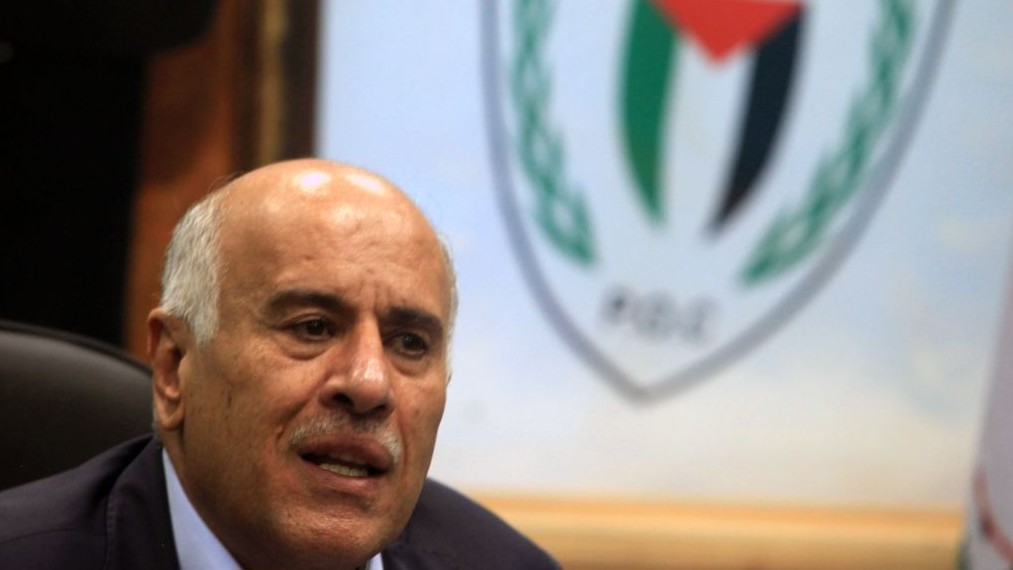
“In the 1990s we decided on reconciliation between the peoples according to an agreement that was approved by the institutions of both sides. The president of the United States at the time supported it too, as did the UN’s institutions. A mechanism for cooperation between us and you was created in many areas, not just security, of course, but also economics, water, talks. We came up against quite a few difficulties over the years, but recently we realized that one side — you, the Israelis — was no longer honoring the agreement that was supposed to have led to the end of the occupation and the establishment of a Palestinian state while solving the Israelis’ rational concerns. You focused only on the security aspect.
“For us at the moment, there is a decision to stop the bilateral relations in all the areas and turn to the international community. There is no trust between us, no hope — yet at the same time we must act like a responsible authority and prove that we are worthy of a state. We are at a point where we have decided to cut off relations with the Israeli side. It is not yet clear when this will happen. It could be tomorrow, today or any other day. The Israeli government is not a partner as far as we are concerned, and you must realize that we are not pushovers. We are currently engaged in an effort to avoid hurting the camp on your side that believes in coexistence and peace, and to avoid damaging the international community’s efforts, led by France.
“I hope that the Israelis will get the message and realize that the existential danger, as far as they are concerned, comes from continuing the cruel, racist, and fascist occupation, which is like a malignant growth. The establishment of a Palestinian state alongside the State of Israel is the only thing that will lead to the protection of the State of Israel’s national aspirations. While I hope that our nonviolent message will be received on your side, we have no intention of raising a white flag.”