In Wadi Joz, prayers turn to protests
Palestinian protesters clash with police for hours in East Jerusalem neighborhood and other flashpoints in the capital
Hundreds of East Jerusalem residents squared off against dozens of well-armed border guards and police officers on Friday in the neighborhood of Wadi Joz, just a stone’s throw from the Old City’s Lions Gate, where last week two police officers were gunned down in a terror attack that set off a chain of events felt all over the world.
On Friday morning, Israel announced that only Palestinian men over the age of 50 and women of all ages were allowed to visit the Temple Mount on Friday, in order to prevent protests on the holy site or in the Old City.
The protests, which occurred in Arab neighborhoods across the capital, in the West Bank and in some Muslim countries, were against Israel’s decision to set up five metal detectors at entrances to the Temple Mount.
The detectors were installed last Sunday, following the terror attack in which three Arab Israeli assailants used guns that had been smuggled into the Temple Mount to kill the two Israeli officers.
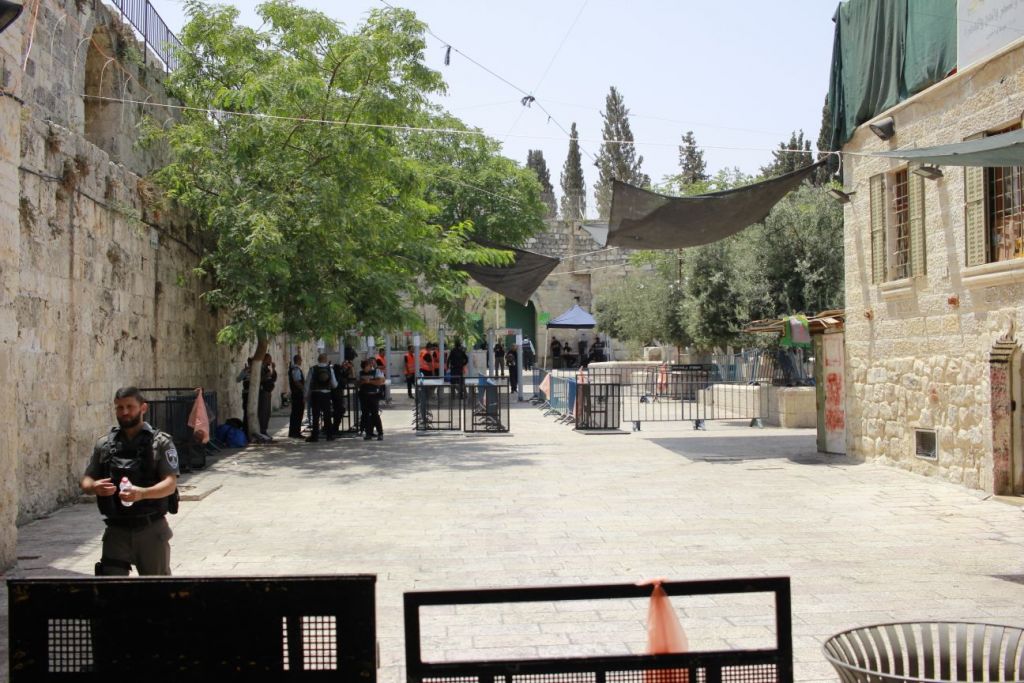
The new security arrangements were condemned by the Waqf, the Jordanian trust which oversees administrative issues on the Temple Mount, as a unilateral action that was designed to impose greater Israeli control over the compound. The Israeli government said the detectors were a security measure that was evidently necessary, and that there was no change to the status quo.
Furious over the Temple Mount situation, Muslim residents of East Jerusalem have staged violent demonstrations on an almost daily basis since Sunday.
On Friday, a holy day for Muslims, in which tens of thousands often visit the Temple Mount, the government decided to keep the metal detectors in place.
By imposing the aforementioned age restriction on men, the police were able to keep Friday’s riots from taking place in the Old City itself. Instead, the clashes took place in the surrounding neighborhoods of the Israeli capital
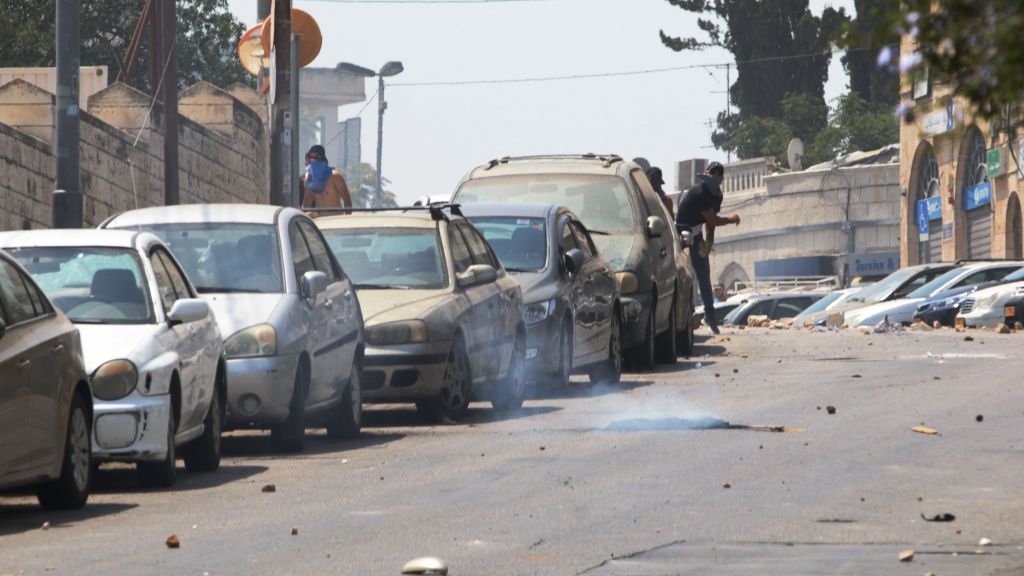
Two East Jerusalem residents were killed in riots in the East Jerusalem neighborhoods of Ras al-Amud and a-Tur and a third was killed in Abu Dis in the West Bank. The army said it arrested at least 17 rioters.
In Wadi Joz, whose roads lead to the Old City’s Lions Gate, the riot broke out, as all the rest have this week, at the end of afternoon prayers.
Ahead of the prayers, thousands of Muslim men gathered at a police checkpoint at the entrance to the area, with the crowd stretching back into the neighborhood.
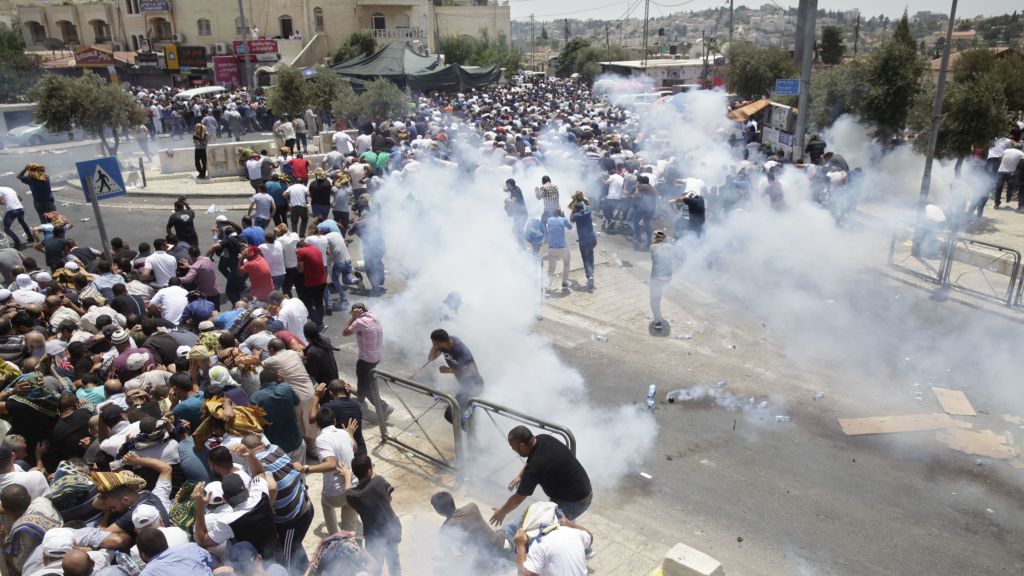
The men performed their prayer service, facing a few dozen well-armed police officers, four of them on horseback, and a police water cannon truck.
As the prayers ended, there was a stillness in the air broken when a group of worshipers burst into song and cheer. When the policemen on horseback and the water cannon truck began moving toward the crowd, worshipers started throwing plastic water bottles at the officers.
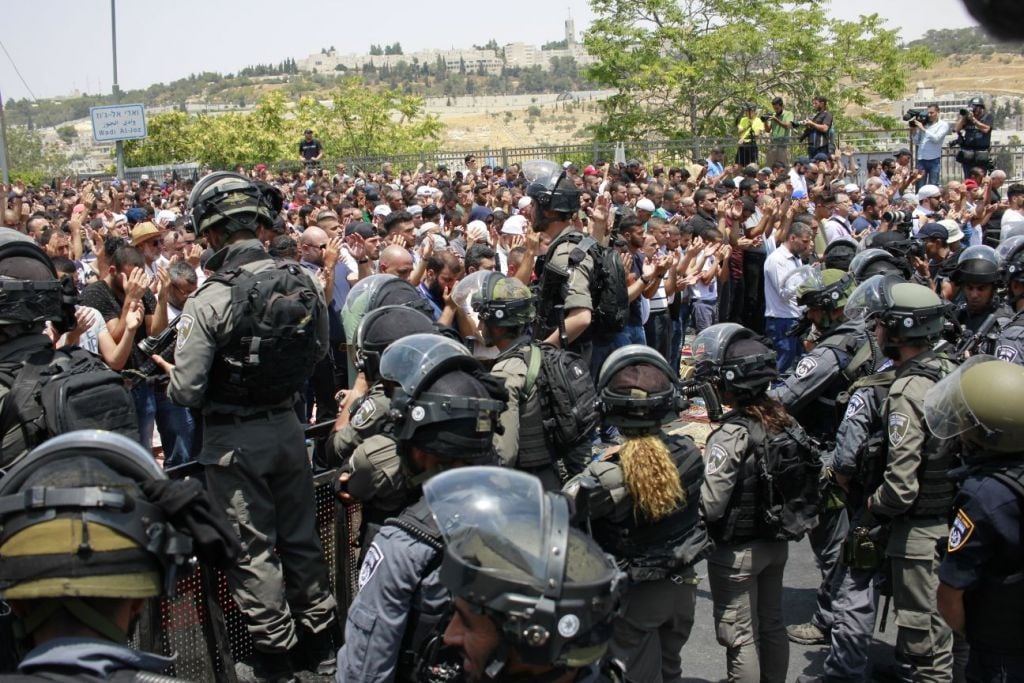
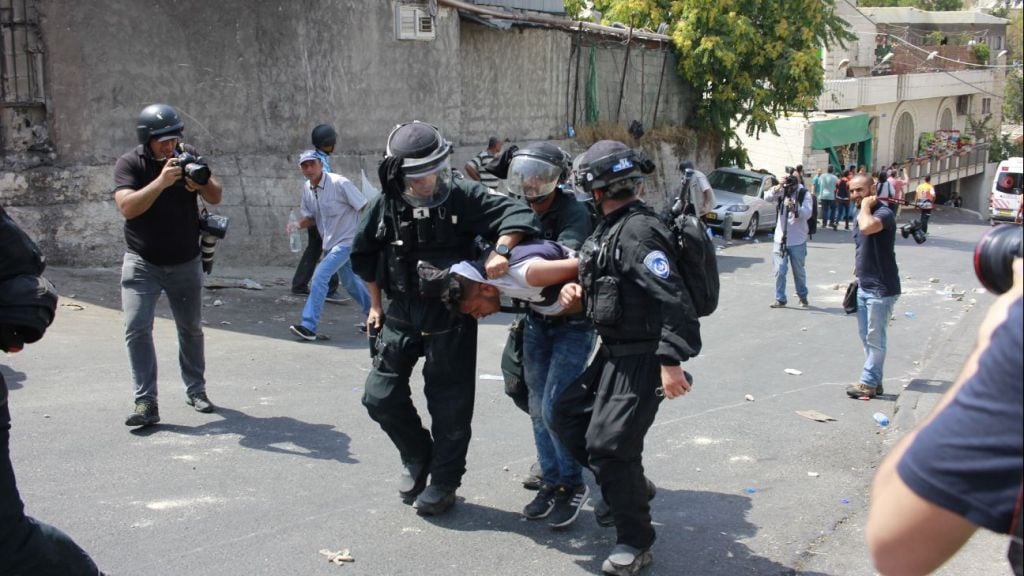
The policemen, who wore helmets and flak jackets and were brandishing batons, responded en masse with flash-bang grenades, filling the street with the smell of burning. The officers, followed by the water cannon truck, then pushed back the protesters into the neighborhood, with about half the crowd going down al-Muqdasi Street and the rest going up Wadi Joz Street.
Predominantly, the older men who were at the prayer-protest took cover in the shops, homes and alleyways of Wadi Joz. The younger men, meanwhile, squared off with police, flinging rocks and glass bottles at the officers.
As the worshipers were pushed back, they left the road to the Lions Gate full of rocks, water bottles, the shells of exploded stun grenades and shoes, which had been removed for the prayer service.
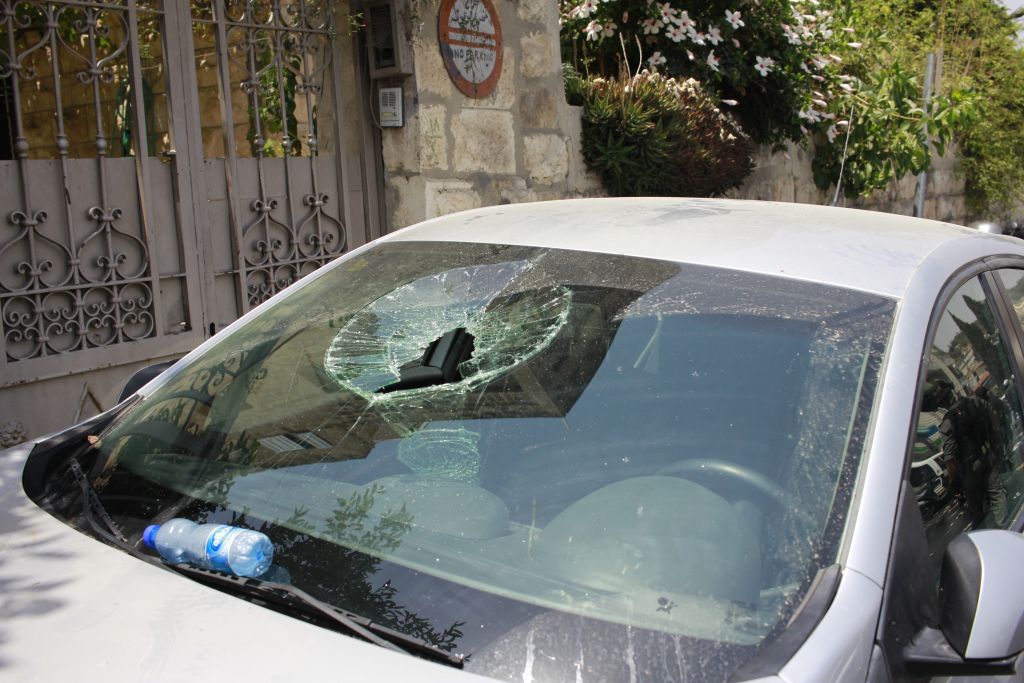
However, the gap between the protesters and the police was often too great for the rock throwers to clear and so instead of hitting the officers, the rocks either fell harmlessly in the road or struck cars that had been left on the street.
After the initial use of the water cannon and the barrage of stun grenades, during most of the riot, police turned to large rubber bullets, fired from a specialized launcher, to drive back protesters.
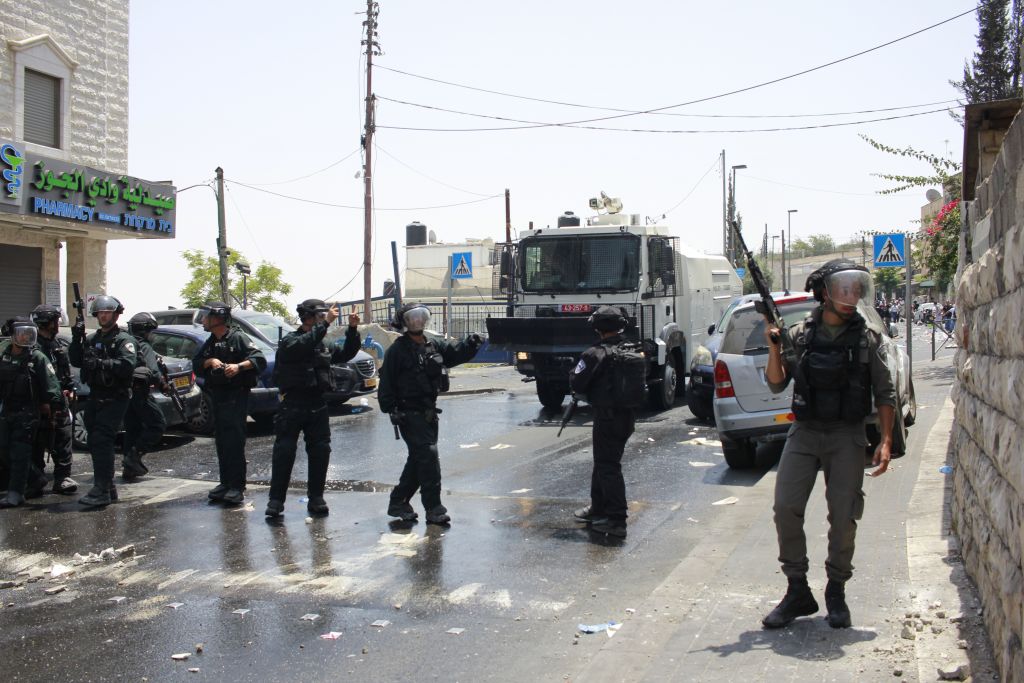
These exchanges would occasionally halt, as the owners of cars and motor scooters rushed to move their vehicles from the crossfire.
On Wadi Joz Street, an older man whose rear windshield was smashed asked an officer what he could do about it.
The officer shrugged. “File a complaint against them,” he said, motioning to the teenagers up the street who were intermittently throwing rocks in their direction.
Other residents took a more resigned view of the damage to their cars. One man whose rear windshield was destroyed surveyed the damage with his friends. “Well, it’s for Al-Aqsa,” they said to one another in Arabic, in reference to the mosque that sits on the Temple Mount which also houses the Dome of the Rock.
In total, the clashes in Wadi Joz lasted approximately two-and-a-half hours. But they were not sustained over that entire period.
Protesters would throw rocks and bottles at the officers, who would occasionally respond by firing back sponge-tipped bullets. Eventually, however, the officers would get the order to take a more forceful stance and they would move together, firing more frequently, to push back the demonstrators.
During the calmer periods, residents would clear out the area, putting out fires that were set and moving large debris out of the road to allow cars with smashed windows and nasty dents to drive out.
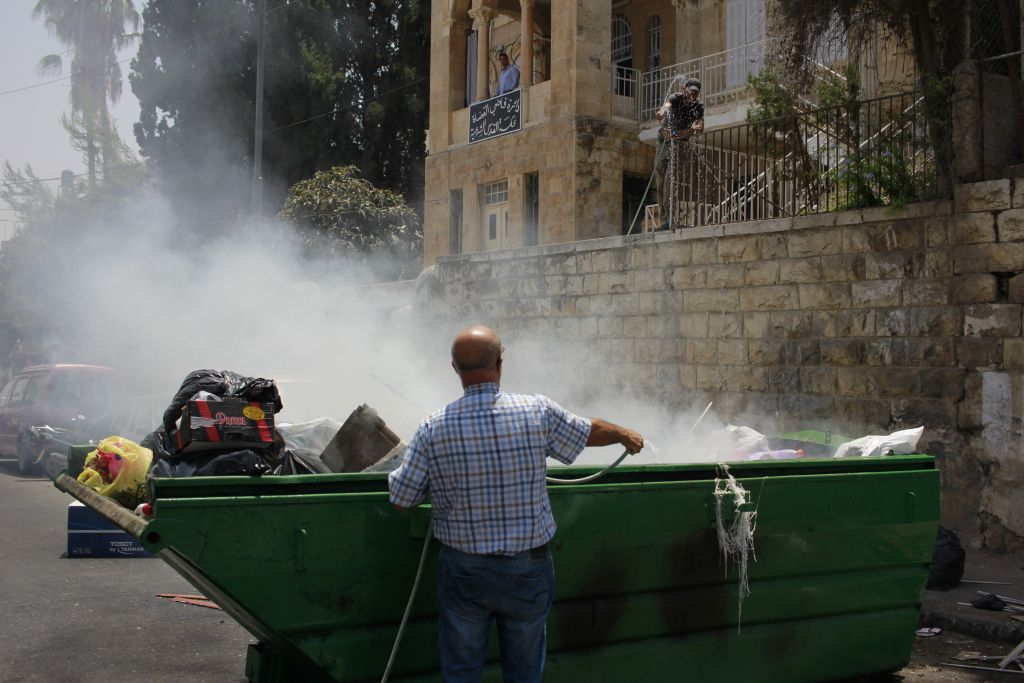
In those interim periods, the protesters would also set up in new positions and start the process all over again.
At around 3:00 p.m., the rioting on Wadi Joz street started petering out, with only a handful of hold-outs still throwing rocks at the three officers standing farthest up the street.
At a certain point, the officers’ commander determined it over and ordered the men to move out. With nothing to throw rocks at, the protesters also cleared out.
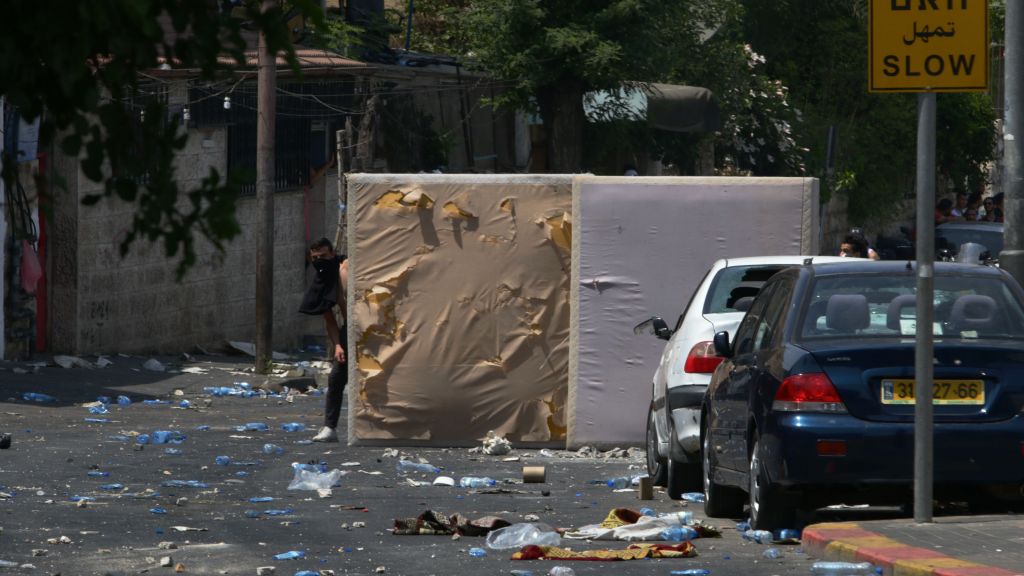
On al-Muqdassi, the police eventually ended the lingering protest there by sending in a team of four undercover officers who snuck in among the demonstrators and in one swoop arrested four of them.
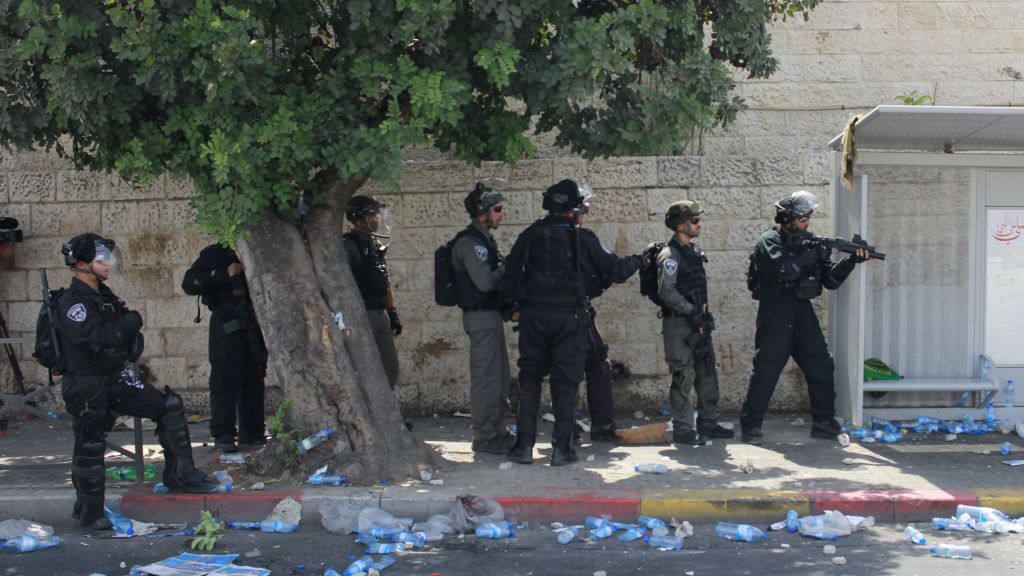
In total, at least six people were arrested in Wadi Joz. At least another four people were picked up at other riots around the capital, police said.
The clashes in the more central Arab neighborhoods of Jerusalem reached their end a little after 3:00 p.m. on Friday, with residents assessing the damage and shopkeepers opening their stores to allow people to cool off with a drink.
But in the farther parts of East Jerusalem — Issawiya, Shuafat and Silwan — the riots raged into the evening.
There was little doubt in the lead-up to Friday that the day would end with clashes and bloodshed. However, as the riots subsided, the question that remained was whether this was a release of pressure that would return Jerusalem or the opening shot of a prolonged period of violence — in the capital and beyond.