In world breakthrough, scientists see star survive encounter with a black hole
Star AT 2022dbl wandered close to black hole but was only partially destroyed; Tel Aviv University researchers say discovery 'changes our conceptions of black holes'
In a discovery that challenges a foundation of modern astrophysics, Tel Aviv University researchers and an international team of scientists have documented the first known instance of a star surviving a destructive encounter with a supermassive black hole — not once but twice.
The observation, which has recently been published in the prestigious The Astrophysical Journal Letters, reveals a flare that followed a nearly identical event observed two years earlier from the exact same location in space. The repeat flare, dubbed AT 2022dbl, occurred when a star came close to a black hole but was not fully consumed, as astrophysicists first expected.
“The star was never fully destroyed, but it actually survived,” Prof. Iair Arcavi, a faculty member in TAU’s Astrophysics Department and director of the Wise Observatory in Mizpe Ramon who supervised the study, told The Times of Israel. “This is the first time we’ve seen it come back in a human timescale. The star came back.”
Dr. Lydia Makrygianni, a former postdoctoral researcher at TAU now at Lancaster University in the UK, led the study. Prof. Ehud Nakar, chair of the Astrophysics Department, and TAU students Sara Faris and Yael Dgany also contributed.
“The research,” Arcavi said, “changes our conceptions of black holes.”
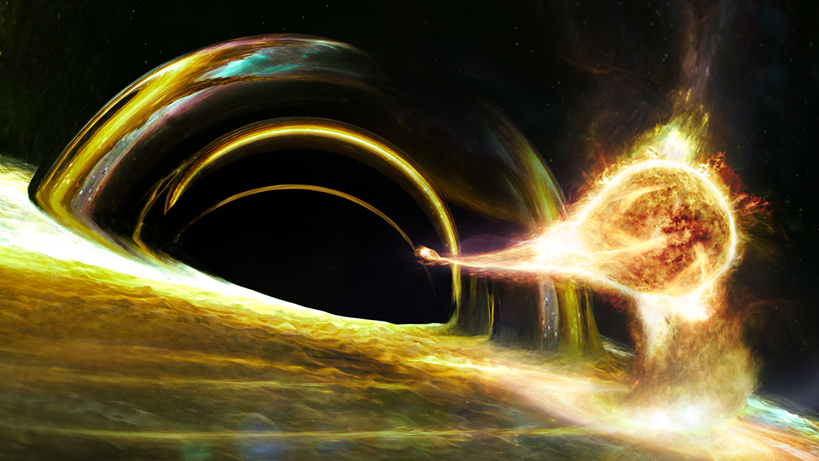
The star orbits around the black hole every 700 days
Arcavi said that Star AT 2022dbl is in orbit around the black hole, much like the Earth is around the sun.
It’s an elliptical orbit that takes about 700 days. This time, when it came to the closer section of the orbit, part of it got “disrupted,” taken in by the black hole.
“Maybe what we saw the second time was all of it got disrupted,” Arcavi said. “We won’t know until we see if there’s a third time in early 2026. Maybe all such flares, which we have been trying to understand for a decade now as full stellar disruptions, are not what we thought.”
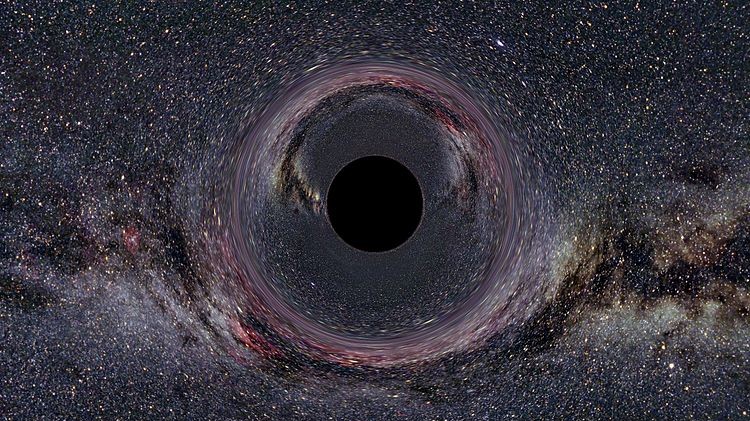
A black hole: Where even light cannot escape
Astronomers have long known that at the center of nearly every galaxy lies a supermassive black hole, millions to billions of times the mass of our Sun. These cosmic giants, including the one at the heart of our own Milky Way, shape their host galaxies in ways that are still not fully understood.
A black hole is a region of space where gravity is so strong that not even light can escape. One of the most powerful, and rare, tools scientists have to study these black holes are “tidal disruption events” (TDEs), in which a star moves close to the black hole.
Material from the destroyed star spirals into the black hole, heating to extreme temperatures and emitting an intense flare of radiation. Such events offer a temporary but illuminating glimpse into the mysterious behavior of black holes.
However, what astronomers have seen in many such flares over the past decade has not matched expectations. The flares have consistently appeared dimmer and cooler than theoretical models predicted.
“We’ll have to rewrite our interpretation of these flares and what they can teach us about the monsters lying in the centers of galaxies,” Arcavi said.
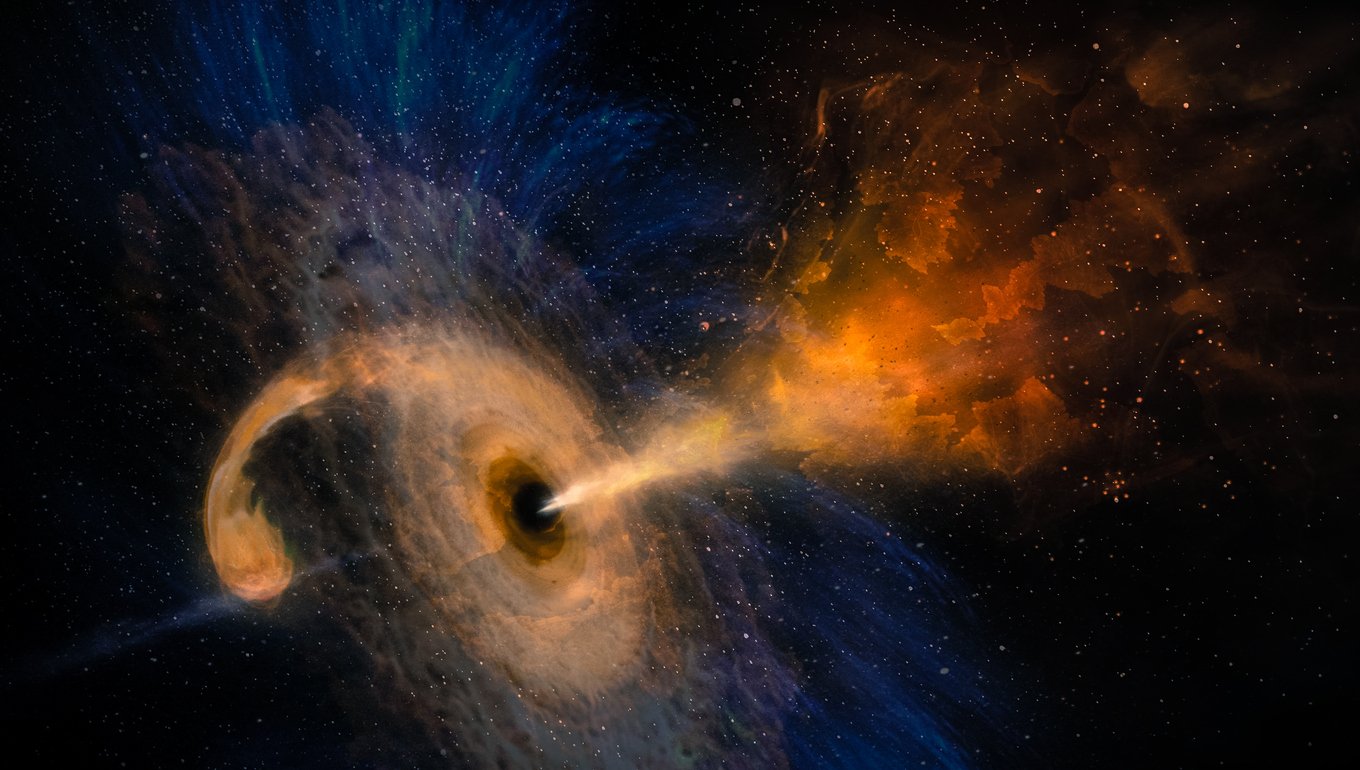
How do black holes form?
The centers of galaxies are very, very dense in stars, he noted.
The Earth is “kind of like the suburbs of our galaxy, but the downtown, the very center, is very busy, very crowded, and it has a supermassive black hole in the center, and there’s a lot going on that we don’t understand.”
The astronomer posed questions that have not yet been answered.
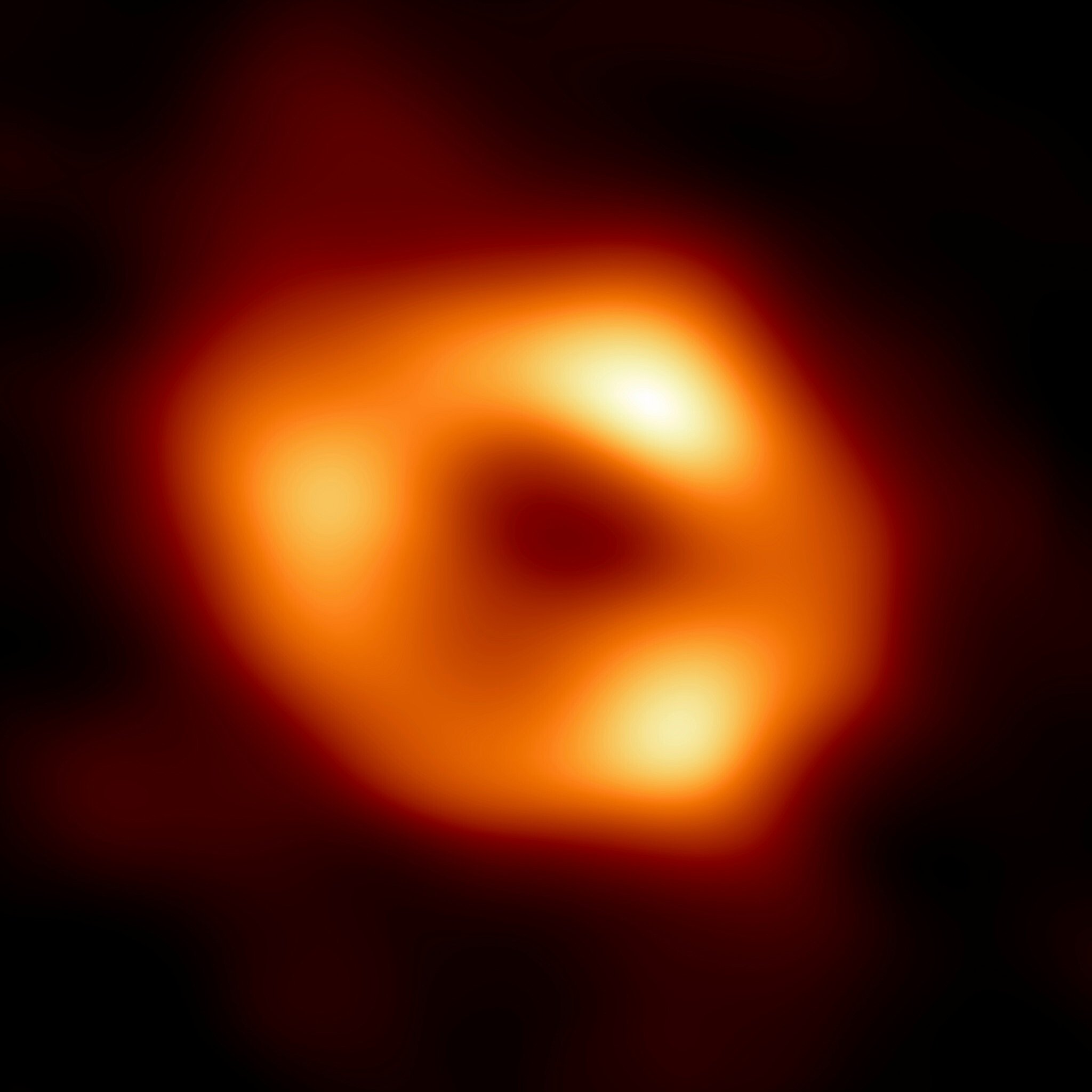
“How do these black holes form in the first place? How do they affect the stars around them?” he mused. “We know it somehow affects the entire galaxy because we see a very strong correlation between the sizes of galaxies and the mass of the black holes in their center.”
Bigger galaxies have bigger black holes and smaller galaxies have smaller black holes.
Astronomers know that when a massive star ends its life and collapses, it can become a black hole, and that black hole will be “something like ten times the mass of the sun,” the astronomer said.
“We thought we were seeing stars being torn apart in the center of galaxies and we thought that meant the total loss of the star,” he said. “But this star was only partially destroyed, and this helps explain some of the puzzles we had, and helps us learn about black holes.”