Indictment prepared against MK Ghattas for smuggling phones to Palestinian prisoners
Attorney general gives go-ahead for charges against Joint (Arab) List lawmaker for bringing illicit cellphones and coded messages to convicted terrorists
An indictment was prepared Thursday against a member of Knesset who is charged with smuggling cellphones and coded messages to convicted Palestinian terrorists in an Israeli prison.
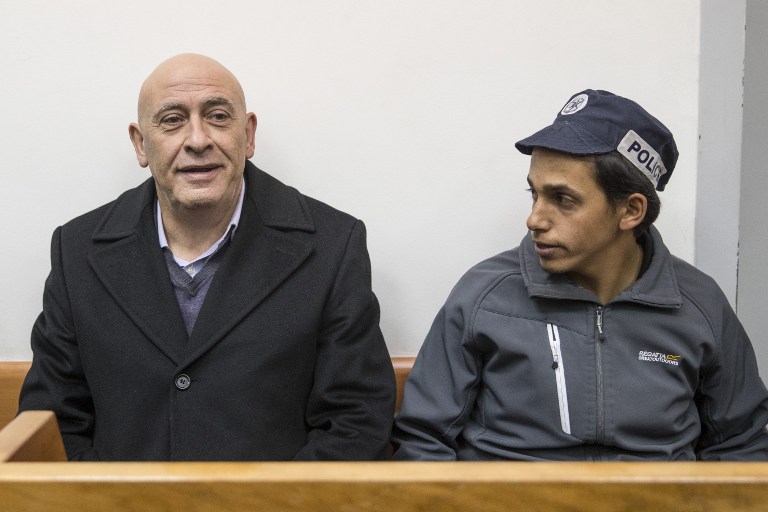
MK Basel Ghattas, of the Arab Joint List’s Balad faction, is undergoing a criminal investigation after he was caught on prison surveillance video passing envelopes to the prisoners last month. He was released to house arrest last week, five days after he was arrested.
Attorney General Avichai Mandelblit authorized the indictment, which includes charges of using property to abet terror, fraud, breach of trust, and aggravated fraud.
The indictment will only be filed after a hearing with Ghattas where he, or his lawyer, will be able to present the attorney general with reasons he shouldn’t be charged. Then, or if Ghattas turns down the invitation for a hearing, a final decision on filing the indictment will be made.
According to the paperwork, Ghattas took advantage of his position as a member of Knesset, who is not subject to a body search, during a visit to Ketziot prison where he met with Walid Daka, who received a 37-year sentence for the 1984 abduction and murder of 19-year-old IDF soldier Moshe Tamam. The MK also met with Basel Ben Sulieman Bezre, who is serving a 15-year sentence on a terror conviction.
Police claim that, ahead of the visit, Ghattas planned with Walid’s 65-year-old brother, Assad, to hand over cellphones to Bezre who was to then pass them on to the incarcerated Daka and other prisoners. Asad Daka allegedly met with Ghattas at a gas station where he handed over four envelopes containing a dozen phones, SIM cards and chargers.
The purported purpose of Ghattas’s visit was to hear complaints about prison conditions. He hid the envelopes inside his clothing and when a metal detector at the entrance to the prison beeped, Ghattas claimed it was because of his belt buckle, the indictment said.
After the visit Prisons Service officials found 12 to 15 cellphones and at least a dozen SIM cards in the prisoners’ cells, along with what officials said were “coded” notes.
Ghattas has admitted to handing over the envelopes, and said he knew that even giving prisoners benign items during visits contravened Prisons Service regulations, but insisted he thought he was giving them reading material, not cellphones.
But during his investigation, the lawmaker refused to tell investigators who gave him the smuggled phones. His lawyers claimed police already knew who had provided them. Last week officers arrested Assad Daka on suspicion of handing the MK the envelopes to pass to his brother.
In a letter Thursday to Knesset Speaker Yuli Edelstein, Knesset House Committee chair MK Yoav Kisch and Ghattas himself, Mandelblit said he had given police the go-ahead to bring charges in accordance with the MK’s decision to waive his parliamentary immunity.

Ghattas’s arrest was made possible after the Knesset formally accepted his waiving of parliamentary immunity just hours before a December 22 session in the Knesset plenum was set to vote on removing it.
According to Mandelblit, who publicized the suspicions against Ghattas when he asked the Knesset to lift the immunity in late December, police had obtained surveillance footage of Ghattas passing envelopes to prisoners at Ketziot Prison, south of Beersheba.
On Monday, the Knesset Ethics Committee voted to distance Ghattas from the parliament for six months as a punitive measure over the allegations.
The decision, while banning him from committee and plenary debates, leaves his salary intact and does not affect his right to vote on bills, which is protected under the Basic Law: The Knesset.