Iran executes man accused of giving missile-site intelligence to Mossad
Tehran faces fresh financial pressure as Turkey revokes Iranian bank’s license; Colorado said it faced a cyber attack on water facilities similar to others linked to Iran
Iran executed a man accused of providing Israel’s Mossad intelligence agency with information about missile sites, the judiciary announced Saturday, as Tehran continued a crackdown on alleged collaborators amid the ongoing war.
“The death penalty was carried out against Hossein Pedaran, who had provided the Mossad with information on missile sites in Isfahan province,” judicial authorities said, without specifying when he was arrested or tried.
Pedaran had been accused of “espionage and intelligence collaboration” with Israel, and Iran’s Supreme Court upheld his sentence, according to the judiciary.
His case had not previously been reported in the media.
Iranian authorities have stepped up arrests and executions both in connection with the war that began on February 28 and nationwide protests that peaked in January.
Missile sites across Iran have been bombed during the conflict, while Isfahan province, which also hosts Iranian nuclear facilities, has been among the areas hardest hit.
Supreme leader Ayatollah Ali Khamenei was killed at the beginning of the war, when the United States and Israel launched a surprise bombing campaign against Iran.
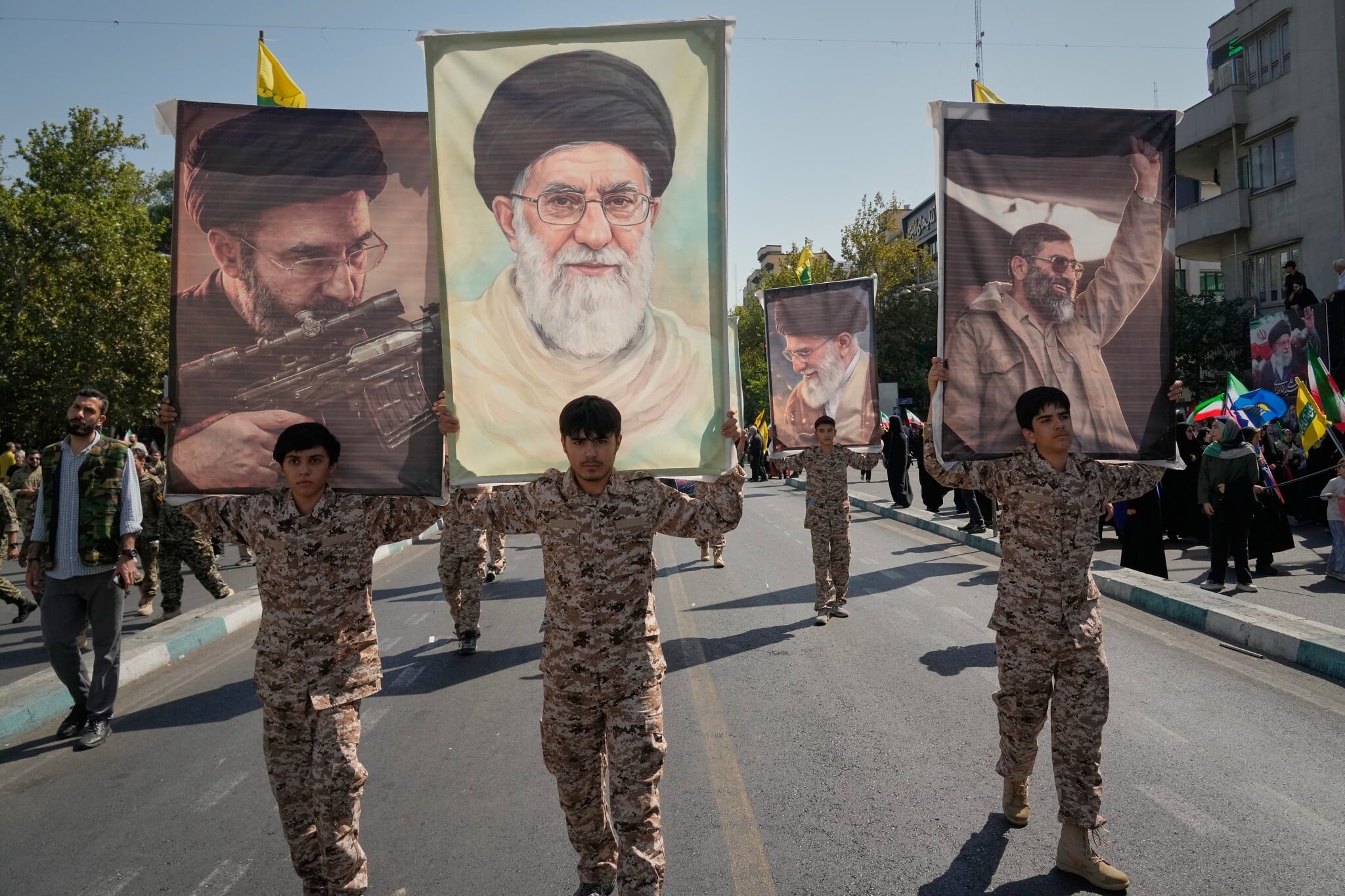
The US and Israel have said that the campaign was aimed at eliminating threats posed by Iran’s nuclear and ballistic missile programs and degrading its military capabilities.
In August, Iran’s judiciary announced the executions of two other men accused of transmitting the coordinates of sensitive military and security sites to Israel. Iran carries out the second-highest number of executions in the world after China, according to rights groups.
Turkey revokes Iranian bank’s license
Separately, on Saturday, Turkey revoked the license of Iran’s Bank Mellat, a semi-private financial institution that has faced Western sanctions for years, according to Turkey’s official gazette.
The move came around two weeks after Washington sanctioned a Turkish bank over alleged ties to Iran’s Islamic Revolutionary Guard Corps, though it was not immediately clear whether the two developments were connected.
The move follows a decision by Turkey’s banking regulator over the Tehran-based bank, which provides financial support to Iran’s government and is subject to US, EU and UK sanctions, according to OpenSanctions, an open-source database of information on sanctions-hit entities.

The Iranian government is also the largest shareholder of the bank, it said.
In revoking Bank Mellat’s licence, the Turkish regulator cited article 71b of the banking law, which says the entity’s “continued operation poses a threat to the rights of depositors and participation fund holders and to the security and stability of the financial system.”
Bank Mellat has long been targeted by Western sanctions over accusations that Iran pursued nuclear weapons capabilities under the cover of a civilian nuclear program.
Those sanctions were lifted under the 2015 nuclear agreement between Tehran and world powers, but the United States withdrew from the deal in 2018 and reimposed economic sanctions.
The bank was sanctioned again by the US and Gulf states in 2019 after being named among entities linked to the Revolutionary Guards.
The Turkish banking regulator’s action comes shortly before Turkish President Recep Tayyip Erdogan was reportedly due to meet US President Donald Trump on the sidelines of the UN General Assembly in New York on Tuesday.
AI-generated report nearly triggered confrontation with China
Meanwhile, a US intelligence report produced with the help of artificial intelligence nearly triggered a military confrontation between Washington and Beijing during the Middle East war after falsely identifying a Chinese ship as carrying nuclear components to Iran, CNN reported.
According to the report, the US military prepared to seize the vessel and military aircraft were already in the air before officials took a closer look at the intelligence and discovered that a chatbot had misidentified the cargo.
CNN said it was unable to determine what the vessel had actually been carrying.

A US military analyst had reportedly queried the chatbot about intelligence from the Hawaii-based US Special Operations Command Pacific.
The bot based its response on a combination of open-source information and secret signals intelligence. CNN said it was unclear whether the chatbot was a commercial or government product.
Foreign hackers target US water systems
In a separate security incident, foreign hackers targeted and manipulated equipment at two small privately owned water systems in Colorado in August, though state officials said they could not determine who was responsible.
The incidents affected two utilities that each serve fewer than 200 people, according to Ally Sullivan, a spokesperson for Colorado Governor Jared Polis.
“There was no impact to public safety or water services,” Sullivan said.
The hackers were able to change equipment settings, including disabling remote access and alarms and altering pumping cycles, Sullivan added.
“These were brief incidents and the risks were quickly addressed by the providers themselves, who subsequently alerted the state,” Sullivan said. “To our knowledge, treatment processes and water quality were not impacted at either provider.”
While Colorado officials did not attribute the incidents to Iran, Sullivan pointed to a broader pattern of Iranian-backed cyber activity targeting US water infrastructure.

The governor’s office “cannot confirm what foreign actors may have been involved, but we are aware of ongoing efforts across the nation by an Iranian-backed group to access drinking water and wastewater systems,” Sullivan said.
The incidents came several weeks after a broader wave of cyberattacks targeting equipment at roughly 100 water entities across about a dozen states, according to an August advisory from the US Cybersecurity and Infrastructure Security Agency.
Cybersecurity experts said those earlier attacks resembled previous Iranian-linked activity targeting programmable logic controllers, computer devices used to control machinery in critical infrastructure networks.
The FBI said in a July 30 statement that some previous attacks had resulted in “degraded water operations,” including changes to IP addresses and passwords, “resulting in a loss of view, and in some cases function, of connected equipment in targeted facilities.”
The FBI declined to comment.