Iran media: Kerry never complained to Zarif over missile tests
Tehran continues to test-fire projectiles it boasts could hit Israel, in defiance of US sanctions and warnings of fresh embargoes
Iranian media on Thursday denied reports that US Secretary of State John Kerry protested Iran’s latest long-range missile tests to its foreign minister Mohammad Javad Zarif a day earlier.
“John Kerry has sent emails to Zarif asking for a telephone call to discuss issues, including Iran’s missile tests, but it did not happen because Zarif is on an official visit,” an Iranian foreign ministry official told Iran’s Students News Agency ISNA, according to a Reuters translation.
Iran state TV trumpeted Wednesday’s test as officials boasted that it demonstrated the country’s might against Israel, with at least one missile emblazoned with the words “Israel must be wiped off the face of the earth,” the Fars news agency reported.
Tehran’s recent tests defy standing US sanctions on the Islamic republic’s missile program and warnings of fresh sanctions.
State Department spokesman John Kirby said Tuesday that the US was prepared to “redouble our efforts with allies and partners in the region to limit Iran’s ability to develop their missile program outside of international conventions.”
Kirby said the US could raise the issue with the UN Security Council and take further action against Iran’s missile program.
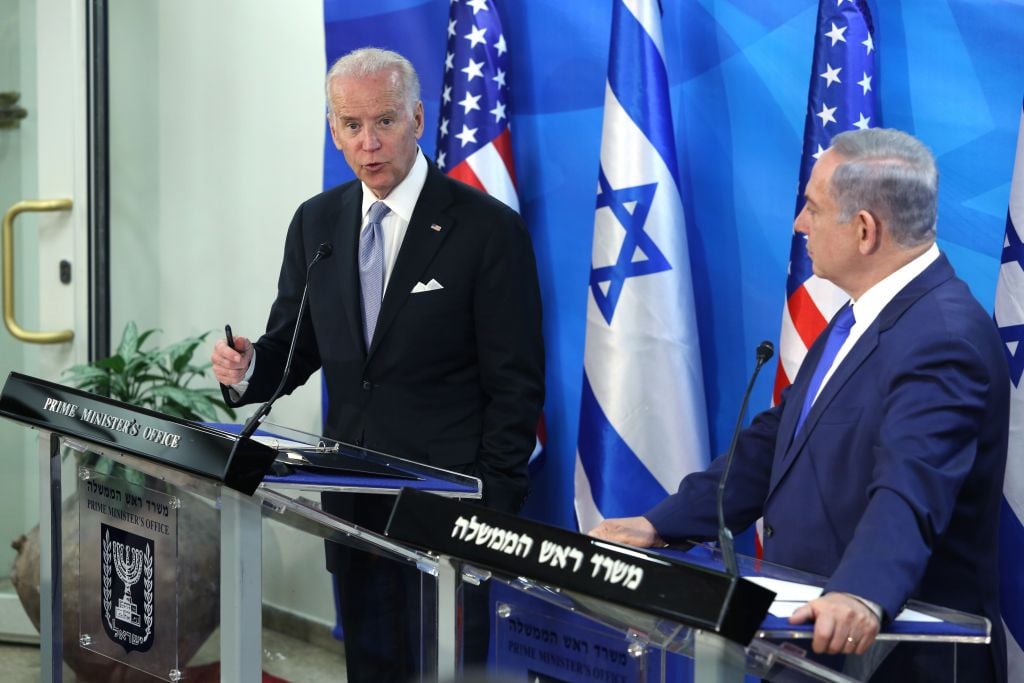
During a brief visit to Israel and the Palestinian Authority this week, US Vice President Joe Biden on Wednesday echoed Washington’s warnings, and vowed his government would take action against Iran if the missile tests were confirmed.
“A nuclear-armed Iran is an absolutely unacceptable threat to Israel, to the region and the United States. And I want to reiterate which I know people still doubt here: If in fact they break the deal, we will act,” Biden said during a Jerusalem press conference. “All their conventional activity outside the deal, which is still beyond the deal, we will and are attempting to act wherever we can find it.”
The missile tests, described by Iran’s powerful Revolutionary Guards as a show of force in the face of US pressure, come just weeks after the implementation of Iran’s historic nuclear deal with world powers.
The hard-fought deal, which saw international sanctions lifted in exchange for curbs on Iran’s nuclear ambitions, did not extend to its missile program.
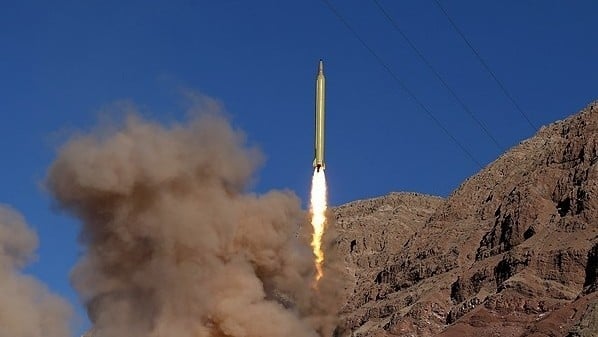
Video aired on Iran state TV on Wednesday showed the golden-hued Qadr H missiles being fired from a crevice between brown peaks identified as being in Iran’s eastern Alborz mountain range. The rockets hit targets some 1,400 kilometers (870 miles) away off Iran’s coast into the Sea of Oman, state media and Iran’s semi-official Fars news agency reported.
Amir Ali Hajizadeh, the head of the Revolutionary Guard’s aerospace division, was quoted as saying the test was aimed at showing Israel that Iran could hit it. Israel is within 1,100 kilometers (660 miles) of Iranian territory.
“The 2,000-kilometer (1,240-mile) range of our missiles is to confront the Zionist regime,” Hajizadeh said. “Israel is surrounded by Islamic countries and it will not last long in a war. It will collapse even before being hit by these missiles.”
The Qiam and Qadr, each capable of carrying payloads greater than 500 kilograms, fit the UN definition for missiles capable of carrying a nuclear warhead, said Jeremy Bennie, Middle East and Africa editor for IHS Jane’s Defence Weekly.
The now-lifted 2010 ban covered missiles with a range of at least 300 kilometers (186 miles) and a payload capacity of at least 500 kilograms (1,102 pounds), under a definition by a UN panel of experts.
The nuclear accord was a victory for Iran’s relatively moderate president, Hassan Rouhani, over hard-liners who sharply opposed reining in the nuclear program. But since the deal was reached, hard-liners in the military have made several shows of strength.
In October, Iran successfully test-fired a new guided long-range ballistic surface-to-surface missile.
UN experts said the launch used ballistic missile technology banned by the Security Council. In January, the US imposed new sanctions on individuals and entities linked to the missile program.
Ballistic missile tests have been seen as a way for Iran’s military to demonstrate that the nuclear deal will have no impact on its plans, which it says are for domestic defense only.
AFP and AP contributed to this report.