After players vote, Ireland decides to play soccer match with Israel; 1 player withdraws
Team was thrown into turmoil after Gavin Bazunu said he would boycott upcoming Nations League fixtures; players to wear black armbands to mark 'all lives lost in the conflict'
Ireland’s national team said Saturday it would play its planned soccer match against Israel in Debrecen, Hungary, after “a significant majority” of its players voted to move forward with the game, despite growing pressure to boycott two upcoming fixtures and despite a member of the team saying he will not play in them.
The game in Debrecen is to be Israel’s “home” game against Ireland as part of the Nations League, and will be played with a limited number of spectators.
Ireland postponed their pre-match press conference ahead of the game in Hungary, and their training session was also delayed. This was to allow talks to continue between Irish players, coaching staff and officials, after one player, later revealed to be backup goalkeeper Gavin Bazunu, announced his intention to withdraw from the squad.
“Representing my country means everything to me. I have the utmost respect for every single one of my team mates, the Manager, his staff and the Irish people,” Bazunu said in a statement.
“However I have reached a decision that I have not taken lightly. I am a man of strong faith and try my best to be a person of character and principle therefore I feel it would be wrong to participate in the upcoming fixtures against Israel.
“My decision is based purely upon my personal belief that the killing of innocent people is wrong. It is important to note that my stance is not in opposition of the Israeli people or the Jewish community but against the atrocities in the region.”
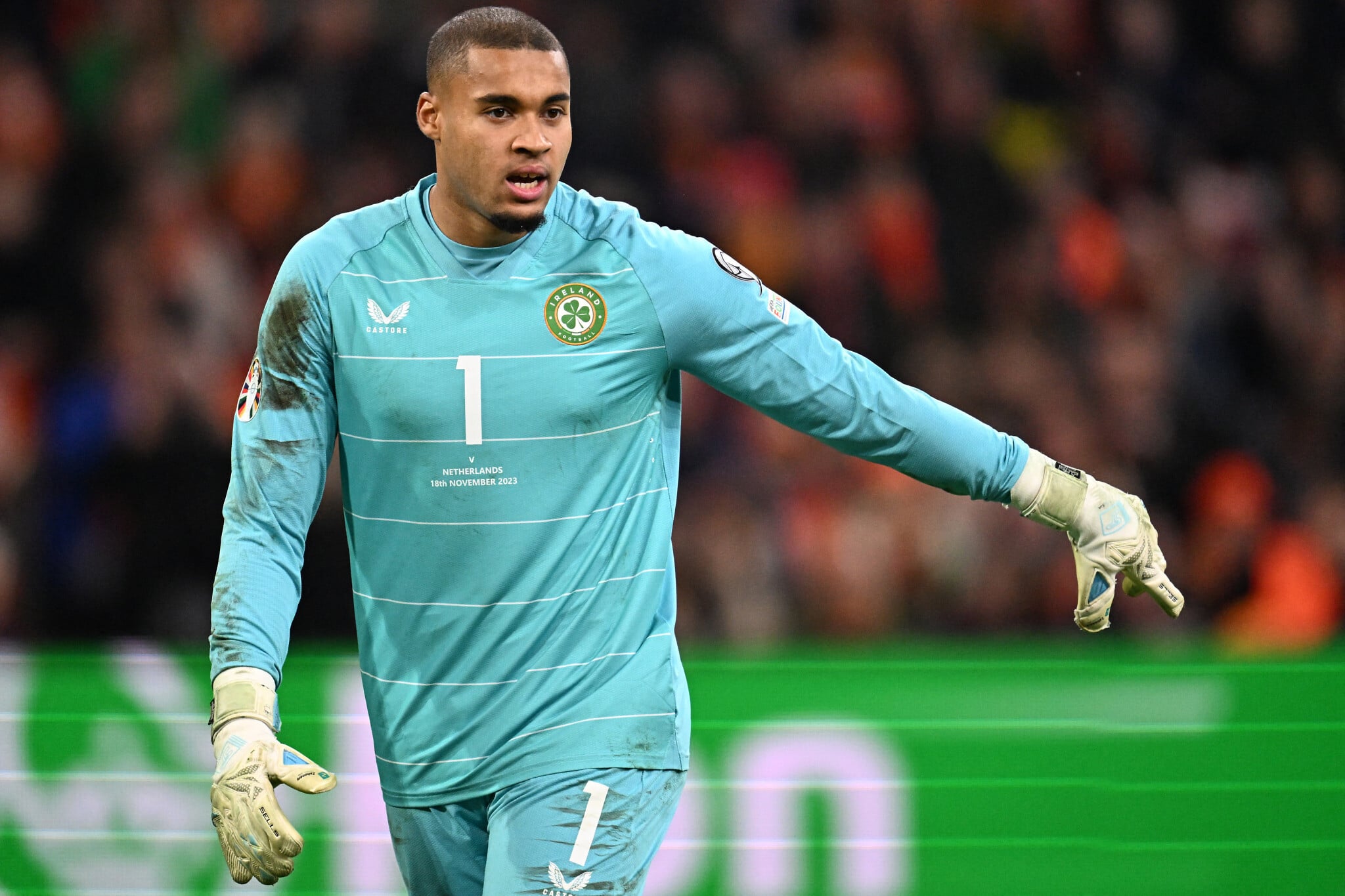
David Courell, head of the Football Association of Ireland, told a press conference on Saturday that “this morning… a player expressed their discomfort with fulfilling this fixture to the head coach and indicated their intent to withdraw from the squad.”
The player’s position led to some four hours of deliberations within the team and with management, at the end of which a vote was held.
“An extensive conversation took place, where ultimately the consensus from the group was to travel to Hungary,” Courell said.
Courell said the players plan to wear black armbands “in recognition of all lives lost in the conflict,” and will not participate in elements of the pre-match ceremony — indicating they may not shake hands with the Israeli team.
Hailing the decision, the Israel Football Association said, “What pleases us today is that soccer has won.”
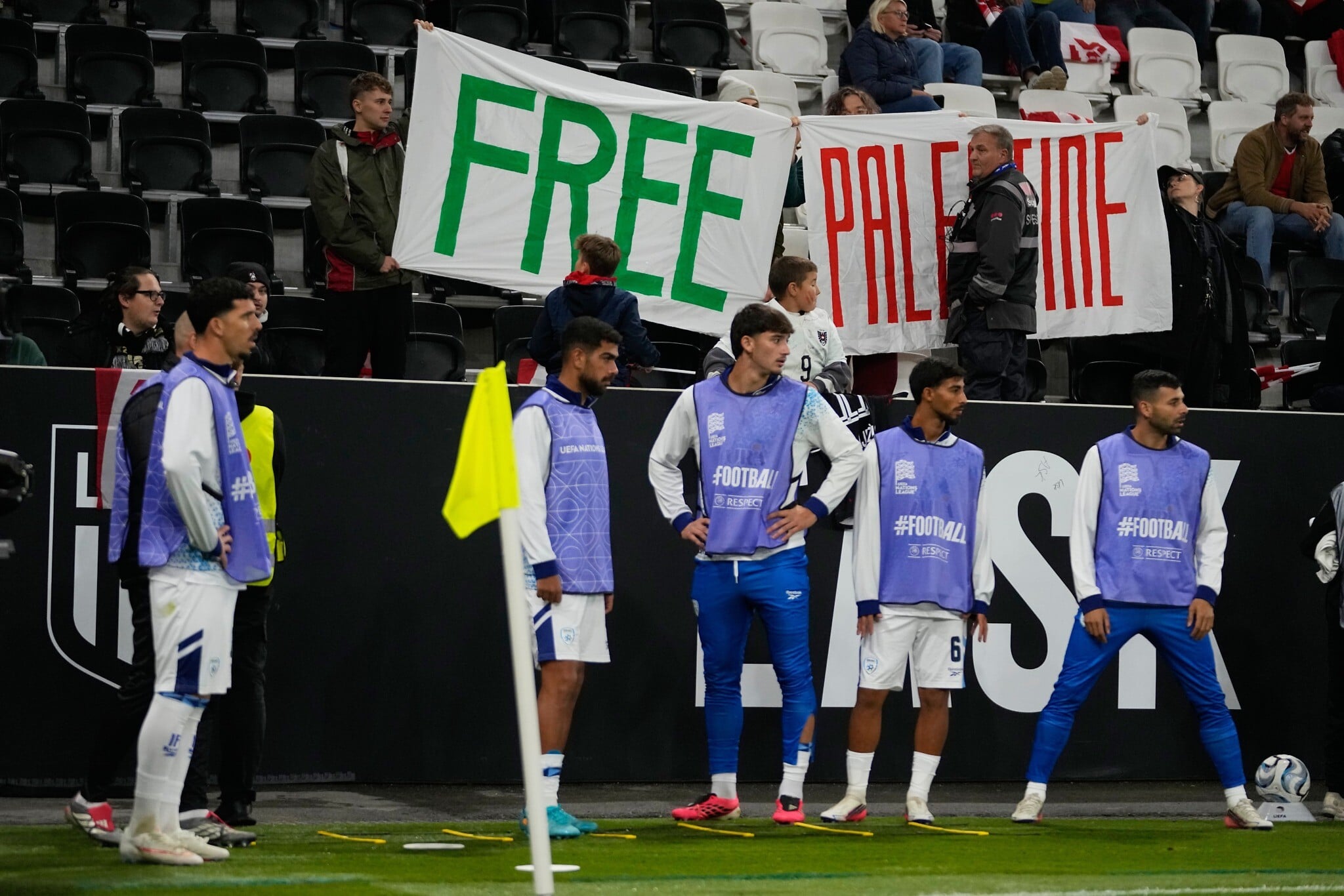
“The ones who have certainly lost today are those who wanted to intimidate, to separate and to turn the soccer pitch into a political arena,” the statement added.
The Irish national team has come under increasing pressure at home, where affinity with Palestinians is strong, to boycott the two games — the first on Sunday and the second, Ireland’s “home” game, in Backa Topola, Serbia on October 4.
Ireland midfielder Jason Knight said after Thursday’s 1-0 loss in Kosovo that the players were in a difficult situation and that he didn’t think the matches should be going ahead.
“I don’t think the game should be going ahead but it is going ahead,” Knight told reporters.
“We’ll have a deeper talk about it and what that means. I’m quite experienced. None of us have gone through this scenario before but I’d like to think I’m experienced, thick-skinned and I can get through most things and that is what I will try and do.
“I’ll try and focus on the football as much as I can,” added Knight, who plays for Championship club Bristol City.
“It’s a bigger spotlight obviously and not focused on the football itself. It’s very, very unusual and none of us have come into this scenario before so we’re learning on the fly as well.”
The Irish Sport for Palestine Group said on Monday that more than 160 Irish sportspeople had signed an open letter asking the Irish national team to boycott their upcoming fixtures against Israel.
Earlier this month, Ireland coach Heimir Hallgrimsson said “we’re not playing with genocide, we’re playing against genocide. We’re playing against Israel, we’re not playing with Israel” — drawing a furious reaction from the Israeli soccer federation, which accused the Icelandic coach of “stupidity, ignorance and hypocrisy.”
On Saturday, Hallgrimsson said of his “genocide” comments, “It is a strong word and the wrong word for me to use,” but added: “By playing, we are not accepting what is happening in Gaza. By playing, the players are not supporting what is happening in Gaza.”
Israel has repeatedly and vehemently rejected allegations of genocide, saying its actions in Gaza adhere to international law as it battles a terror group deeply embedded within the civilian population.
The war began with Hamas’s October 7, 2023, onslaught against Israel, in which terrorists killed 1,200 and took 251 hostages amid widely documented atrocities and targeting of civilians.
Ireland has been one of the most strident critics of Israel amid the war in Gaza. Israel has accused Ireland of antisemitism and shuttered its embassy in Dublin.
Dublin formally recognized a Palestinian state in 2024 alongside Spain and Norway, and has repeatedly criticized Israel over the Gaza conflict.
No tickets for the game will be made available to Irish supporters after the Football Association of Ireland (FAI) declined its allocation.
The Football Association of Ireland had resisted calls to boycott the matches, arguing the team could be hit by punishing sanctions from UEFA. Ireland will co-host the 2028 European Championship with England, Wales and Scotland. Israel has not yet qualified to play in that tournament.