Israel condemns Libya’s approval of maritime agreement with Turkey
Foreign Ministry says 'deal infringes upon the sovereign rights of our close allies,' accuses Ankara of 'working to destabilize the east Mediterranean region'
Israel condemned on Wednesday a decision by divided Libya’s eastern-based parliament to ratify a memorandum of understanding with Turkey on maritime demarcations in the Mediterranean.
Eastern Libya is ruled by military leader Khalifa Haftar, whose administration has grown closer to Ankara and has for years rivaled Libya’s internationally recognized government in Tripoli.
The memorandum sets out maritime boundaries in a potentially gas-rich part of the eastern Mediterranean that Greece says infringe on its own maritime claims.
Athens renewed its objections, as did nearby Cyprus, with the EU saying it supported its two member states and calling the memorandum “null and void.”
Israel is close to both Greece and Cyprus, and its foreign ministry said it “strongly condemns the decision of the Libyan House of Representatives to ratify the Maritime Jurisdiction Memorandum between Turkey and Libya.”
“This agreement infringes upon the sovereign rights of our close allies in the region. Regretfully, once again we see Turkey working to destabilize the east Mediterranean region,” it added in a post on X.

Turkey was the first Muslim-majority country to recognize Israel and the two countries once had robust trade, but their ties have become increasingly strained in recent years.
Ankara has become a severe critic of Israel’s war in Gaza, sparked by Palestinian Islamist terror group Hamas’s October 7, 2023 attack. Turkish President Recep Tayyip Erdogan, a longtime Hamas backer, has frequently accused Prime Minister Benjamin Netanyahu of committing genocide in Gaza, a charge rejected by Israel.
Netanyahu’s office, meanwhile, has described Erdogan as an “antisemitic dictator.”
Turkey’s foreign ministry welcomed the demarcation deal’s approval on Tuesday, describing the agreement as one “based on the principles of international law and equity (which) protects the mutual rights and interests of both countries.”
Libya’s eastern authorities had previously opposed the deal, which was also criticized by Egypt.
“Egypt reaffirms that this memorandum is null and void … possesses no legal effect,” the Egyptian foreign ministry said.
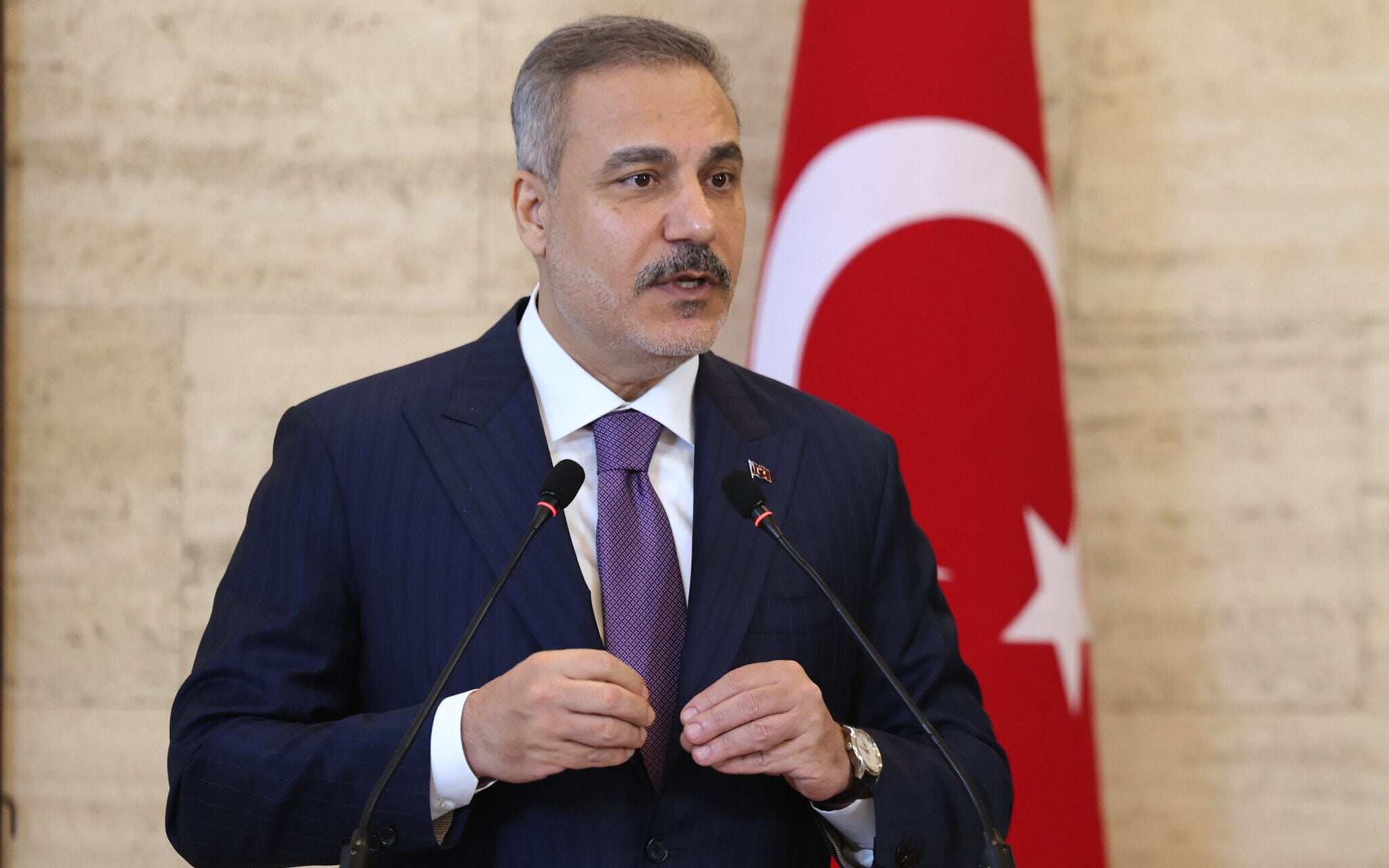
Turkish Foreign Minister Hakan Fidan rejected the criticism, saying the agreement was legitimate and that the Libyan parliament’s ratification was simply a formality as the deal was already in effect for Ankara.
“There are countries reacting to this. We know why they are reacting. Some are doing so because they need to, some really do have strategic problems with this issue. However, this is an entirely legitimate deal, both from a legal and a statutory perspective. There is no need to argue this,” Fidan told state media in Brussels.
A statement by the EU’s foreign policy chief Kaja Kallas issued later said: “The EU has a strategic interest in a stable and secure environment in the Eastern Mediterranean and urges all countries to respect the sovereign rights of all Member States, in accordance with EU and international law, including the United Nations Convention on the Law of the Sea.”
Greece, Egypt and Cyprus have long been opposed to a maritime-boundaries deal between Libya and Turkey, as they see it as an infringement on their own maritime claims.
The Greek smbassador to the United Nations, Aglaia Balta, briefed the UN Security Council about the issue on Wednesday, arguing it would impact security and stability in the eastern Mediterranean, said Greek diplomatic sources.
Times of Israel staff contributed to this report.