Israel shrouded in dense sandstorm
Officials ask Israelis -- especially the elderly, young, sick and pregnant -- to remain indoors; lengthy heatwave likely
Israelis are being asked to remain indoors, especially those who have respiratory problems, the elderly, children or pregnant women.
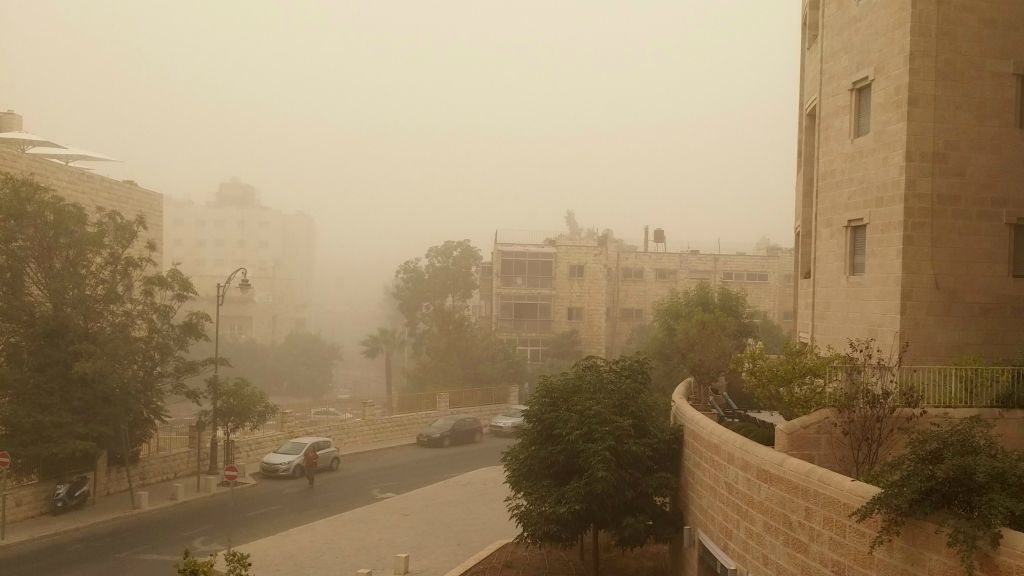
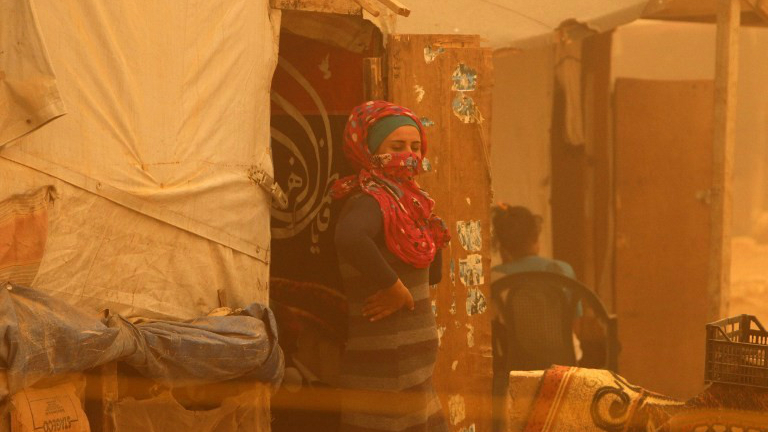
The reason: a dense sandstorm that moved in overnight, blocking the sky with a brownish-yellow fog throughout the country.
The storm has been making its way to Israel from Iraq and Syria over the past week. It is expected to remain in Israel’s skies throughout Tuesday, and possibly until Wednesday morning, according to meteorologists.
The Environmental Protection Ministry issued a warning saying that the storm poses a real danger to Israelis’ health, and asked that schools keep children indoors for the duration of the day.
It will be followed by a heatwave expected to hit the country by Tuesday afternoon and last until the weekend.
On Tuesday morning, the concentration of sand particles was highest in the hills, including the Jerusalem area, the southern West Bank and the Golan Heights.
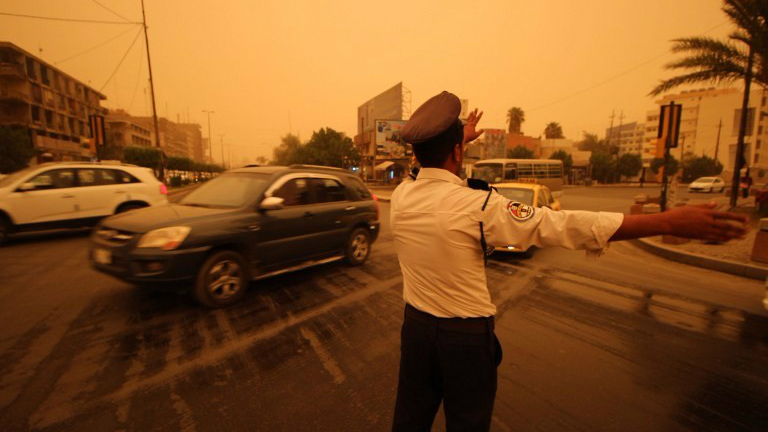
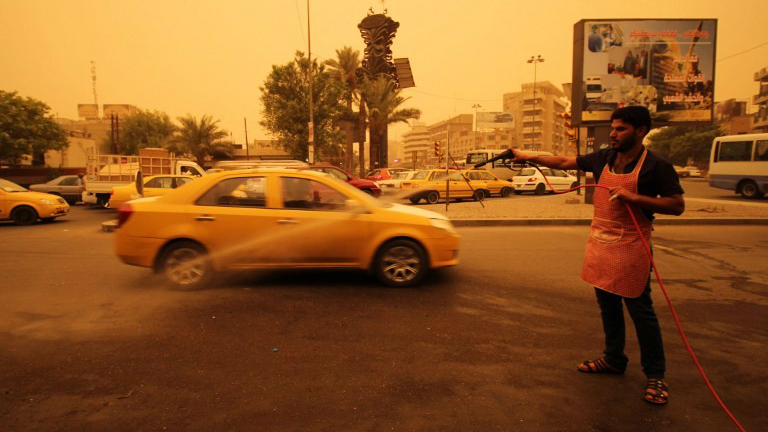
Other population centers in the Middle East were blanketed in drab sepia tones last week and earlier this week.
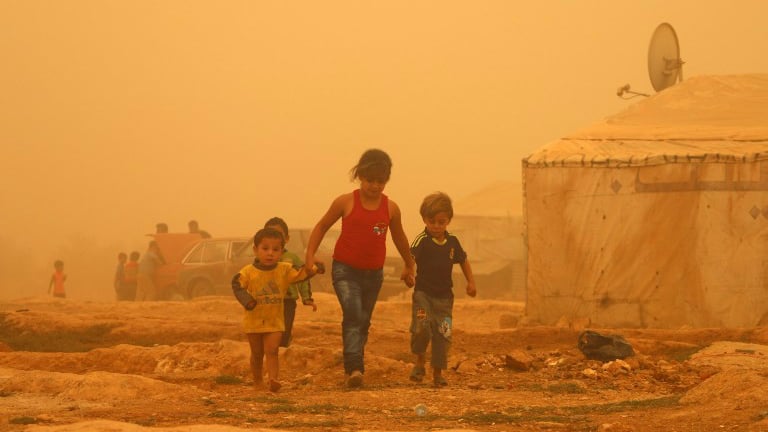
The storm also hit Lebanon’s coastal capital of Beirut on Tuesday, a day after it engulfed the eastern Bekaa Valley and neighboring Syria to the east.
Lebanese officials advised people to stay indoors. The Lebanese state news agency said at least 80 people fainted or suffered breathing problems because of the fine dust. People have been warned against burning trash that has piled up on Beirut streets this summer, sparking a political crisis and protests.
In Syria, the storm reached the capital, Damascus. The pro-government Syrian Al-Watan newspaper said the sand had forced the government to halt its airstrikes against rebel fighters north of the central province of Hama.
AP contributed to this report.