Israelis turn to Facebook in search for loved ones after Nepal quake
With some 200 Israelis unaccounted for, social media becomes an important tool for families and friends to locate those in disaster zone; death toll over 1,800
Israelis with friends and family in Nepal have taken to social media to plead for information on loved ones in the quake-stricken country who have yet to make contact.
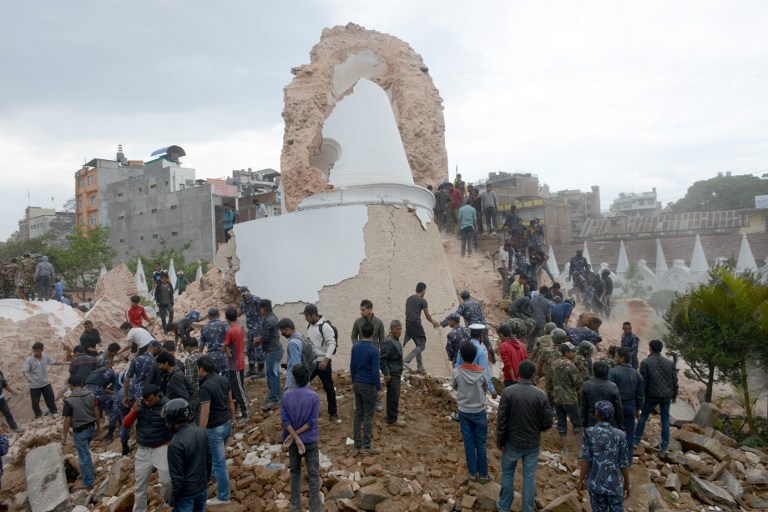
Some 200 Israelis were said to be unaccounted for after a 7.8 earthquake toppled buildings and killed at least 1,800 people in Kathmandu and neighboring areas, officials said.
Nepal’s Home Ministry said the death toll from Saturday’s devastating earthquake climbed to 1,805.
The latest toll puts the overall regional fatalities at 1,865.
Home Ministry official Laxmi Dhakal said Sunday that at least 4,700 people have been injured in the temblor.
The Foreign Ministry said that there were no known Israeli deaths from the catastrophic earthquake, which has been called the worst in the region in over 80 years.
However, Foreign Minister Avigdor Liberman said that there were a number of Israelis, of the estimated 2,000 in the country at the time, who suffered minor injuries.
Many Israelis went on Facebook seeking help locating family members in the country, which is a popular destination for backpackers.
“My brother Atar Dan is in Nepal and hasn’t been in contact since the morning. He left four days ago from Kathmandu for Everest,” Ohad Dan wrote on the social media site, asking people to share the message.
Musician Noam Sadan had posted pictures on Facebook of her sister among a group of seven Israelis who had been hiking in the Annapurna region of the Himalaya Mountains when the quake struck, asking if anyone had heard from them.
She later wrote on Facebook that her sister Na’ama and another member of the group had been contacted.
A Facebook group called “Nepal earthquake updates and Israelis found” was set up as clearing houses for those searching for information on people in Nepal and the online forum Rotter published lists of Israelis who were uninjured but unable to contact family.
Lists of unharmed Israelis also circulated on the messaging application WhatsApp.
The turn to social media for help came as Facebook activated a new Safety Check feature, which allows users in disaster-affected areas to easily inform friends and family that they or others are safe.
“When disasters happen, people need to know their loved ones are safe. It’s moments like this that being able to connect really matters,” Facebook CEO Mark Zuckerberg wrote about the feature.
A website set up to gather information on Israelis in Nepal counted some 250 unaccounted for as of Saturday night, though the number was impossible to confirm.
Foreign Ministry Director General Nissim Ben-Sheetrit told reporters at a press conference that the ministry was working to get in touch with Israelis in Nepal who were out of communication.
“We are trying to locate Israelis who are disconnected from their families,” he said.
Jerusalem was also planning to airlift surrogate mothers bearing Israeli babies to safety, he said.
Nepal is a popular destination for Israeli couples to hire surrogates, and Ynet reported that there were dozens of Israeli couples in the country Saturday with at least 24 newborns.
The Israeli Embassy in Kathmandu opened a situation room and was working to locate Israelis traveling in the country.
The building of the embassy sustained some damage and embassy staff were operating a situation room from the yard, the Foreign Ministry said, adding that staff were out on foot looking for injured Israelis since roads are blocked.
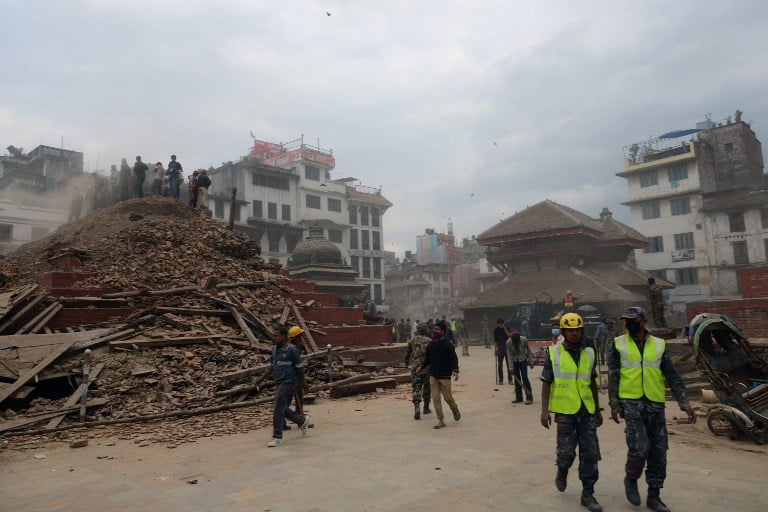
As search and rescue teams and international aid groups headed to the region, officials have noted the poor communication infrastructure in the region hampering rescue attempts.
“Roads have been damaged or blocked by landslides and communication lines are down preventing us from reaching local Red Cross branches to get accurate information,” said Jagan Chapagain, Asia/Pacific director of the International Federation of the Red Cross and Red Crescent Societies in a statement.
Other aid organizations responding to the emergency also struggled to assess the needs with communications cut off around the Himalayan nation.
“Communication is currently very difficult. Telephone lines are down and the electricity has been cut off making charging mobile phones difficult,” said Cecilia Keizer, Oxfam country director in Nepal.
“People are gathered in their thousands in open spaces and are scared as there have been several aftershocks,” she added.
AFP and AP contributed to this report