Italy’s Renzi resigns as PM after crushing referendum defeat
After staking political future on constitutional reform vote, leader says his time is up; result seen as boon for populist forces in Europe
ROME, Italy (AFP) — Italian Prime Minister Matteo Renzi announced his resignation on Monday, hours after learning he had suffered a crushing defeat in a referendum on constitutional reform.
“My experience of government finishes here,” Renzi told a press conference, acknowledging that the No campaign had won an “extraordinarily clear” victory in a vote on which he had staked his future.
Interior Ministry projections suggested the No camp, led by the populist Five Star Movement, had been backed by 59.5 percent of those who voted.
Nearly 70 percent of Italians entitled to vote on Sunday cast their ballots, an exceptionally high turnout that reflected the high stakes and the intensity of the various issues involved.
Renzi said he would be visiting President Sergio Mattarella on Monday to hand in his resignation following a final meeting of his cabinet.
Mattarella will then be charged with brokering the appointment of a new government or, if he can’t do that, ordering early elections.
Most analysts see the most likely scenario as being Renzi’s administration being replaced by a caretaker one dominated by his Democratic Party which will carry on until an election due to take place by the spring of 2018.
Finance Minister Pier Carlo Padoan is the favourite to succeed Renzi as the President of the Council of Ministers, as Italy’s premier is formally titled.
Call for early elections
The main opposition parties went into the vote insisting that there should be early elections if the proposals — curtailing the size and powers of Italy’s Senate and transferring powers from regions to the national government — were defeated.
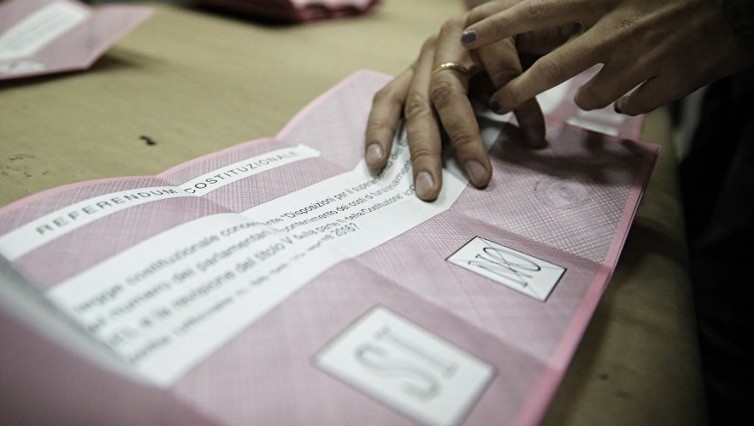
Renzi had gone the final weekend of the campaign insisting he could still win voters around.
And during the day his hopes were raised as turnout in the prosperous north of the country far exceeded that in the south — a pattern which was seen as a potential boost to the premier’s survival hopes.
But it appeared in the end that voters on both sides were equally energized, leaving the balance of forces much as it had been at the start of the campaign.
Opposition parties denounced the proposed amendments to the 68-year-old constitution as dangerous for democracy because they would have removed important checks and balances on executive power.
Spearheaded by the populist Five Star Movement, the biggest rival to Renzi’s Democratic party, the “No” campaign also capitalized on Renzi’s declining popularity, a sluggish economy and the problems caused by tens of thousands of migrants arriving in Italy from Africa.
Matteo Salvini, leader of the far-right Northern League said Renzi should resign immediately and called for early elections.
“God willing it’s over. A new era starts tomorrow I hope,” he had said earlier in the day.
Populist victory
The No vote represents a major victory for Five Star leader Beppe Grillo, who had urged Italians to follow their gut instincts.
But Renzi’s backers believed they were voting for overdue change.

Outside a polling station in Rome, business owner Raffaele Pasquini, 37, told AFP he had voted “Yes” in the interest of his two-year-old son.
“We are voting to try and change a country that has been stalled for far too long,” he said.
Some short-term market turbulence looks inevitable in the wake of the vote.
And some analysts fear a deeper crisis of investor confidence that could derail a rescue scheme for Italy’s most indebted banks, triggering a wider financial crisis across the eurozone.
After the Brexit vote and Donald Trump’s victory in the US presidential election, the No vote is likely to be interpreted as another victory for populist forces and a potential stepping stone to government for Grillo’s Five Star.
But the campaign was not just about popular discontent with the state of Italy. Many Italians of a similar political bent to Renzi had deep reservations about the proposed changes to the constitution.
Under the proposals, the second-chamber Senate, currently a body of 315 directly-elected and five lifetime lawmakers, would have been reduced to only 100 members, mostly nominated by the regions.
The chamber would also have been stripped of most of its powers to block and revise legislation, and to unseat governments.