Jerusalem renovation to make 2,000-year-old Roman street wheelchair-accessible
Ancient paving stones on Christian Quarter road will be relocated as part of a NIS 80 million project to open the Old City’s historic alleyways to people with disabilities
A 2,000-year-old Roman street in the Christian Quarter of Jerusalem’s Old City is being reconstructed to make it more accessible for wheelchairs and strollers as part of a multi-year NIS 80 million ($24.7 million) renovation project, the East Jerusalem Development Company (PAMI) said last week.
Despite facing “nearly every possible constraint” due to the area’s high population density and historical sensitivity, accessibility experts from other regions have been impressed with the project, which has been planned since 2009, PAMI said.
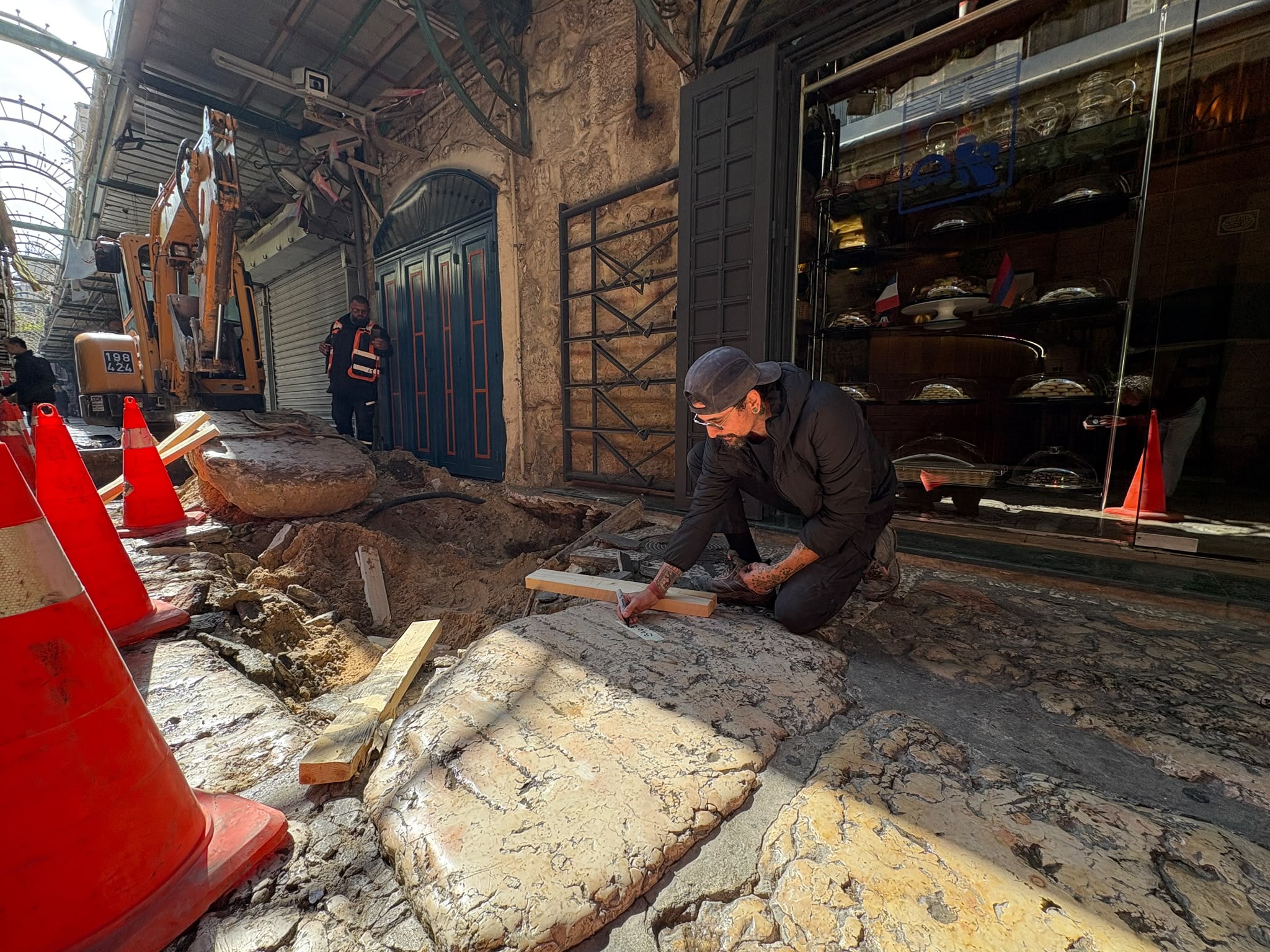
The work on Christian Quarter Street involves removing about 50 ancient stones that date back to around 135 CE, during the early Roman period, and then reinstalling them along the eastern side of the street. This will allow the western side of the street to be leveled so wheelchairs and strollers can pass easily, PAMI said. Water and electricity infrastructure will also be replaced during the project.
Each of the ancient paving stones will be documented by the Israel Antiquities Authority before being lifted. Once it has been removed, the IAA will assess whether the stone can safely be returned to the street or must be preserved elsewhere. Some of the stones are already in fragile condition, PAMI noted.
The project is part of a broader Old City accessibility initiative that was first conceived in 2009. Since implementation began in 2019, about six kilometers of alleyways have been made accessible, including the Via Dolorosa and David Street, PAMI said.
Other upgrades have included improvements to street surfaces, ramps, handrails, public facilities, lighting and signage, as well as upgrades to cleaning and garbage collection systems. The planning process included input from local residents and merchants, PAMI noted.
Work within the approximately one-square-kilometer (0.4-square-mile) area surrounded by the Old City walls proceeded faster than expected during the coronavirus pandemic, when Jerusalem’s streets were empty of tourists, the organization noted.
The improvements will serve the Old City’s approximately 40,000 residents, as well as millions of tourists and pilgrims who visit each year, PAMI said. In 2019 — a peak year for tourism, which has since dropped precipitously — approximately 10 million people visited the site.
The work is being led by the Jerusalem and Jewish Heritage Ministry, the Jerusalem Municipality and the IAA, with implementation by PAMI.
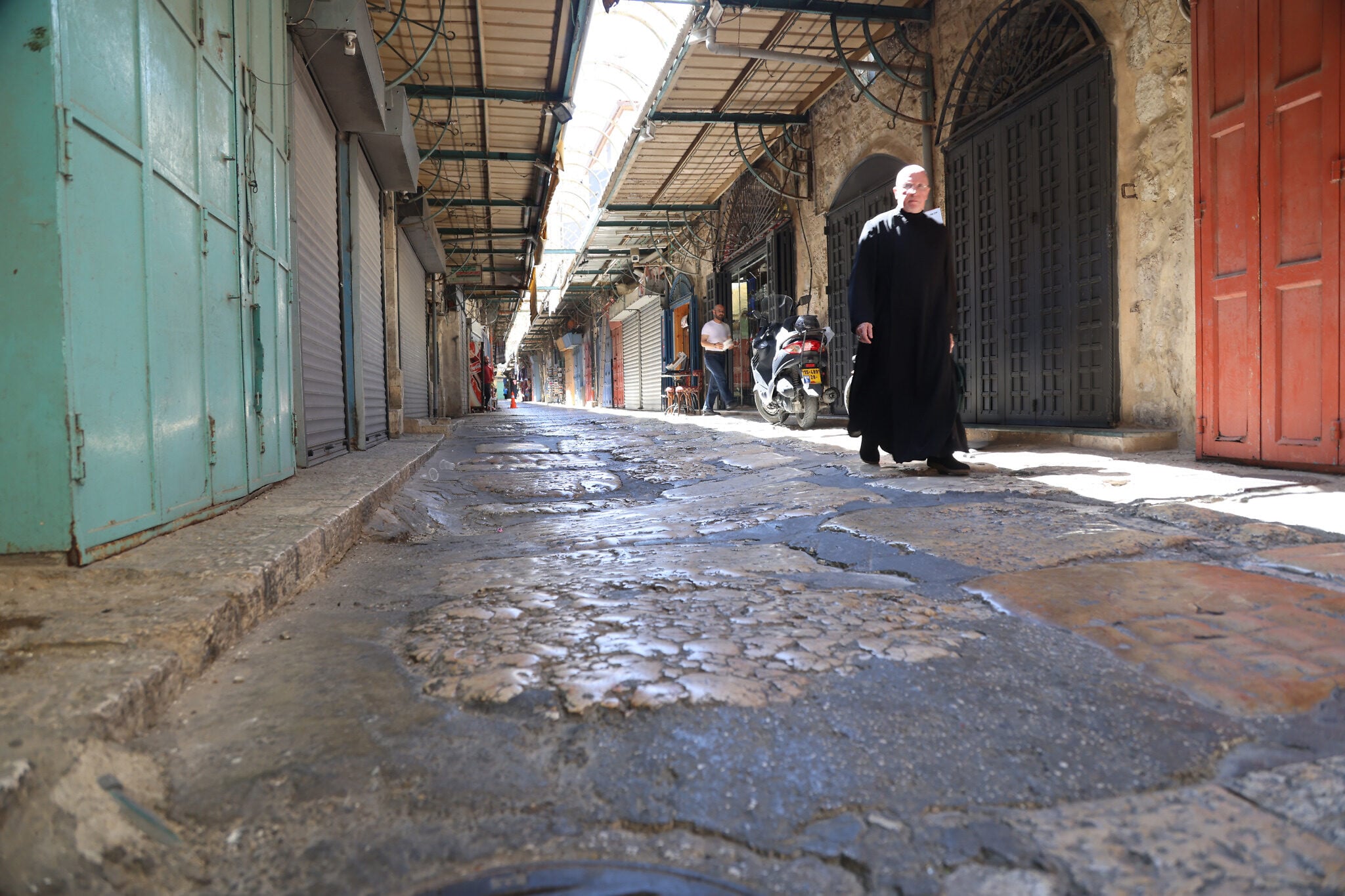
The original Roman-Byzantine stones paving the main street of the Christian Quarter were first uncovered in 1977, when archaeologists Shlomo Margalit, Doron Chen and Giora Solar discovered the remains of an earlier street about 60 centimeters (two feet) below the modern street level. The stones, some measuring up to one by two meters (3.3 by 6.5 feet) and around 50 centimeters (about 1.5 feet) thick, were subsequently raised to the level of the modern street, allowing visitors to walk directly on the paving used 1,900 years ago.
As part of the city’s broader efforts to make the Old City accessible, navigation assistance is available to visitors with visual impairments through the StepHear app, which provides audio guidance at around 60 locations in the Old City in 11 languages.
Another app, Accessible JLM, maps accessible routes in the Old City, and has been downloaded on Android and Apple by over 140,000 people since its launch in April 2019, PAMI said.
“Making the Old City accessible is much more than adapting sidewalks and paving,” said Jerusalem Mayor Moshe Lion. “It is an initiative that expresses a fundamental value of equality, dignity and every person’s right to experience Jerusalem’s most important places for themselves.”