Jerusalem girds for possible violence amid swirling tensions
Temple Mount reopens as Fatah calls for 'Day of Rage' to avenge death of suspected shooter of Jewish activist
Police were put on high alert and access to the Temple Mount was opened but restricted Friday morning, as Jerusalem braced for a renewal of violence that has roiled the capital for weeks.
A day after Israel sparked Palestinian anger and international condemnation by shutting down all access to the Temple Mount for the first time in decades, officials said they would reopen the holy site to Muslim worshipers, though men under 50 would be barred.
The announcement came as the Palestinian Fatah faction called for a “Day of Rage,” to protest against the closure and the death of East Jerusalemite Mu’taz Hijazi, suspected to be behind the attempted assassination of Temple Mount activist Yehudah Glick on Wednesday night.
Over 1,000 police officers were set to be dispatched around hotspots in the capital to head off any possible violence, Israeli media reported.
Police said they killed Hijazi after he opened fire on them during an arrest attempt. Palestinian officials charged Hijazi was killed in cold blood. Adnan Gaith, the head of Fatah in Jerusalem, called the killing “terrorism.”
Hijazi was buried outside Jerusalem’s Old City late Thursday night with a heavy police presence to prevent the funeral becoming a riot, said an AFP journalist at the scene.
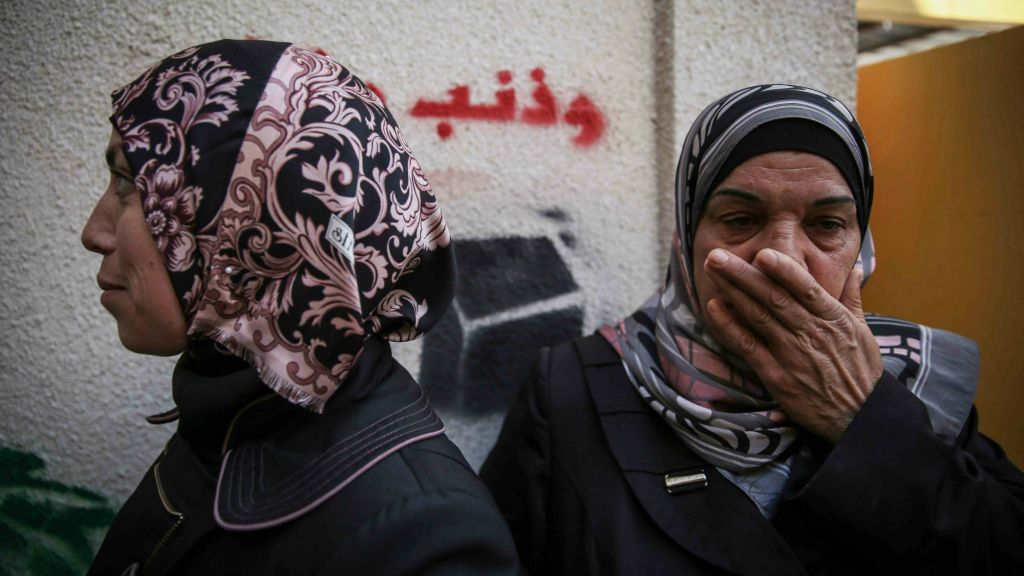
Despite a court order limiting the number of mourners to 45, about 300 people followed his body into the cemetery, but police did not try to stop them by force.
Glick, a US-born activist who has lobbied for Jewish rights on the Temple Mount — known as Haram al-Sharif to Muslims — was shot four times Wednesday night while leaving a Jerusalem conference. He was listed in serious condition Thursday night.
The shooting heightened tensions in the city, which has seen several weeks of unrest in a number of flashpoint neighborhoods, including rock-throwing incidents, Molotov cocktail attacks and clashes with police by firework-armed protesters. Police presence in the city has been beefed up in an effort to quell the unrest, which flared earlier this month after a Palestinian man drove his car into a crowded train station, killing two.

Thursday saw sporadic riots around East Jerusalem, including in Abu Tor, Jabel Mukaber and the Old City.
The US Consulate in Jerusalem said it would bar its officials from entering the Old City on Friday out of fear of unrest, and urged caution for US citizens in East Jerusalem.
Much of the anger on the Arab street was directed against the closure of the Temple Mount.
A spokesman for Israeli Prime Minister Benjamin Netanyahu said the closure aimed “to prevent riots and escalation, as well as to restore calm and the status quo to the Holy Places.”
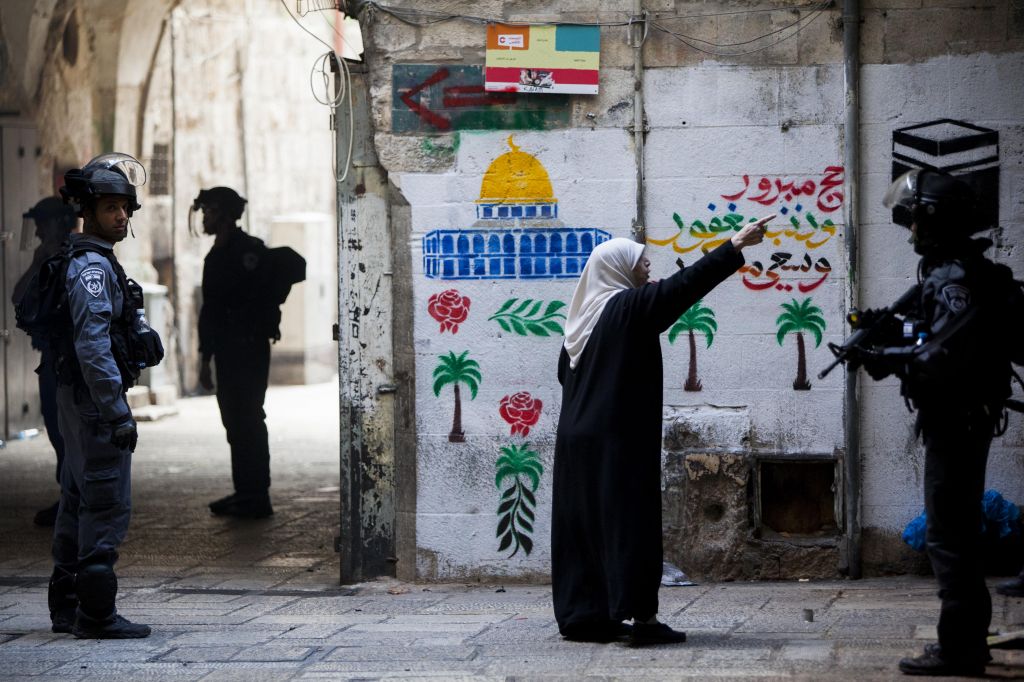
Officials from the Jerusalem Islamic Waqf, which administers the compound, said it was the first closure since Israel seized Arab east Jerusalem during the 1967 Six-Day War, though Israeli media said it had been closed in 2000.
“This dangerous Israeli escalation is a declaration of war on the Palestinian people and its sacred places and on the Arab and Islamic nation,” Palestinian Authority President Mahmoud Abbas said through his spokesman Nabil Abu Rudeineh, warning it would only fuel “more tension and instability.”
Jordan’s Islamic affairs minister, Hayel Daoud, said it amounted to a case of Israeli “state terrorism.” Under its 1994 peace treaty with Israel, Jordan has responsibility for Muslim holy sites in Jerusalem.
In Washington, Secretary of State John Kerry called for Israel to open the site and keep the status quo in the compound, where Jewish prayer is currently banned.
Any change, he said in a statement, would be “provocative and dangerous.”
Kerry said he was in touch with Israeli, Palestinian and Jordanian leaders to calm tensions.
Jordan considers itself the custodian of Jerusalem Muslim holy sites.
Times of Israel staff and AFP contributed to this report.