Jews recall MLK’s legacy, ‘from Ferguson to Palestine’
King’s staunch Zionism and battle against anti-Semitism in the black community take back-seat in divided Jewish community
BOSTON – With racial tensions simmering nationwide, American Jews recalled Dr. Martin Luther King’s legacy this weekend through civil rights movement-inspired “Justice Shabbats” — even as some Jewish groups made use of that history to denounce Israel.
Half a century after Dr. King walked arm-in-arm with rabbis to demand racial equality, his movement’s legacy ignites the activism of American Jews on both ends of the Israel spectrum, pitting ardent Zionists against Jews who beg to differ with King’s 1968 assessment of Israel as “one of the great outposts of democracy in the world, and a marvelous example of what can be done.”
Most typical, however, were Friday evening services to honor King’s life and fight against racism, often organized in partnership with black churches or the occasional Islamic group. The leadership role of American Jews in the civil rights struggle was recalled from some pulpits, with fewer mentions made of less unifying topics like King’s staunch Zionism, or his battle against anti-Semitism in the black community.
At Boston’s Temple Israel, the city’s mayor joined almost 1,000 congregants and community members on Friday evening to honor King and call for the continuation of his work. King called Boston his “second home,” and the city remains an epicenter for activist Jews of both the ’60s generation and today’s self-labeled “progressive” Jewish college students.
‘It starts by talking to each other openly and honestly’
Friday’s memorial gathering came a day after demonstrators with the Black Lives Matter movement blocked a major artery into Boston during rush hour, quadrupling commuter times and landing 29 of the activists in handcuffs. Following the police-caused deaths of unarmed black men in Ferguson, Missouri and New York City’s Staten Island last year, the US has seen a wave of protests calling attention to allegedly racist police practices.
Like Ferguson, Boston is a “majority-minority” city with a largely white police force, but disturbances have been limited to incidents like Thursday morning’s highway action. Calls for calm and dialogue have ruled the day in Beantown, which also held it together following the 2013 Boston Marathon terrorist attacks.
“I’m proud of Boston’s response to the events of Ferguson and New York,” Mayor Martin J. Walsh told the crowd at Temple Israel following a tambourine-filled Kabbalat Shabbat service.
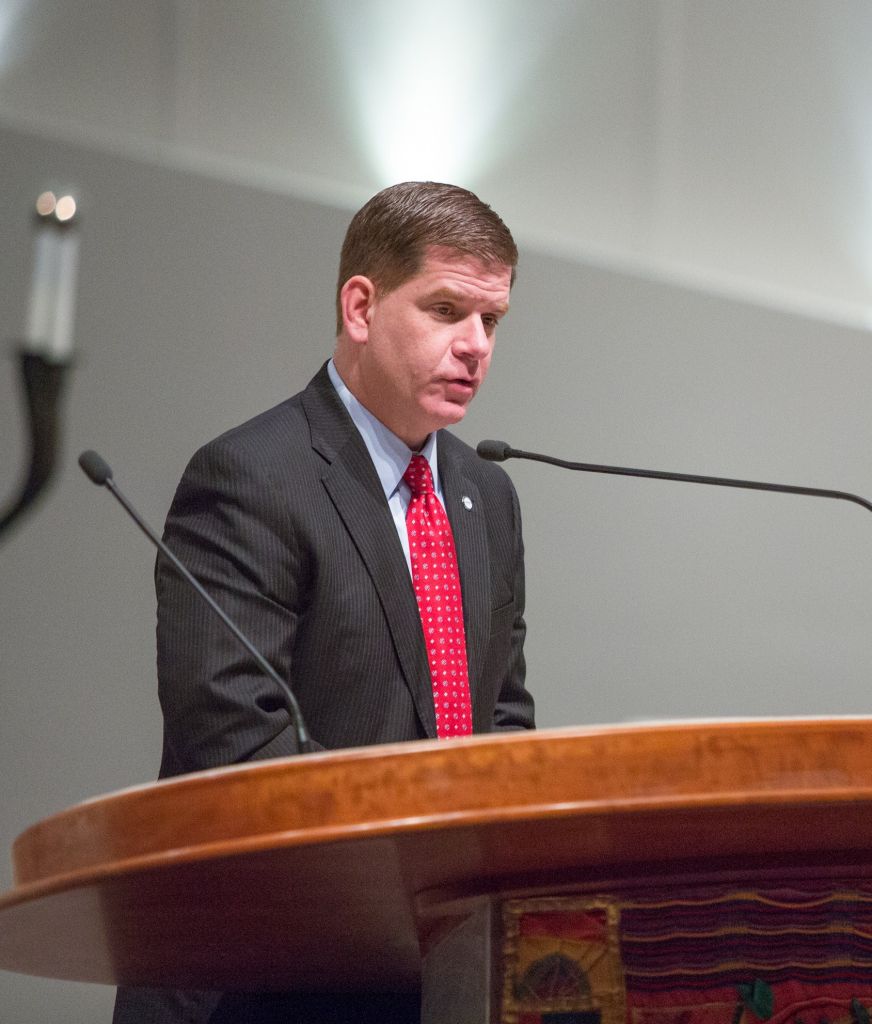
“It starts by talking to each other openly and honestly,” said Walsh, citing King’s admonition to “confront injustice in your own city.”
“We must bring King’s voice as well into the boardrooms and into the courtrooms,” said Walsh in his remarks to New England’s largest Reform congregation.
The mayor reminded attendees that King addressed Temple Israel 50 years ago this April, when he visited the congregation at its previous, green-domed marble edifice, across the street from where King earned his doctorate at Boston University.
When King visited Boston that April, he’d just finished the historic march to Montgomery, depicted in the new film “Selma.” According to Walsh, the preacher touched on some of his most poignant themes during his remarks at Temple Israel that spring evening.
‘We must all learn to live together as brothers, or we will perish as fools’
“The world has become a neighborhood, but not a brotherhood,” King told the packed sanctuary. “We must all learn to live together as brothers, or we will perish as fools,” he said.
Days later, King led Boston’s “mile of marchers” from the South End to the Boston Common, where he delivered a speech to 22,000 people huddled in the rain. There, the leader called racism a “cancer” eroding the “moral health” of the nation, and he lambasted racially segregated school systems throughout the US.
Begging to differ on Dr. King’s legacy
For some Jewish activists, remembering King and his movement is also a matter of social justice in the Middle East, specifically Israel’s role in allegedly oppressing Arabs west of the Jordan River. Three months ago, elite Boston-area universities hosted national gatherings of both Students for Justice in Palestine and the Open Hillel movement, two heavily Jewish groups committed to eroding US support for Israel.
During their October gathering at Harvard University, Open Hillel leaders announced plans to partner with Jewish civil rights veterans who have since made waves delegitimizing the Jewish state, including “Freedom Summer” participants Ira Grupper, Larry Rubin and Dorothy Zellner, who speaks about Israel having “hijacked” Judaism.
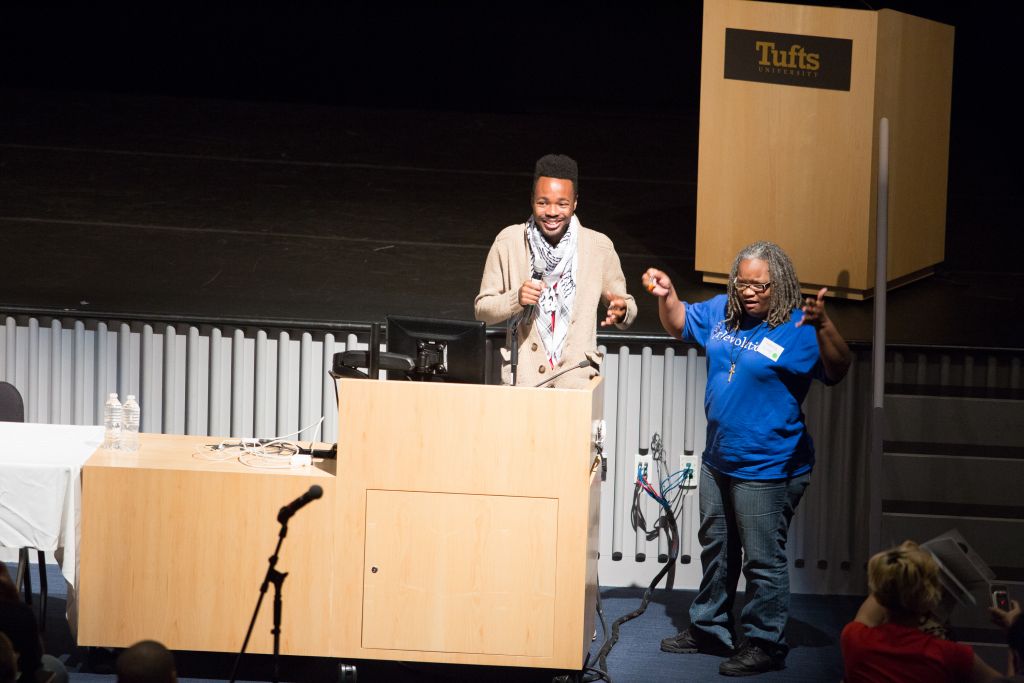
“Jewish ‘Freedom Summer’ veterans will be traveling to Hillels across the country this spring to talk about their experiences in the civil rights movement and their views on Israel-Palestine,” said Eva Roben, an Open Hillel leader and 2013 Harvard graduate.
“Stay tuned for updates on how Hillel responds when these Jewish leaders, who represent some of our proudest social justice traditions, violate [Hillel’s] ‘standards of partnership,’” Roben told conference participants.
At their global conference in Orlando last month, Hillel International leaders countered with their own plans to latch onto the civil rights legacy. To commemorate the movement and passage of the 1965 Voting Rights Act, Hillel will send old-time activists to campuses around the country, culminating in an equality-focused Hillel institute to take place in St. Louis this August.
Unlike Open Hillel’s campaign to draw a line between racism in the US and Israel’s “occupation” of the Palestinians, one can expect Hillel International to keep the struggle for civil rights in America focused squarely within US borders, disconnected from Israeli policies.
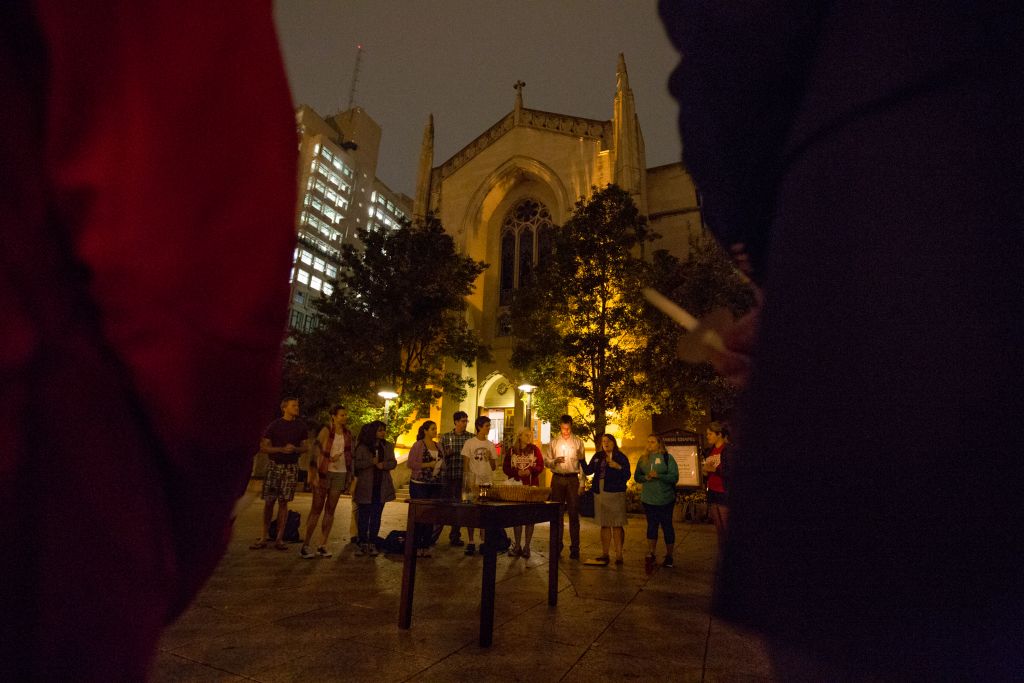
“We are fortunate to have the opportunity to hear from people that lived this struggle, who experienced the transformation of the country first-hand,” said Sheila Katz, Hillel International’s vice president for social entrepreneurship.
‘We have been moved to witness powerful expressions of solidarity from Palestinians in Gaza to African-Americans in Ferguson and back again’
“From the march on Selma to the Voting Rights Act and thousands of flash points in between, the activists of 1965 helped to reshape the country for the better, and it’s our hope that students will internalize the lessons learned in order to commit to furthering civil rights today,” Katz said in a statement about the just-launched campaign.
For their part, leaders with Jewish Voice for Peace — the driving force behind Students for Justice in Palestine — firmly disagree that Israeli policies in the West Bank and Gaza have no relation to racial oppression in the US.
“We have been moved to witness powerful expressions of solidarity from Palestinians in Gaza to African-Americans in Ferguson and back again,” said JVP’s advocacy director, Sydney Levy, in a statement published when both the Ferguson anti-police riots and Israel’s conflict with Hamas in Gaza were at the top of the news in August.
“We know that at the root of Israel’s assault on Gaza this summer is a belief that Palestinian lives do not matter. It’s also not surprising to see the similarity in the tactics and technologies of repression against those who are rising up nonviolently in both places,” he said.
In short, JVP sees US government and society’s “devaluation of African-American lives” mirrored in Israel’s treatment of Palestinians.
- Jewish Times
- Boston
- Martin Luther King Jr.
- racism
- civil rights
- Abraham Joshua Heschel
- Jewish-black relations
- social justice
- Ferguson
- anti-Zionism
- antisemitism
- Students for Justice in Palestine SJP
- Open Hillel
- Hillel
- Jewish Voice For Peace
- African-Americans
- racial discrimination
- Israeli-Palestinian conflict
- occupation
- interfaith dialogue
- non-violence
- social activism
- pro-Palestinian activists