‘Jihadi John’ reportedly considered suicide in 2010
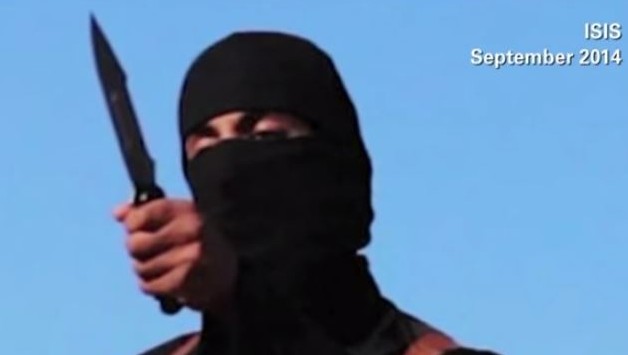
British Islamic State executioner, identified as Mohammed Emwazi, told a reporter of his anxiety over MI5 surveillance
The London man believed to be Islamic State executioner “Jihadi John” told a journalist four years ago that surveillance by British security services had left him contemplating suicide, it emerged Saturday.
Mohammed Emwazi, named by media and experts as the militant thought to have beheaded at least five Western hostages held by the IS group, told the Mail on Sunday reporter that he felt like a “dead man walking.”
Cage, a British civil rights group that was in contact with Emwazi, claims that domestic spy agency MI5 had been tracking him since at least 2009, and blamed his radicalization on their “harassment.”
Prime Minister David Cameron and a former head of foreign spy agency MI6 strongly rejected the idea, while London mayor Boris Johnson accused Cage of an “apology for terror.”
In an email to Mail on Sunday reporter Robert Verkaik, dated December 14, 2010, Emwazi described how he sold his laptop to someone he met online who he subsequently came to believe was with the security services.
“Sometimes I feel like I’m a dead man walking, not fearing they may kill me. Rather, fearing that one day, I’ll take as many pills as I can that I can sleep forever!! I just want to get away from these people!!!” Emwazi wrote.
Emwazi was born in Kuwait but moved to London when he was a child and attended school and university in the capital.
The Daily Telegraph reported this weekend that he went to high school with two other boys who went onto become militants — Choukri Ellekhlifi, who was killed fighting in Syria, and Mohammed Sakr, killed fighting in Somalia.
A spokeswoman for the Department for Education said Saturday that it had launched a review into how Quintin Kynaston school in north London dealt with radicalization “to see if there are any lessons we can learn.”
It was also reported that Emwazi had contacts with the men responsible for failed attacks on London’s public transport system in 2005, two weeks after suicide bombings killed 52 people in the capital.
All the revelations add to pressure on the security and intelligence agencies to explain why they did not act on their suspicions about Emwazi before he traveled to Syria.
Cameron on Friday defended their actions, saying they have to make “incredibly difficult judgments, and I think basically they make very good judgments.”
Press reports on Sunday said Kuwaiti authorities are closely monitoring several relatives of Emwazi who live and work in the Gulf emirate where he was born.
A number of relatives of Emwazi are working in Kuwait and like him hold British citizenship, Al-Qabas newspaper reported.
“Security agencies have taken the necessary measures to monitor them round the clock,” the paper said, citing an “informed source.”
The daily did not say how many of Emwazi’s relatives are in Kuwait. Authorities have remained silent on the issue.
Al-Rai newspaper cited security sources as saying that Emwazi’s father, Jassem Abdulkareem, also a British national, is currently in Kuwait and is expected to be summoned by authorities.
Emwazi visited Kuwait several times, the last of them between January 18 and April 26, 2010, Al-Qabas said.
He arrived from the United Arab Emirates using his British passport to obtain a Kuwaiti entry visa.
A year later, he was denied entry to Kuwait after his name came up during investigations into attacks in Britain, the newspaper said.
Emwazi’s visits to Kuwait were largely of a social nature and he was briefly engaged to a stateless Kuwaiti resident, the paper added.
The Gulf emirate has tens of thousands of stateless residents known as bidoons.
Emwazi’s family, who are of Iraqi origin, were among them.
They applied for naturalization but their names were removed from the list of prospective citizens because of allegations that they collaborated with the Iraqi army during its seven-month occupation of Kuwait in 1990-1991, Al-Qabas said.