Jolted by aftershocks to an earthquake that never was
Revelations over deals negotiated by Netanyahu and Arnon Mozes inspire a fresh round of soul-searching at Yedioth, Mozes-bashing at Israel Hayom, and cheering for more at Haaretz
Anyone who’s been at newspapers or other workplaces during minor upheavals and scandals knows there’s usually a bit of chaos, some scrambling, and a general rally-around-the-flag feeling coming from the sense of being misunderstood or wronged by those on the outside.
What’s happening at Yedioth Ahronoth is that writ large, and there is no escaping the fire raging in the house that publisher Arnon Mozes built and has now apparently put a match to. After Mozes was apparently caught on a tape essentially kowtowing to Prime Minister Benjamin Netanyahu’s demand that he sideline hostile writers and install more friendly ones, in a partial transcript published Tuesday night, the paper shows maturity in tackling the issue head-on, though it also exhibits signs of rallying around its embattled leader.
The issue takes up almost the whole front page of Yedioth, as it does in the other major dailies, though none of them have as much skin in the game.
An editorial by editor-in-chief Ron Yaron takes up half the page, and is at turns scathingly critical of the deal apparently in the works and defensive of the boss-man. Titled “When the house shakes,” Yaron’s editorial makes reference to Mozes’s claim to Netanyahu that moves they are talking about would cause a temblor.
“This newspaper would not have survived that earthquake. All of us, to a person, would have left and found another home. And then, in any case, Yedioth Aharonoth would not have been the newspaper you are now holding in your hand. Our dear readers — we, the editors and writers, are loyal first of all to you, and only then to the one who pays our salary,” Yaron writes.
But he also says Mozes is “utterly loyal” to the paper and downplays the influence he has, comparing the publisher to an art gallery owner who can hire or fire the director but not choose what goes on the wall.
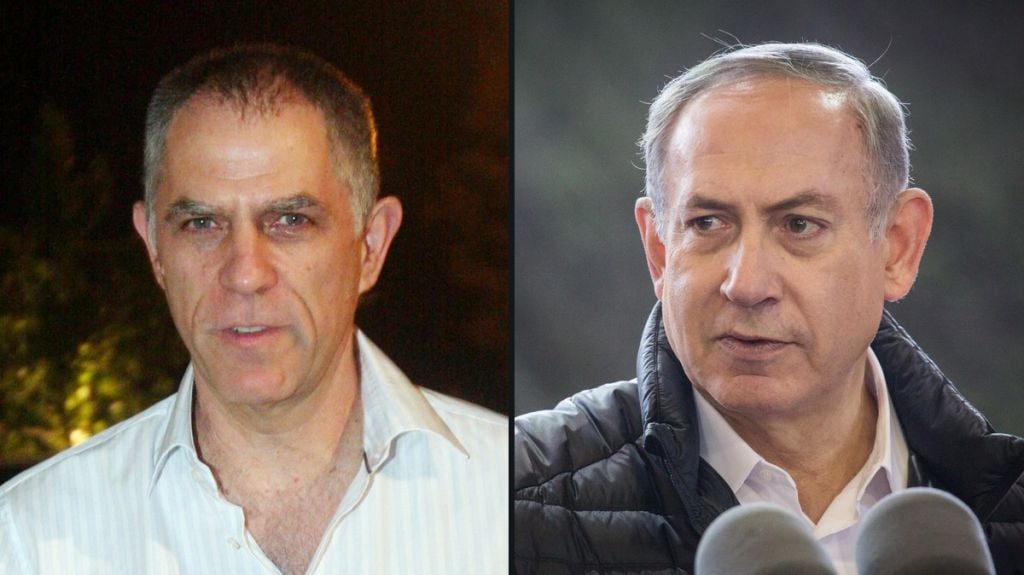
In another column, Ben-Dror Yemini, possibly the closest personage the paper has to someone who goes easy on Netanyahu, addresses suspicions that his joining the paper around the time these talks were taking place had something to do with them.
“Despite the criticism, sometimes harsh, that I’ve published against Netanyahu in the past, even before I joined Yedioth, I know he says nice things about me. And here and there, I must admit, we are even in touch. This revelation only increases the suspicions around me,” he writes. “But the senior editorial person who came to me to offer me a job at Yedioth did that over the years more than once. Only two and a half years ago, with the collapse of Maariv, did it actually happen.”
Pro-Netanyahu Israel Hayom, the paper that would have seen its fortunes sink had the secret deal gone ahead, also shows loyalty – in its case to the prime minister – and little else.
The stories in the tabloid paint Mozes with the harshest brush possible, including a piece on Yedioth writer Nahum Barnea under the headline, “There were times at Yedioth when outside interests intervened,” which conveniently leaves out the fact that Barnea is talking about rumors and said that they were rare cases.
The paper also devotes a full page to another alleged misdeed by its rival, namely that Mozes spoke to MK Eitan Cabel over the bill that would have reduced Israel Hayom’s circulation, and that the lawmaker’s mentions in the paper went up by 70% around that time.
“The moment it became clear there was a bill like this, Noni spoke to me. He didn’t meet with me but he spoke to me like [Amos Schocken] speaks to me about things that concern his paper, Haaretz,” the paper quotes Cabel telling Channel 2.
In this case, Haaretz finds itself nowhere near the baby pool of mud where the two other papers are busy wrestling, but it’s making the most of its front-row seat, filling the top half of its front page with stories connected to Netanyahu’s legal woes.
The paper’s lead headline focuses on Netanyahu asking Mozes to blackball the unfriendly reporters, but not Mozes going along with it. In an column by commentator Amir Oren and the paper’s lead editorial, though, the focus shifts to Attorney General Avichai Mandelblit, urging him to take action and charge the prime minister with criminal offenses in not just one of the cases for which he is being investigated, but both.
“The attorney general cannot dally. He must act quickly and resolutely, and use the power he has to issue indictments against anyone who dares undermine public faith for the good of private interests. Any other decision will cast a heavy shadow over the institution of the attorney general and Israeli democracy,” the editorial reads.
Buzzfed
Considering Netanyahu’s denunciations of the “biased leaks” of the recordings’ contents, he’s only one step away from declaring it all “fake news,” as US President-elect Donald Trump did regarding a dossier alleging Russian possession of a tawdry videotape of him and some Muscovite prostitutes.
But even without Netanyahu linking the two, Yedioth does it itself, reporting Sunday that Buzzfeed confirmed Yedioth’s report on Israeli concerns surrounding the dossier, which was published by Buzzfeed. Confusing? That’s because it’s so darn fake.
“The site … even quoted the expose by Ronen Bergman,” Yedioth crows pathetically.
Joining them in the “fake news” category is a thinly sourced article in Haaretz reporting that Trump’s team is strenuously opposed to the Paris conference that kicked off Sunday, especially the timing.
Tying all the affairs together, Haaretz op-ed writer Rogel Alpher says the comparison of Israel’s situation with the Palestinians to apartheid South Africa runs even deeper, drawing parallels between Netanyahu’s use of Israel Hayom and South African leader B.J. Vorster, who was brought down with a similar scandal.
“Netanyahu is following in Vorster’s footsteps. And Israel is following in South Africa’s. Vorster was succeeded by P. W. Botha, another apartheidist,” he writes. “This shows us that after Netanyahu falls, his successor won’t wipe out apartheid: Netanyahu will fall, apartheid will stay.”