Justice is blind for Michigan residents
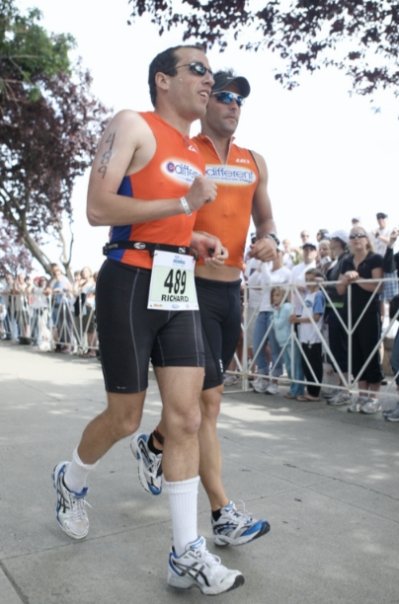
Visually impaired Justice Richard H. Bernstein is a tireless advocate for the disabled. He's also an 18-time marathon runner and an Ironman athlete. Why he feels blessed
In November 2014, Attorney Richard H. Bernstein was elected to the Michigan Supreme Court in a heated statewide race in which he ran against a Republican challenger who outspent him a whopping eight-to-one.
Victory in an electoral race for anyone against such odds is already an amazing feat. But the Detroit native also made history by becoming Michigan’s first blind justice.
Justice Bernstein, 41, suffers from retinitis pigmentosa, an inherited disorder, and has been legally blind since birth. Despite his disability, he demonstrates there’s nothing people with special needs can’t do — including running 18 marathons and two triathlons. And even an average day in his life is a reminder that we’re all capable of great things.
“I literally work about 15 hours every day,” the justice says. Much of his time, he says, is dedicated to what he calls “the intensification of memorization.”
“I have to memorize and internalize every case. I have to know them incredibly well,” he explains. “While my colleagues can use notes and read while sitting on the bench, I have to know the cases cold.”

Dedicating hours and hours to committing information to memory is nothing new for Bernstein. While in law school at Northwestern University (one of only four US law programs who would accommodate a visually impaired student like himself) he arranged for people to read to him over and over until he memorized all the material for class. He says he declined to use Braille because “one page of a textbook equals 70 pages of Braille.”
Today, Bernstein has an additional state-paid assistant who helps him prepare for oral arguments and for conference, which occurs weekly.
‘There are people’s lives on the line’
“Conference,” he says, “is where you make a determination into which cases the Supreme Court is actually going to hear. Every week there will be 26 cases and I have to know all of them until they’re embedded in my mind because for all intents and purposes there are people’s lives on the line.”
Listening to Bernstein, I remark that he must have an incredibly good mind.
“I don’t consider myself very smart,” he says, “but I work hard. There are some people I went to school with who were naturally book smart, talented, and everything came to them easily. I wasn’t like that. For me, nothing is natural, it just comes with incredible effort.”
A tireless advocate for disabled rights
After graduating from law school in 1999, Bernstein left Evanston, Illinois to return home to Michigan to join the Sam Bernstein Law Firm of Farmington Hills, headed by his father. Working alongside his siblings, Beth and Mark, he started its pro bono public services division, which focused on disability rights litigation.
‘I took cases that nobody else wanted to litigate because they were too costly, difficult, or challenging’
“I took cases that nobody else wanted to litigate because they were too costly, difficult, or challenging,” says Bernstein of his 15-year legal career before becoming a justice.
Some of his most renowned cases include a joint action with the US Department of Justice against the City of Detroit to fix the wheelchair lifts on its buses; a suit representing the Paralyzed Veterans of America in an action against the University of Michigan for failing to accommodate spectators with disabilities in its stadium renovation (which resulted in the university creating accessible seating, parking, bathrooms, and more) and a settlement with Delta Airlines and the Detroit Metro Airport that led to better access for disabled travelers.
But it is not the need for equal access that Bernstein, a leader and advocate for generating awareness and acceptance for people with disabilities, considers the foremost misconception the general public has regarding the disabled.
“The biggest challenge they face,” he says, “whether it’s physical or cognitive, is employment. The number one thing that could really have the biggest impact and effect on people with disabilities regardless of the disability is having a job.”
Bernstein knows firsthand how having a job changes everything.
Speaking candidly about his own experience he says, “When I was at law school, I had 65 interviews with various laws firms. Out of them, how many callbacks just to explore employment — we’re not talking job offers — do you think I got?”
After a long pause he solemnly answers: “Zero.”
Given such adversity, many people would become not only disheartened, but also discouraged. Bernstein, however, harbors no bitterness.
“In the employment arena, I realize that someone like me is viewed as challenging or difficult,” he says. “The normal reaction by hiring committees is to just move on to the next person.”
‘The reason I work 15 hours a day, sleep in hotels, am constantly on the move… is because I can make life better for other people’
He’s also cognizant of the fact that without the votes of the people of Michigan a little over a year ago, he wouldn’t hold the position of supreme court justice today.
“If you were to go back 50 or 70 years ago, people with a severe disability like myself would have been segregated from society and probably lived in institutions,” he says. “That was the trajectory that people with disabilities or special needs would have ultimately been on.”
“The reason I work 15 hours a day,” he says forcefully, “why I sleep in hotels every night, why I’m constantly on the move, is because I’m so blessed to be in a state like Michigan where people would give me an opportunity to serve them in the capacity that I’m able to serve them. I have the possibility to make life better for other people. That’s what drives me and makes life worthwhile.”
Along with the people of Michigan, Justice Bernstein also credits his family for what he’s been able to achieve.
‘In the US, 85% of the blind population is currently unemployed’
“I’m incredibly blessed to come from the family I come from,” he says. “In the US, 85% of the blind population is currently unemployed. That’s not because blind people aren’t passionate, hard working, and wouldn’t make the most incredible employees if given the chance. It’s because they haven’t been given the resources and opportunities that I was given.”
A phrase oft-repeated by Bernstein is: “To whom much has been given, much is expected.”
And his personal aide Tim MacLean says, “He lives by that every day of his life.”
Strength and inspiration
An unstoppable force of nature, Bernstein has traveled throughout the US and the world, including Ecuador, Australia, Brazil and Israel to give inspirational speeches for various organizations from the Lion’s Club to Shabbat Across America, as well as a much celebrated Ted Talk this past autumn titled “The Source of Your Strength.”
In 2010, he came to Israel through the OneFamily Fund, an organization that works to help victims of terrorism. Bernstein met with survivors of terrorist attacks in Sderot and spoke on how they can cope with disabilities caused by those attacks.
Bernstein visits Israel frequently. In 2011, he participated in the Israman triathlon in Eilat.
He speaks of Israel with the same boisterous enthusiasm in which he talks about law and justice.
“I love Israel and Israelis,” he exclaims twice before continuing. “In Israel, I can ride the buses and go anywhere and everywhere on my own and be OK.”
“For example,” he says, “when I go to the Central Bus Station in Jerusalem, I can’t walk more than five feet before people come and say, ‘Can I help you? Where are you going? Can I assist you?’ Then they’ll proceed to take me to where I have to go and then they’ll find someone on that bus who’s going to watch over me until I arrive at my stop.”
With acute amazement and sincere gratitude in his voice Bernstein continues by saying, “Israelis form a committee so that they can make sure that they’re helping me find my destination. It’s the one country in the world where I know if I go anywhere or do anything I can be completely independent because people are always going to help me and there’s never even a question! It’s truly remarkable,” he says.

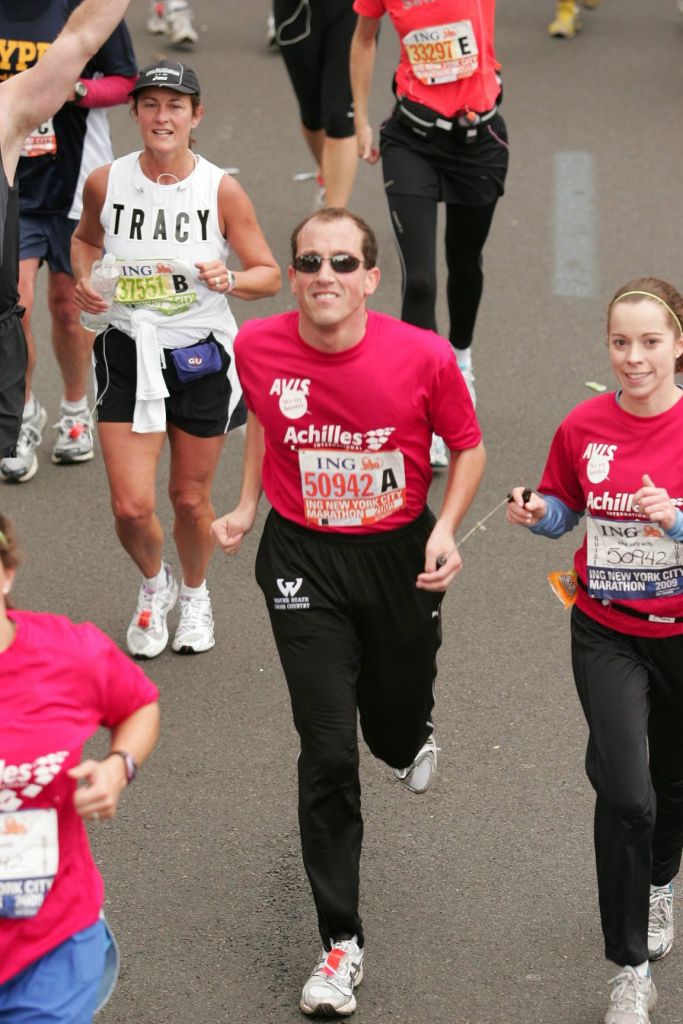
Apart from long workdays, intense memorization, and an exhaustive schedule (including almost weekly visits to his girlfriend in New York), Bernstein is also an avid runner. He wakes up at 4:30 every morning to get an hour or two of running into his daily routine.
Asked how he manages to do on average about eight miles every day, he states matter-of-factly, “It’s all time management. I have to run. It’s absolutely essential for me to keep my mind clear.”
“He really is the Energizer Bunny,” quipped his judicial assistant Susie Fear, who went on to say that Bernstein is the most appreciative boss she’s ever had.
When I relate her words to the justice he says, “I love my team. From my chambers there’s tons of energy, life, affection, and laughter. Most people will call their staff ‘clerks,’ but I call them my team. I think that’s important language – functioning as a team.”
Judaism and a promise to God
Undoubtedly, Bernstein sees himself on a spiritual mission. He has been a longtime member of Shaarey Zedek, an egalitarian Conservative Jewish synagogue in Detroit, and I ask him how being Jewish has influenced his perspective.
“I really believe that we are given life experiences for a reason and they make us better at what we do. Without the life experiences that God has given to me I don’t think I’d be as good of a judge,” he says.
According to Bernstein it’s absolutely essential for attorneys and judges “to recognize and understand the challenges and difficulties real people face on a daily basis” and to treat everyone with “compassion and respect.”
Bernstein admits that he often wondered if he was going to make it through the “unbelievably arduous and difficult” process of law school and turned to God throughout.
“I made a promise to him that if he gave me the opportunity to graduate from law school, to pass the bar, and the chance to practice law,” says Bernstein,
“then I’d dedicate my life and professional career towards making life better for those with and without disabilities that otherwise don’t have access to legal representation.”
The young justice sums up his strongly held belief while sitting on and off the bench: “Adversity, hardship and challenges give rise to pain and purpose, but most importantly connection with others. An easy life doesn’t always correspond to a good one.”