Kerry: French peace confab plan reflects world’s ‘frustration’
Secretary affirms US not yet committed to divisive Paris effort, but says not moving forward not an option; Obama: Both sides must be given hope
US Secretary of State John Kerry said efforts to revive the stalled Israeli Palestinian peace process need to take a “slightly different” course than they have in the past, but stopped short Wednesday of endorsing a French proposal for a regional peace conference.
Kerry also said he saw the justification behind the multilateral confab, backing comments reportedly made by an Israeli general weeks ago that rampant violence over the past month would only get worse without a diplomatic effort on the horizon.
Paris’s proposal — to convene two regional peace conferences aimed at advancing the implementation of the two-state solution, and unilateral recognition of Palestinian statehood should the effort fail — is “a reflection of the frustration the international community feels” about the turmoil in the region, the US top diplomat told a hearing on foreign policy at the US House of Representatives. “That why we remain committed to Israel, to Israel’s stability, committed also, however, to move the process forward and bring the parties to the table.”
But Kerry said the US was still not ready to support the plan, which Israel opposes, saying Washington was “evaluating it.”
“We don’t have all the details,” Kerry said about the French plan. “We’re trying to get some details of what exactly is it trying to achieve and how and what are the rules of the road would be.”
Kerry asserted at the hearing that the US government opposed any unilateral steps toward Palestinian statehood.
“But what’s happening now is that there’s a multilateral movement that is growing that is concerned about any number of things,” he said.
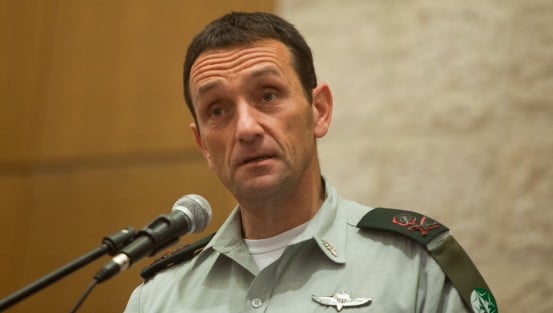
Also in the hearing, Kerry quoted Israel media reports about statements made by IDF military intelligence chief Herzl Halevi, who told a Knesset committee that lack of progress with the Palestinians could lead to more violence.
“So my hope is everybody will take note of that, not as a threat but as a sense of reality about the downward spiral that comes if there isn’t an active process that is genuine, and I think that requires a slightly different formula than has existed previously,” Halevi said.
Twenty-nine Israelis and three foreign nationals have been killed in a wave of Palestinian terrorism and violence since October, during which nearly 170 Palestinians have also been killed, some two-thirds of them while attacking Israelis, and the rest during clashes with troops, according to the Israeli army.
Meeting with Jordan’s King Abdullah at the same time as Kerry spoke, US President Barack Obama said they discussed ways to reduce the violence via a diplomatic solution.
“We continue to agree that it’s important for us to provide both sides a sense of possibility and hope, and not simply despair,” Obama said.
Last week, Prime Minister Benjamin Netanyahu rejected the French proposal during a press conference in Berlin.
“The French initiative, as it has been published, is questionable,” Netanyahu said in response to a question by The Times of Israel. “There is one way to advance peace – direct negotiations without preconditions between the sides. This is the true way and I think that anyone who tries to deviate from it will not advance successful negotiations.”
Speaking on Capitol Hill on Wednesday, Kerry called on both sides to take measures to signal “readiness and willingness to reduce the violence.” Netanyahu, he said, is currently preparing “some major initiatives with respect to economics” and “security relations” in the West Bank.
Kerry, who met with Palestinian Authority President Mahmoud Abbas on Sunday in Amman, said he has asked him to combat anti-Israel incitement. “We are working very directly with him with respect to any aspects of incitement. I called him on occasion him to encourage him to condemn acts of violence. He has on occasion, but not with consistency, regrettably.”
But Kerry also said Israel was at least partially responsible for the moribund peace efforts.
“I don’t think the situation is helped by additional settlement construction and building,” he said. “I think that we know we need to see measures taken on both sides to indicate a readiness and willingness to try to proceed forward and reduce the violence.”
Joshua Davidovich and AP contributed to this report