Leonard Cohen, Donald Trump, and their songs of love and hate
Op-Ed: With an incoming president to whom humility and generosity of spirit are alien, we will cry out for the artist's warmth and inspiration
Eight years ago, in a soulless, concrete soccer stadium, Leonard Cohen inspired Israel in person for the last time. “I don’t know if we will pass this way again,” he told the 50,000 devotees gathered in giddy reverence in Ramat Gan Stadium. And so it proved.
Somehow, in the flickering neon shadow of signs from the nearby shopping mall and furniture stores, the artist conjured a holy experience — regaling us with songs rooted in the Scriptures, shaped by a lifetime of self-awareness, yearning and wry self-deprecation.
The performance lasted a staggering three-and-a-half hours. Plainly, Cohen did not want to take his leave. He had decades of music to share with us, this one last time. The Jewish singer poet, this descendant of the priestly caste, had returned home and was feeling blessed among his people.
No song disappointed. Particularly moving was “Famous Blue Raincoat,” from the 1971 album “Songs of Love and Hate,” thought by some to be a metaphor for Israel — a bit “torn at the shoulder…”; “building your little house, deep in the desert.”
But the highlight of the evening was his performance of the mid-1980s entreaty “If It Be Your Will.” As I wrote at the time, the song seemed to shepherd us back through the millennia, to the time, in these very lands, when our ancestors spoke and sang their prayers of fealty and supplication in absolute certainty that they were communicating with the Lord. “If it be your will, if there is a choice, let the rivers fill, let the hills rejoice,” Cohen implored. “Let your mercy spill, on all these burning hearts in hell, if it be your will, to make us well.” Then two of his accompanying singers, sisters Charley and Hattie Webb, took over the vocals and flew with Cohen’s painstakingly crafted words, their voices swirling, dancing and triumphantly meeting in harmonies that rang out, crystal clear, across an awed stadium: “And draw us near, and bind us tight, all your children here, in their rags of light.”
The stadium was quite silent, dazzled, at the perfect beauty of it all. This, surely, we all felt, was how it must have been in Temple times.
The lyrics to that song, as in others wrought by this unique poet-musician, were at once a plea to the Creator and a reminder of our minor, largely helpless place in the unknowable Divine scheme of things.
And now Leonard Cohen has gone.
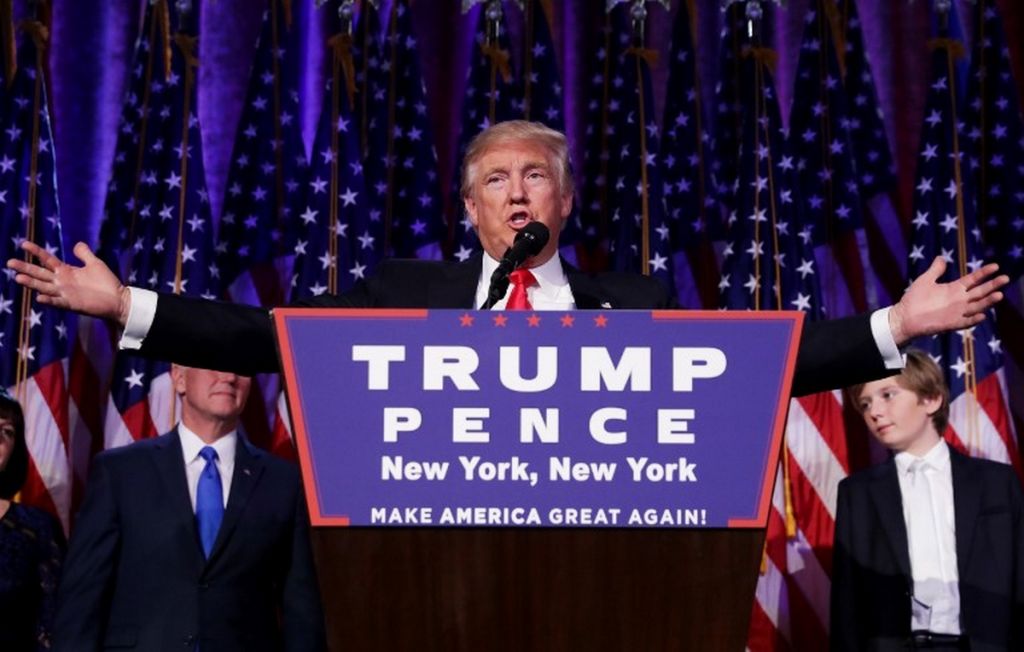
And Donald Trump will soon be entering the White House.
And the coincidence of the one, artistic, departure and the other, political, arrival mandates some bleak reflection.
The rise of Trump seems to highlight the accelerating descent, now that a few decades have passed since World War II, from Western civilization’s horrified, post-Nazi efforts to strive to be better — to be more tolerant, less vicious. To elevate the good.
We may not have succeeded all that well, but we tried.

However much we may think President Barack Obama to have been misguided in some of his leadership — to have underestimated the dark forces, especially in this part of the world — even his failings suggested a generosity of spirit, a faith in humankind’s essential goodness. Now he will be replaced by a man who seems to seethe with resentment and bitterness, an angry narcissist who treats women like chattel and casually incites hostility. A man who unleashed intolerance on the campaign trail, who veered close to, and inspired, anti-Semitism.
No sane person would have wanted Leonard Cohen in the White House (and not only because he was Canadian). Leading the free world is no job for anguished romantics or artistic types who can’t competently handle their own financial affairs. But we will cry out for his nuanced eloquence, his warmth, his modesty and his inspiration.
No sane person should have wanted Donald Trump in the White House either — to manipulate envy and disaffection. For here will be a president to whom notions of humility and generosity of spirit are alien. A president with no patience for anguish. A president of superficial certainties that will shatter in the face of real-world nuance and complexity.
Lord, “if it be your will, to make us well…”
Cohen was thinking of God again when he wrote this year’s “You Want It Darker”: “Hineni, hineni, I’m ready, my Lord,” he intoned, his voice all gravel by now.
He could not have dreamed he would be writing of Donald Trump, as well: “If you are the dealer, I’m out of the game.”