Liberman denies France opposed PM’s presence at Paris march
Foreign minister contradicts account by Netanyahu's office, insists four-person delegation was not excessive
Foreign Minister Avigdor Liberman denied on Monday that Prime Minister Benjamin Netanyahu was unwelcome at Sunday’s massive Paris march, and said the French government had voiced no objections to the participation of the Israeli premier at the event.
The foreign minister’s account contradicted comments late Sunday night from the Prime Minister’s Office confirming that Paris was initially opposed to Netanyahu attending Sunday’s historic march, believing his presence at the rally would be “divisive.”
In an interview with Army Radio, Liberman also rejected allegations by some quarters that the presence of four Israeli representatives at the rally — Netanyahu, Liberman, Economy Minister Naftali Bennett, and MK Eli Yishai — was excessive.
“There was no message from Élysée Palace that Netanyahu was unwanted,” Liberman insisted.
As for the size of the Israeli delegation, the foreign minister said: “Based on the community’s reaction, if more would have come, they would have been happy.”
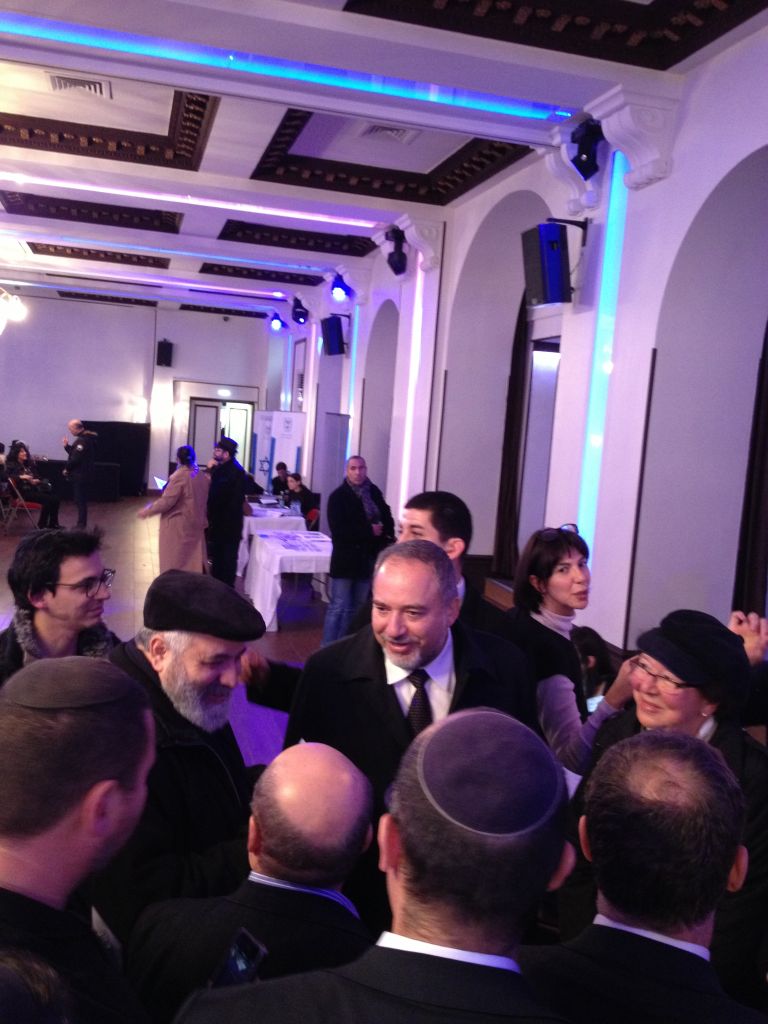
“There’s no doubt there was room here for four representatives,” he added.
Labor Party leader Isaac Herzog said on Sunday he and Hatnua leader Tzipi Livni opted not to go to Paris with the “inflated delegation.” While Netanyahu’s presence at the event was merely necessary, he added, the rest of the delegation was “unnecessary and embarrassing.”
A source in the PMO told Israel Radio that France did not give an official reason for its objection Saturday to the prime minister’s attendance. According to Channel 2, Paris wanted to avoid any mention of the Israeli-Palestinian conflict at the rally, which was organized in a show of solidarity and defiance after a series of terrorist attacks in the French capital claimed 17 lives, including those of four Jewish men at a kosher supermarket.
Netanyahu initially accepted Paris’s wish that he stay away and on Saturday cited security concerns to explain why he would not attend the event. However, the prime minister changed his mind later Saturday after Liberman and Bennett announced they would join the march, Channel 2 news reported.
When Netanyahu’s office told the Elysee Palace that he would be coming after all, France responded by highlighting that it was extending an invitation to Palestinian Authority President Mahmoud Abbas, according to the report. The French government also announced a planned meeting between French President Francois Hollande and Abbas Saturday night.
When it became clear to Hollande that the Israeli prime minister intended to join the march, he phoned to invite Netanyahu personally, according to the report.
On Sunday, Hollande and world leaders, including Netanyahu and Abbas, marched in the mammoth procession, which began near where gunmen killed 12 people at satirical magazine Charlie Hebdo last week.
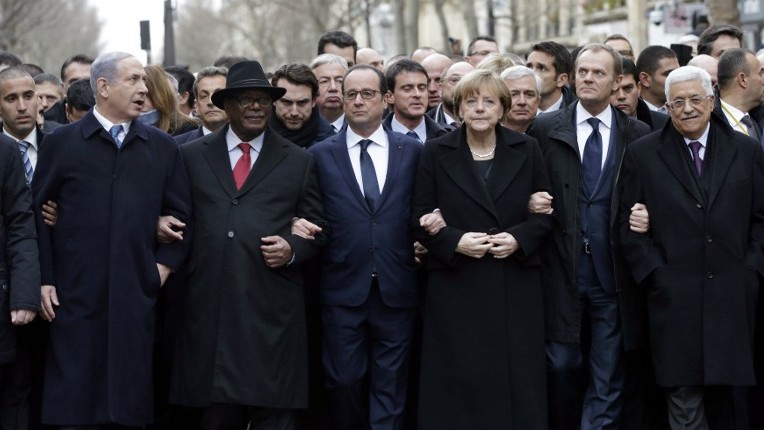
Netanyahu was initially situated in a second row of leaders, but shimmied his way into the front row, alongside Malian President Ibrahim Boubacar Keita, Hollande, German Chancellor Angela Merkel, EU Council President Donald Tusk and Abbas.
Some 1.5 million people marched in the massive rally, the largest of a series of demonstrations around France that brought a total of some 3.7 million people out into the streets, according to figures cited by AFP.