Liberman: Don’t drag IDF into turmoil over outpost eviction
Defense minister says belligerent statements by settlers planning to resist evacuation are unacceptable
Defense Minister Avigdor Liberman demanded Tuesday that those who oppose the court-ordered demolition of an illegal West Bank outpost not direct their anger against the IDF soldiers who will be tasked with carrying out the evacuation.
Liberman aimed his comments at residents and supporters of the Amona outpost, who have sworn to resist any attempt to evict them after the High Court of Justice denied a request by the government to postpone the evacuation, which was ordered by the court two years ago.
“Don’t drag the IDF into politics,” Liberman said during an inauguration ceremony of a new IDF training base complex in the Negev region in the south of the country, also attended by Prime Minister Benjamin Netanyahu. “The IDF only implements. The people who make the decisions are the government. Don’t let it come to clashes with IDF soldiers.”
“I am talking about the possibility that we will need to evacuate Amona,” Liberman clarified. “The things that I have already heard said are unacceptable.”
Earlier in the day Amona resident Tamar Nizri said told Army Radio that the 40 families in the outpost were working to mobilize masses of supporters to resist an evacuation and hinted at stiff resistance.
“We will do everything in our power to remain here — these are scenes that a right-wing government doesn’t want to see,” she continued. “I personally will not raise a hand, but I am not responsible for the mass of people we are telling to prepare for the order day. If the soldiers come I want there to be such painful pictures that it will not happen again. That Jews never again be forced off their land.”
“Hitler’s soldiers also received orders. So what? There are orders and there are laws, and logic and basic ethics,” Nizri said.
Reacting to the High Court ruling on Monday that the West Bank outpost must be cleared of residents by December 25, settlers appealed to Netanyahu to prevent the decision from being carried out and warned they will “stand as a fortified wall” in the face of any attempt to uproot them.
The evacuation must occur before December 25, the court said in its ruling, the latest in a series of skirmished between Israel’s judiciary and the right-wing governing coalition on the fate of Amona. “The court rejects the delay requested by the state.”
The Hebrew-language daily Haaretz reported Tuesday that tDeputy Commissioner Moshe Barkat Commander of the Judea and Samaria police district — the department covering the West Bank — has held talks with the residents of Amona and requested that they not violently resist an evacuation. A source said the residents told police while they themselves won’t use violence they can’t speak for the protesters who are expected to arrive.
Amona residents have been calling on supporters across the country to come to the outpost ahead of a possible evacuation and plan to set up dozens of tents to house protesters, the report said. A support rally for the outpost during last month Sukkot holiday drew in a crowd of some 6,000.

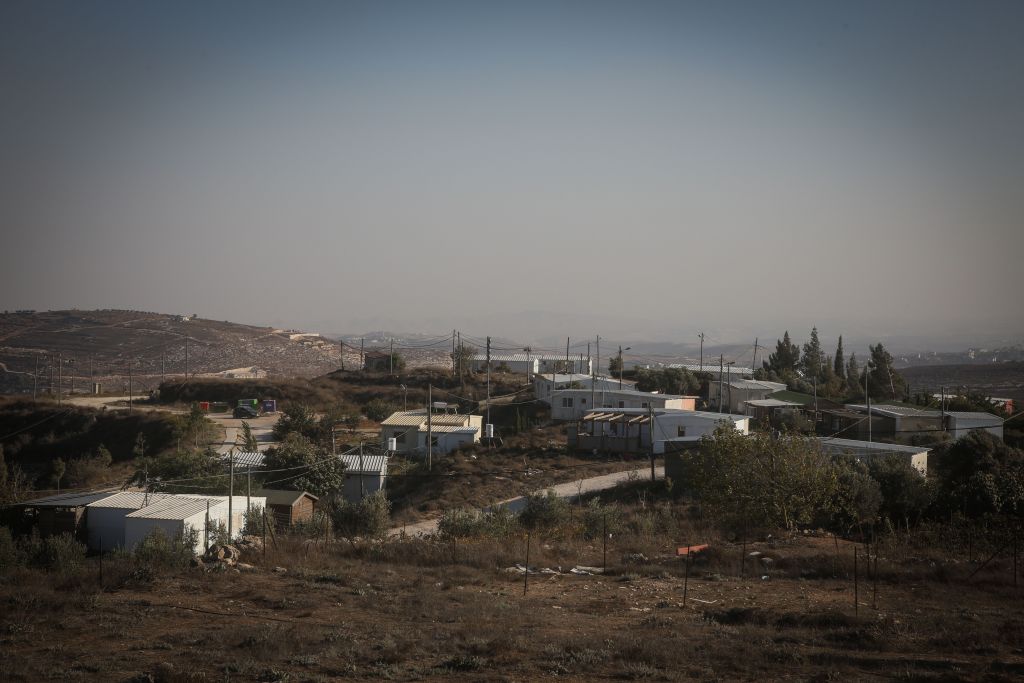
The Amona outpost, on a hilltop in the central West Bank, was founded without state authorization in 1995 on Palestinian land, and is home to around 200 people who live in trailer homes and semi-permanent buildings. The outpost has been the subject of years of legal wrangling and cabinet minister are pushing a so-called Regulation Bill which is designed to avert the court-ordered demolition of the outpost and other illegal settlements.
The bill was approved by a ministerial panel on Sunday night over the objections of Netanyahu and Attorney General Avichai Mandelblit. The bill was deemed legally indefensible by Mandelblit.
In 2006, the site was the scene of a pitched battle between thousands of security forces and outpost residents, after the Supreme Court, in response to a Peace Now petition, ordered the demolition of nine permanent houses residents had built.
Some 200 people were injured in the violent clashes, turning the site into a symbol of resistance among some settlers.