Liberman: I’ll back Netanyahu’s bid to nix new broadcaster
Defense minister's declaration comes as finance minister indicates he'll veto plan to roll back public media corporation
Defense Minister Avigdor Liberman declared Monday that he will support Prime Minister Benjamin Netanyahu’s efforts to cancel a planned new public broadcast authority, citing his party’s coalition agreement.
Liberman’s announcement came hours after Finance Minister Moshe Kahlon broke his silence on the matter, threatening to torpedo Netanyahu’s plan to dismantle the nascent cooperation amid a brewing legislative battle over the future of public broadcasting in Israel.
During his faction’s first weekly meeting of the Knesset’s winter session, Liberman said that the deal he signed to join the government in June mandated his party’s support for Netanyahu — who is also the communications minister — on media matters.
He added that when the coalition agreement was signed, Netanyahu told him there could be “developments” concerning the broadcast authority.
Kahlon’s threat, issued just before a meeting of the Knesset Finance Committee, sharpened statements made by lawmakers from the Jewish Home and Kulanu parties over the weekend in opposition to the not-yet-on-air broadcasting corporation, which is supposed to replace the ailing Israel Broadcasting Authority (IBA).
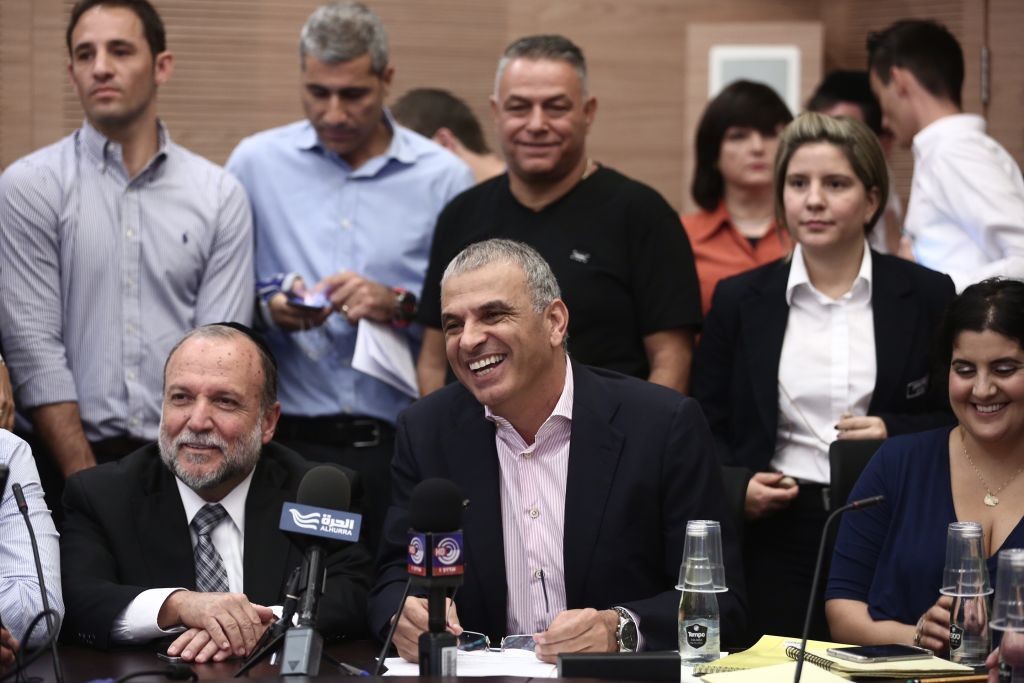
Kahlon said he was opposed to the costly flipflopping by the government over what to do with the new corporation, named Kan, citing the billions of already-invested shekels that he said would be wasted were it to be shut down.
“Canceling the corporation would mean losing NIS 1.7 billion ($442 million) immediately and NIS 370 million ($96 million) a year. Whoever wants to introduce a law next week and advance it will have to make sure that there is strong public broadcasting and understand where the money is going to come from,” he said Monday.
“Personally, I don’t think I can throw this money away and throw around millions. I know the value of a shekel. That’s the story. I’m not willing to give up, and if necessary, I will not hesitate to veto the government,” he said, adding that he wouldn’t skim from other ministries budgets to pay for the move.
Kahlon, a former communications minister from Likud who later struck out to form his own party, boycotted a planned cabinet vote on closing down Kan Sunday, forcing Netanyahu to delay the poll for a week.
Under coalition agreements, the parties must vote in favor of all media reforms backed by Netanyahu. But it was not immediately clear what that would mean for parties opposing the cancellation of the corporation.

The nascent corporation was created by government legislation in 2014. The law gives it greater editorial independence than the IBA, exempting it from government oversight rules that apply to most other public corporations and severely curtailing the ability of politicians to intervene in content and senior staff appointments.
In July, Netanyahu decided to extend the life of the IBA and delay the new corporation’s launch.
Of late, a senior Likud lawmaker, David Bitan, has been pushing for new legislation to cancel the previous legislation, on the stated grounds that shutting the new corporation and streamlining the IBA will save the government money in the long run.
Last week, Bitan claimed that his plan would save some NIS 2.5 billion ($658 million), a figure later ridiculed by the Finance Ministry and Interior Minister Gilad Erdan, who shepherded the original law when he served as communications minister.
The proposal was also termed “sleight of hand” by the Israel Democracy Institute think tank.
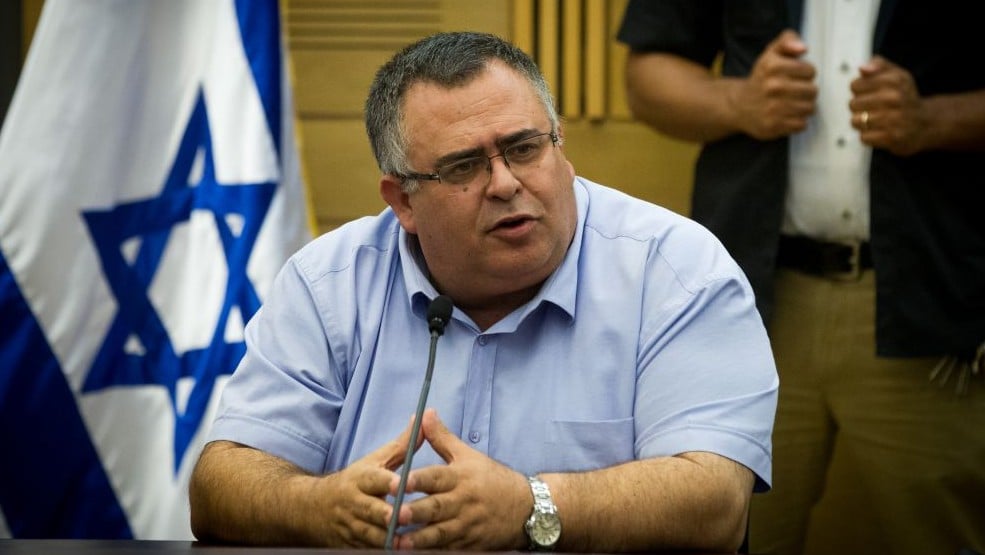
Government critics say the real reason for Netanyahu’s turnaround is that he fears the corporation’s political independence. That assessment is backed by statements from Bitan, as well as Netanyahu, expressing fear that it would be left-leaning.
An unnamed source in Likud told the Netanyahu-aligned Israel Hayom daily on Saturday that the new broadcaster “has turned into a broadcaster for Noni Mozes and the left,” referring to the owner of the Yedioth Ahronoth daily, which is regularly critical of Netanyahu. The source also alleged that employees at the new body were picked by “left-wing figures and Mozes’s associates.”
On Wednesday, corporation heads said they would be ready to broadcast on January 1. They also said that the corporation has already invested some NIS 140 million ($36 million) on original productions and on establishing studios in Jerusalem, Tel Aviv, Modiin and Beersheba.
“Behind all the figures and the deliberations are people, who have been taken on and who face being fired,” Kahlon said.