Likud hits back at ‘pathetic’ Barak over Netanyahu criticism
Ruling party says former leader 'the biggest failure of a prime minister in Israel's history'
Prime Minister Benjamin Netanyahu’s ruling Likud party on Saturday hit back at Ehud Barak over his criticism of Netanyahu, calling the ex-prime minister the worst in Israel’s 69-year history.
“[He is] the biggest failure of a prime minister in Israel’s history who was shamefully thrown out by the public after only a year and a half,” Hebrew media reports quoted an unnamed party official as saying.
“He has become pathetic,” the official added, saying that Barak’s criticism of Netanyahu was a ploy “to lick up a few crumbs of media attention.”
Earlier Saturday, Barak charged Netanyahu was being heavily pressured by the extreme right in terms of state affairs and policy, adding that the Likud had been “taken over” by the settler movement.
He warned that Netanyahu risked missing a “once-in-a-generation” opportunity to advance relations between Israel and the Arab world. Netanyahu recognizes the shared interests between Israel and numerous Arab states, “and he talks about it,” said Barak, but the prime minister was failing to take the necessary steps to utilize the “one-time opportunity.”
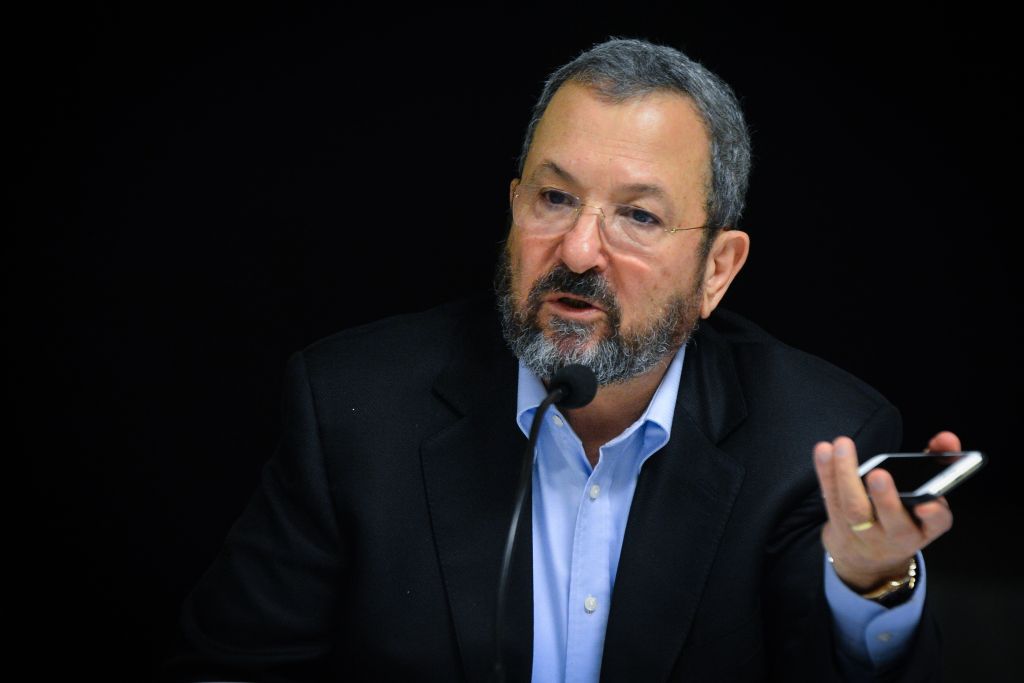
The “regional project” could not move forward without “significant progress” with the Palestinians, and Netanyahu was not showing the necessary readiness to countenance that, charged Barak.
“I do not like Netanyahu’s changing discourse,” Barak said during an event in Tel Aviv.
“In recent years he has been in a state of mind that is rooted in his parents [beliefs] and this has been exacerbated by the fact that the settler-aligned right has taken over the Likud.”
Barak further asserted that the prime minister’s bleak nature was holding him back from handling the country’s affairs properly.
“[Netanyahu] is pessimistic, passive, very anxious and feels like a victim,” the ex-Israeli leader said.
“This is not a good recipe for strategic decisions, and leads to paralysis, and to pessimistic prophecies that validate themselves because nothing is done to prevent them,” Barak concluded.
Barak was joined in his criticism by current opposition leader Isaac Herzog, who assailed the Netanyahu government over its perceived attacks on freedom of expression in Israel.
“The brutishness of the Netanyahu government against any artistic freedom, their attempts to suppress anybody who expresses a different opinion, is a great disaster for Israeli democracy,” Herzog said Saturday in remarks prompted by Culture Minister Miri Regev’s recent threat to defund the Israel Festival over works that contain nudity.
“Every day Miri Regev looks for someone to fight with. You can’t always — even under the guise of changing the world — harm freedom of creativity, thought and expression,” said Herzog, who currently heads the Zionist Union, a coalition of leftist parties that includes Labor.
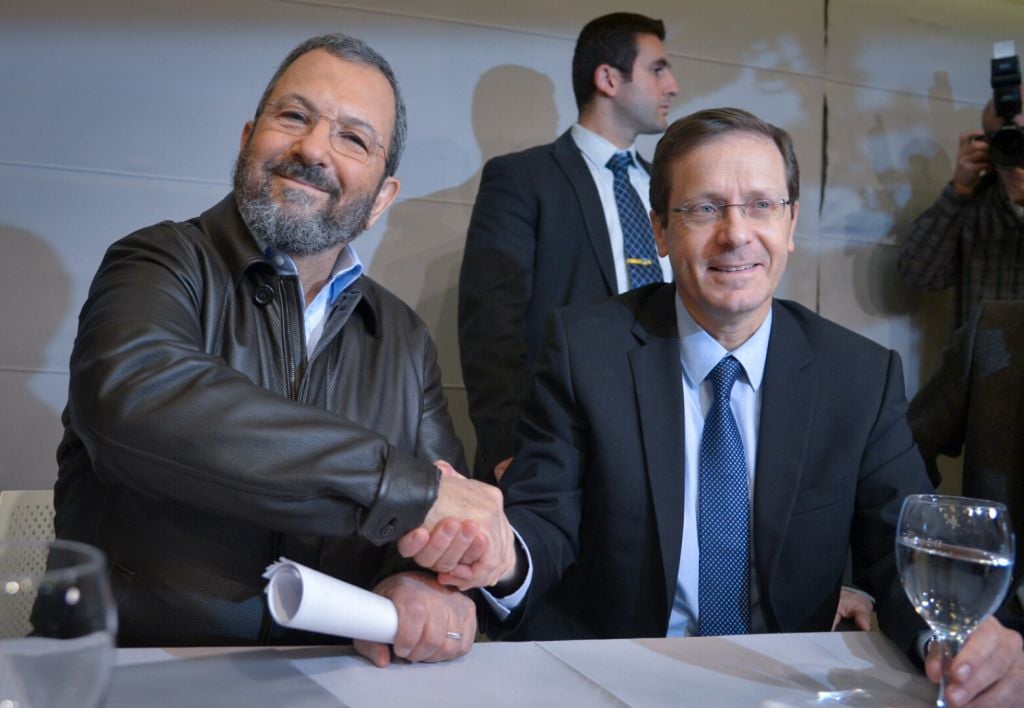
(Flash90)
Last month, Barak reportedly agreed to an initiative that would have seen him contend for the leadership of the Labor Party, but the plan fell through when other candidates refused his demand that they drop out of the race.
Publicly, however, the former prime minister has denied weighing a return to politics, and he has not registered as a candidate in next month’s Labor leadership primaries at which party leader Herzog will face a challenge from several would-be successors.
Over the past year, the freshly bearded 75-year-old Barak has become an outspoken critic of Netanyahu, with diatribes against the prime minister and his governing coalition on Twitter, radio and television.
Barak was the IDF’s longest-serving chief of staff and the country’s most decorated soldier, before becoming prime minister in 1999 after defeating Netanyahu in elections.
Following his defeat in 2001 to the late Ariel Sharon, Barak temporarily retired from politics, but returned to the Labor Party in 2005. From 2007 to 2013 he served as defense minister, the last four years under Netanyahu.
In 2011 he split from Labor along with four other MKs, forming the short-lived Independence Party in order to remain in Netanyahu’s coalition despite the objection of most of Labor. The party was effectively disbanded upon Barak’s retirement from politics in 2013.