Likud, Smotrich say they’ll put 2,000 activists at Arab polling stations on election day
Joint List chief decries 'racist campaign' after PM's party and Religious Zionism cite unsubstantiated fraud claims; Eisenkot vows to end Hamas rule in Gaza in 18 months if elected
Prime Minister Benjamin Netanyahu’s Likud and Finance Minister Bezalel Smotrich’s Religious Zionism vowed Thursday to send nearly 2,000 activists to polling stations in Arab communities in the October 27 election over unsubstantiated claims of fraud by voters and vote counters.
The activists will be posted in addition to formal observers that each party can send to polling stations. The additional Likud and Religious Zionism activists will thus have no official function or ability to perform oversight, raising questions as to the purpose of their presence and concerns of potential intimidation of voters.
The joint statement from Likud and Religious Zionism came as Netanyahu’s lead challenger, Yashar party chief Gadi Eisenkot, vowed to end Hamas rule in Gaza within 18 months if he becomes prime minister.
According to the two parties’ statement, they will send the activists to hundreds of polling stations in Arab areas based on a “special mapping” of fraud risk, and will train the activists to respond to violations of voting procedure and irregularities in the count.
The statement cited “a long series of fraud incidents in previous election campaigns.” Contrary to the statement, there is no evidence of widespread voter fraud in Israel.
A spokesperson for Religious Zionism did not respond to a request for comment on what the activists would do at the polling stations, how the mapping was conducted and how the ostensible fraud risk would be determined.
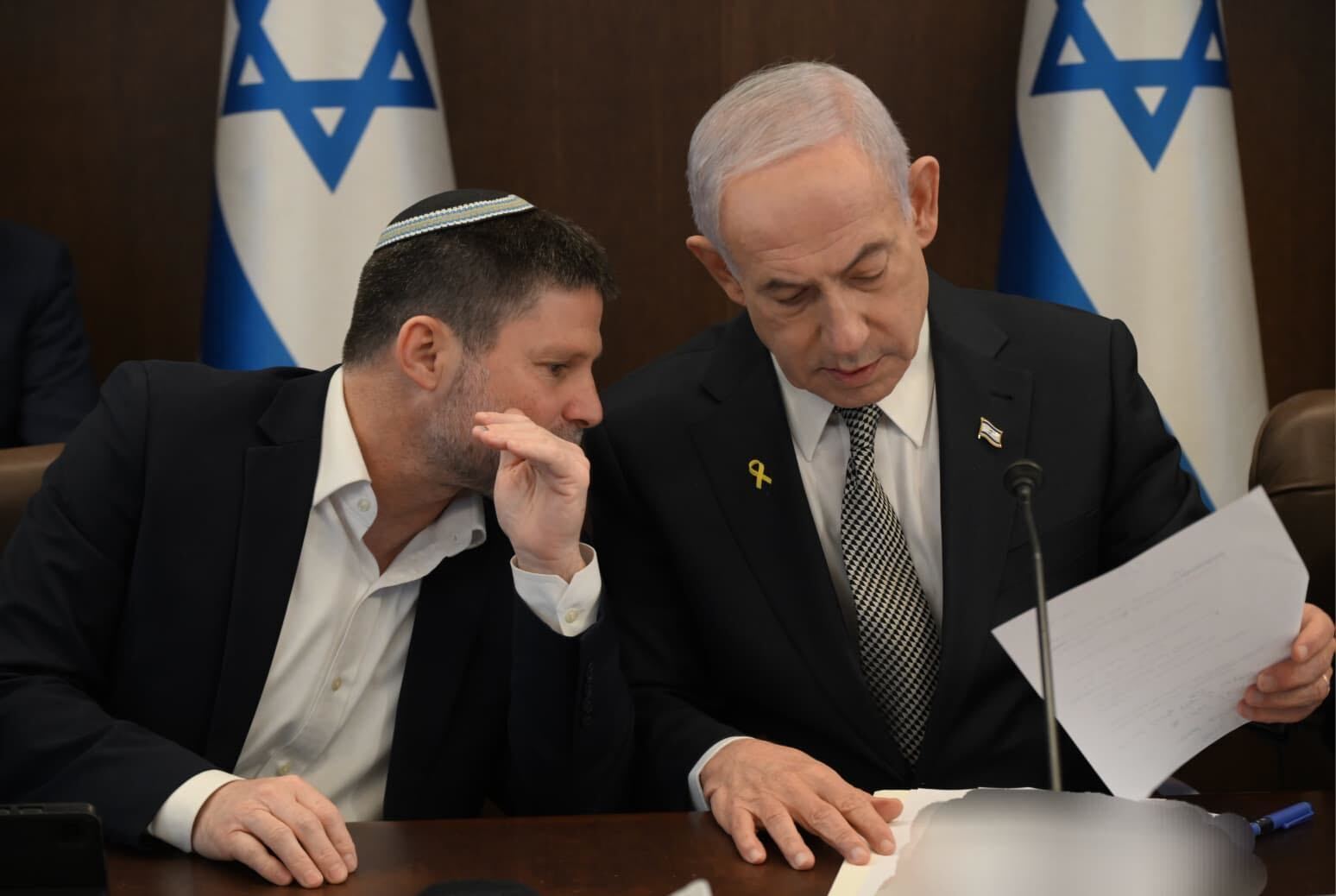
Yousef Jabareen, head of the Arab-majority Joint List party, said in a statement that Smotrich and fellow far-right minister Itamar Ben Gvir of the Otzma Yehudit party were “trying to intimidate the Arab public through lies and racist campaigns.”
In June, when Likud lawmakers proposed installing cameras at polling stations to combat fraud, Central Elections Committee Director General Dean Livne said existing safeguards were sufficient.
“There is no fraud in Israel. If it exists, it’s on the margins,” Livne said at the time.
Likud deployed cameras at polling stations in Arab communities in 2019, drawing accusations of attempts to suppress turnout and intimidate voters. On election day in 2015, Netanyahu released a video urging supporters to go vote because “the Arabs are heading to the polls in droves.”
Party activists can enter polling stations, though not the rooms in which voting booths are placed and where the polling station committees sit. They can also not enter the polling station wearing any party symbols or be identifiable with a particular party.
It is unclear what such activists would do at the the polling stations in Arab population centers they go to.
The press statement put out by Religious Zionism on the issue noted that many of the activists from both parties would be from the religious-Zionist community.
In a video response to the initiative, Jabareen referred to the activists as “settlers,” reflecting concerns that the activists sent to polling stations might include violent settler extremists who have been documented attacking and harassing Palestinians in the West Bank in recent months and years.
These extremists are largely from the radical wing of the religious-Zionist community, which constitutes the primary constituency of the Religious Zionism party and many of whom live in the West Bank settlements.
Assaf Shapira, the head of the Israel Democracy Institute’s Political Reform Program, expressed concern that the activists could engage in “provocations” against Arab voters to deter them from going to the polling station, or initiate violence requiring the police to arrive, which could itself deter Arab voters from going to vote.
Party officials could also request that the Central Elections Committee order voting be stopped at a specific polling station.
The presidency of the committee, comprising CEC chair Deputy Supreme Court President Noam Sohlberg along with representatives from the Likud, Yesh Atid, Blue and White and Shas parties, can halt voting at polling stations for various reasons.
Formal polling station observers can conduct a variety of oversight functions to ensure that voting is conducted properly, such as ensuring voters properly identify themselves, checking that the voting booth is in order, and similar such activities.
Shapira said that the deployment of observers was legitimate and welcome.
He nevertheless opined that observers with partisan motivations could create problems by abusing their authority. An observer could, for example, claim that a voter’s identification was insufficient, or insist on checking the voting booth more than necessary, slowing down voting.
Shapira said the emphasis of Likud and Religious Zionism on supposed electoral fraud could be seen as part of “propaganda” by right-wing parties and media that fraud is rife in the Arab sector.
He noted that right-wing politicians and media have already made claims that the Central Elections Committee, which has responsibility for the integrity of elections, is biased, and that official complaints by elections observers about voting in polling stations in Arab communities could be part of an premeditated effort to claim that the election was stolen if the right wing loses.
He also noted the “extraordinary gap” between polling done for right-wing media, which frequently has Likud as the largest party, and polling done for the mainstream commercial channels, which mostly put Gadi Eisenkot’s Yashar party ahead of Likud.
“If we’re living in different echo chambers then it’s easier to say the elections were stolen,” Shapira observed.
Voter turnout is typically lower in the Arab community than in the general public. The last election, in November 2022, saw a roughly 53% turnout among Arab voters, compared with about 70% among all voters.
Arab turnout could be pivotal in the coming election, with polls showing Joint List and Ra’am, the two Arab-majority parties, cumulatively earning 14 of the Knesset’s 120 seats and potentially playing a key role in determining the balance of power between Netanyahu’s bloc and his Zionist opponents.
Ra’am, a traditionalist party running for the first time with a Jewish candidate, Yoav Segalovitz, on its slate, seeks to govern with the Zionist opposition, while the more strictly anti-Zionist Joint List has said it would provide a conditional “safety net” for a potential anti-Netanyahu minority government. Ra’am and Joint List have a surplus vote-sharing agreement.
Netanyahu has cudgeled Eisenkot for ostensibly requiring Arab support to govern, according to polls.
Eisenkot and other Zionist opposition heads — with the exception of Yair Golan, head of the left-leaning Democrats — have vowed not to form a government with either Joint List or Ra’am, though Ra’am was part of the 2021-2022 government that briefly unseated Netanyahu.
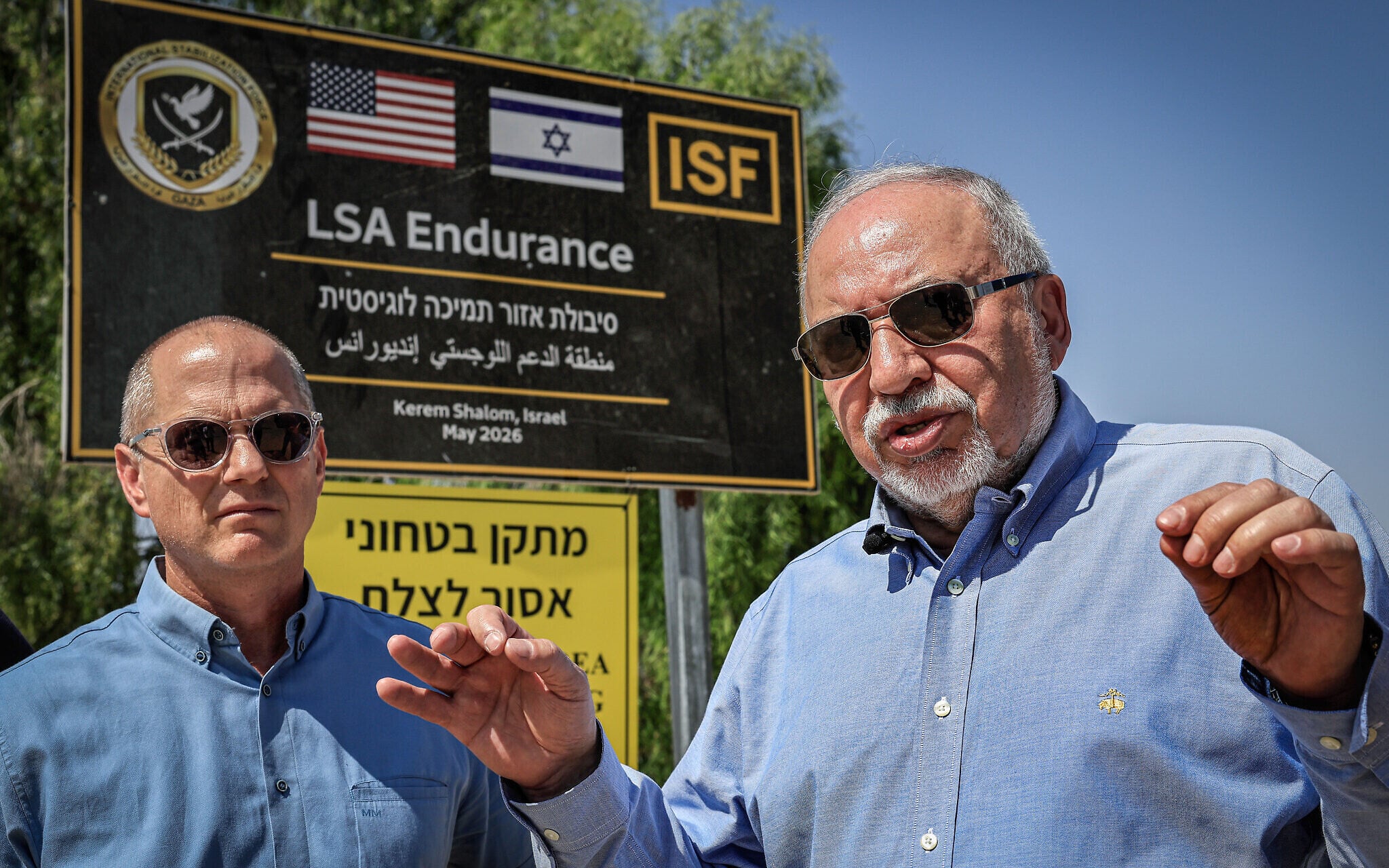
Yisrael Beytenu chairman Avigdor Liberman, who was finance minister in that government, on Thursday repeated his opposition to a minority government or to any government that includes the Arab parties, as well as the ultra-Orthodox parties or Netanyahu himself.
“Our position is sharp and clear: We will form a coalition made up only of Zionist parties,” Liberman said in a post on X. “Without Ra’am, without Joint List, without Shas and without United Torah Judaism.”
Likud could be “a significant partner” without Netanyahu, Liberman said. But “with Netanyahu – even if the world turns upside down, we won’t sit with him under any circumstances,” he added.
“I believe we’ll achieve a solid majority in the upcoming elections, despite the polls,” Liberman said.
Reiterating his opposition “even to a transitional minority government,” Liberman said he knows several Likud lawmakers who realize Netanyahu has made them into “subcontractors” for the ultra-Orthodox parties. According to Liberman, those Likud members would be willing to join the Zionist opposition bloc.
Liberman previously rejected the possibility of a minority government after Eisenkot, the frontrunner, floated it.
Eisenkot: As long as Netanyahu remains in power, Hamas will too
Eisenkot, a former IDF chief, delivered a statement at the Gaza border Thursday in which he accused Netanyahu of failing to achieve Israel’s war aims in Gaza in the three years since the Hamas-led onslaught of October 7, 2023.
Hamas remains in control of roughly a third of the Gaza Strip and retains military capabilities, even as Israel holds 63% of the territory, according to IDF figures.
“As long as Benjamin Netanyahu remains in power, Hamas will remain in power,” Eisenkot said, accusing the prime minister of squandering unprecedented domestic and international legitimacy for military action while allowing Hamas to stay in control and rebuild.
“Within 18 months of taking office as prime minister, Hamas will no longer rule the Gaza Strip. We will bring about the destruction of Hamas’s military wing,” Eisenkot said.
The goal, he said, would be reached either through military action or through US President Donald Trump’s Gaza framework to demilitarize and rebuild Gaza, which was accepted by the Netanyahu government, but which has stalled in recent months amid disagreements.
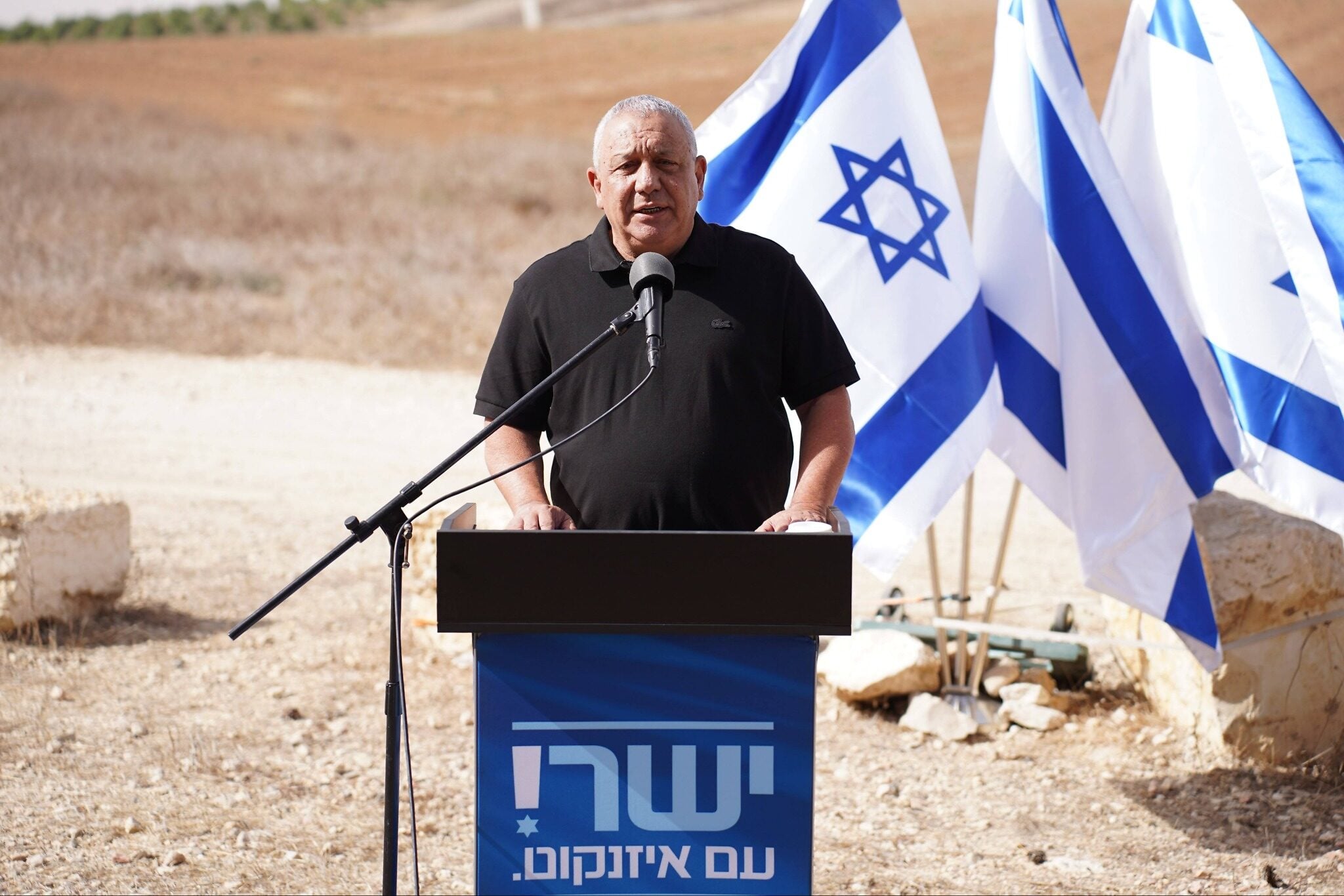
Likud responded by again needling Eisenkot over his apparent need for support from the Arab parties.
“How will you defeat Hamas without getting permission from your partners Mansour and Tibi?” Likud said, name-checking Ra’am chief Mansour Abbas and senior Joint List member Ahmad Tibi.
Eisenkot’s Yashar responded: “For 17 years, Netanyahu and Likud have been deceiving Israeli citizens and strengthening Hamas. If you had focused a little more on your job and a little less on drafting talking points, perhaps October 7 could have been prevented.”