Likud, United Torah Judaism to meet as coalition talks resume
After Passover break, party leaders slated to restart talks to hammer out new government
After a brief slowdown during the Passover holiday, Prime Minister Benjamin Netanyahu was poised to resume coalition talks on Sunday with a meeting with the ultra-Orthodox United Torah Judaism party.
Netanyahu’s negotiating team is slated to meet with the Jewish Home and Shas parties on Monday, Israel Radio reported.
The prime minister is hoping to sign coalition agreements with all of his prospective partners — UTJ, Shas, Yisrael Beytenu, Jewish Home and Kulanu — at the same time, Haaretz reported on Saturday night. The prime minister is therefore reluctant to make commitments to the ultra-Orthodox parties and Avigdor Liberman’s Yisrael Beytenu until the details are finalized among the remainder of his partners, the report said.
The delay has led to criticism from those partners, with Yisrael Beytenu leader Avigdor Liberman charging Sunday morning that Likud was “delaying” an agreement — possibly in order to prepare the ground for a national unity government with Zionist Union, he speculated.
Nonetheless, the prime minister is expected to settle the distribution of ministerial portfolios as soon as this week, according to media reports.
“Netanyahu will have to make serious decisions on the subject. Otherwise the negotiations will go nowhere,” a senior Likud official was quoted as saying in Haaretz.
According to reports, the prime minister’s talks with Jewish Home and Kulanu leaders have been unsuccessful. Both parties are demanding several senior posts for their top officials.
Jewish Home’s leader Naftali Bennett has accused the prime minister of treating him and his constituents like “suckers” by refusing to grant his demand for either the foreign affairs or defense portfolio. The right-wing Jewish Home is seen as a close ally of Netanyahu’s Likud party, but a lackluster showing in the elections — eight Knesset seats, down from 12 — has left it in an inferior bargaining position. The pro-settlement party was also looking for commitments to push forward a number of controversial bills that would weaken the powers of the High Court as a precondition for entering the governing coalition.
Moshe Kahlon, leader of the 10-seat Kulanu party, has also upped his demands in recent weeks, pressing Netanyahu for the housing and environmental protection ministries, in addition to the already-promised Finance Ministry post. He has also requested the chairmanship of the powerful Knesset Finance Committee, encroaching on the territory of another likely Netanyahu coalition partner, the United Torah Judaism party.
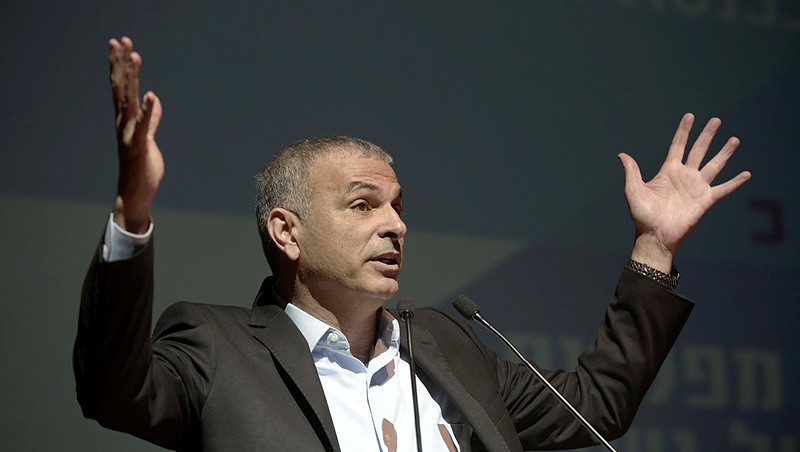
But a senior Likud official warned Kahlon in early April that if he continued to play hardball in coalition talks, Netanyahu would put negotiations with Kulanu on the back burner and shift focus to Yisrael Beytenu and the ultra-Orthodox parties.
Under Israel’s electoral system, Netanyahu must cobble together a coalition comprising smaller parties by offering cabinet positions — including some of the most senior posts in government — to factions whose support he requires if he is to cement a Knesset majority of at least 61 seats. Meanwhile, lawmakers within his own Likud party have also demanded top jobs, citing the party’s strong 30-seat showing, which makes the party the largest by far in the 20th Knesset.
The game of give-and-take could prove difficult for Netanyahu because of opposing inter-party interests and ideologies, as well as steep demands for ministerial posts.
The ultra-Orthodox Shas party, which won seven seats in the election, is demanding and will likely receive the Interior Ministry and possibly also the Religious Affairs Ministry.
Netanyahu has until May 7 to present his coalition to President Reuven Rivlin.
On Saturday night, the prime minister urged national unity and said the new coalition would focus on reducing the cost of living.
“The dust of the elections has settled. We must strengthen unity among the citizens and people of Israel, and this we will do,” he said.
“Second, the welfare of the people. We are committed to continuing the impressive accelerated economic development of the State of Israel. However, this must be accompanied by lowering the cost of living, especially housing prices. To this end, we must increase the supply [of housing]; we must increase supply by many means, and this we will do. We promised to do this and this will be the first mission of the government that – with God’s help – I will quickly form.”