Massive IDF raid nothing new for hardened refugee camp
Lacking any Israeli or Palestinian law enforcement, Qalandiya has become a hotbed of terrorist and criminal activity, and it doesn't look set to change anytime soon
After a night of heavy clashes between Israeli troops and Palestinians in the Qalandiya refugee camp north of Jerusalem, residents Tuesday morning described the area as having been turned into a fierce battleground.
The fighting, sparked by a rescue operation after two soldiers accidentally entered the camp and were attacked, involved hundreds of soldiers and dozens of armored vehicles that arrived in Qalandiya to search through the camp’s web of alleyways and backstreets for the soldiers who went astray, residents told The Times of Israel.
But the heavy army presence and the skirmishes that followed are not unusual for residents or soldiers.
Almost every day, elite IDF units carry out operations in Qalandiya, either undercover or in uniform. For Israel’s defense forces, the 0.35 square kilometer camp — housing some 11,000 people, according to the UN –remains one of the most prominent and permanent areas of threat.
The camp is full of weapons. There is high motivation to carry out attacks. And almost every arrest leads to an exchange of fire and casualties.
In the unofficial competition between the various refugee camps in West Bank and Jerusalem for the title of Most Difficult Camp, Qalandiya is rivaled only by its neighbor Shuafat.
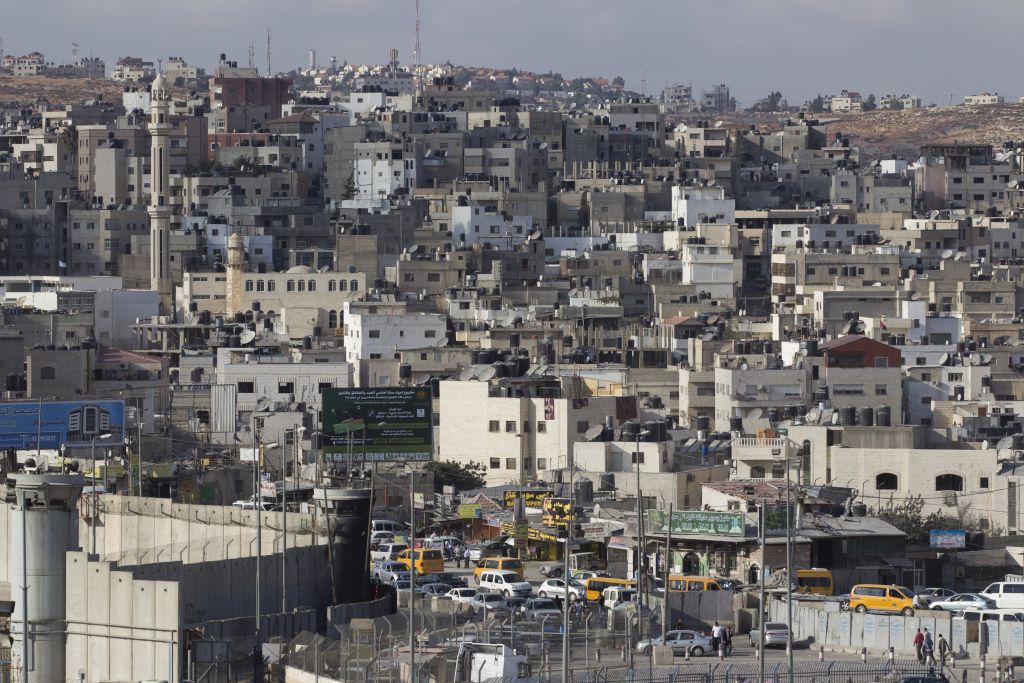
Not by chance, both camps are located in the twilight zone between Jerusalem and Ramallah: surrounded by the municipal boundaries of greater Jerusalem, but wholly avoided by Israeli authorities.
Even the Palestinian Authority has no jurisdiction there (as stipulated by Israel) and so these two camps have become islands of lawlessness and a paradise for criminals, armed or otherwise.
Unlike the other refugee camps in the West Bank, Shuafat and Qalandia have produced a new terrorist attacker nearly every week since the beginning of the current wave of violence.
Everywhere in Qalandiya are reminders of the ugliness of the camp’s condition.
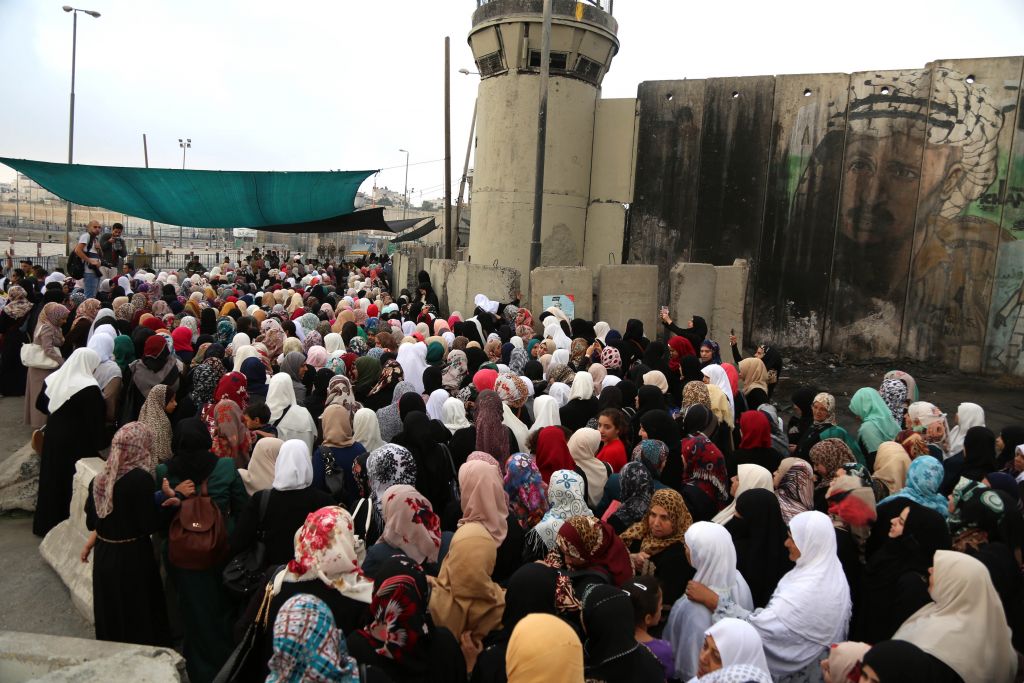
The main road, constantly clogged with a sluggish trail of traffic, sits beneath a towering wall covered in graffiti of spectacular murals depicting the mukawama, a phrase for Palestinian resistance.
Meters from the road begins a mass of crowded houses, built without planning and sprawling in all directions.
On the outskirts of the camp sits the neighborhood of Kafr Aqab, where drug dealers and car thieves go about their daily business undisturbed.
It is into this hellhole that two soldiers accidentally entered and got lost. It’s not hard to imagine what they and the forces who came into the camp to rescue them went through. It’s also not hard to imagine what the residents of camp experienced during the operation.
Qalandiya will not transform into an orderly neighborhood in the foreseeable future. Instead, it will continue to be a hotbed of hostile activity against Israel and criminal activity against its residents.