How a Memphis Reform rabbi joined the national board of NAACP
'The NAACP is about everything I stand for as a rabbi and a Jew,' Rabbi Micah Greenstein says. Here's why
NEW YORK – “Race will always exist, but why does it have to matter?” asked Rabbi Micah Greenstein, the senior rabbi at Temple Israel in Memphis.
It wasn’t a question born out of naiveté or desire for rosy idealism. Rather, out of Greenstein’s personal understanding, and his mission to get others to understand, that the struggle for equality, dignity, and respect is as important now as it was during the Civil Rights Movement.
That struggle is why Greenstein chose to come to Memphis, a place he calls “Jerusalem of the South,” upon finishing rabbinical school in 1991. It’s why he serves on the board of the National Civil Rights Museum. And it’s what led to his recent election to the National Board of the NAACP.
As one of four new board members and the only rabbi to sit on the 27-member board, Greenstein said he is grateful about the opportunity.
“My focus has always been Judaism and justice, civil and human rights. The NAACP is about everything I stand for as a rabbi and a Jew,” Greenstein, 53, said in a telephone interview. “While much has changed regarding racial inequality there is still a great deal of systemic inequality.”
Racial disparity continues to exist in all facets of US life – from the judicial system to the lack of economic opportunities, from access to healthcare to getting a quality public school education, he said. It’s through the latter that Greenstein sees one of the most promising ways forward.
“I truly believe that only the educated are truly free but some of the worst performing schools in the country are in the poorest areas. Education is the path that leads out of poverty,” Greenstein said.
One way he’s worked toward that goal is through Clergy for Equitable Education. The organization brings together religious leaders from all denominations to support public education for the school children of Shelby County.
The 2012 recipient of the Memphis Theological Seminary’s President’s Humanitarian Award, Greenstein has worked throughout his career to strengthen ties between races and religions.
“Civil rights and equity of rights is everybody’s issue. It’s why we need voices like Micah’s on the NAACP,” said Pastor Keith Norman of the First Baptist Broad Church and Chair of the Memphis NAACP. “Education not only will break the cycle of poverty and let you rise above the system. It teaches you have nothing to fear by knowing a person of another culture, another religion, or another sexual orientation.”
Greenstein has come to regard many of his fellow clergy to be more like family than friends. In speaking with Norman, it’s clear the feeling is mutual.
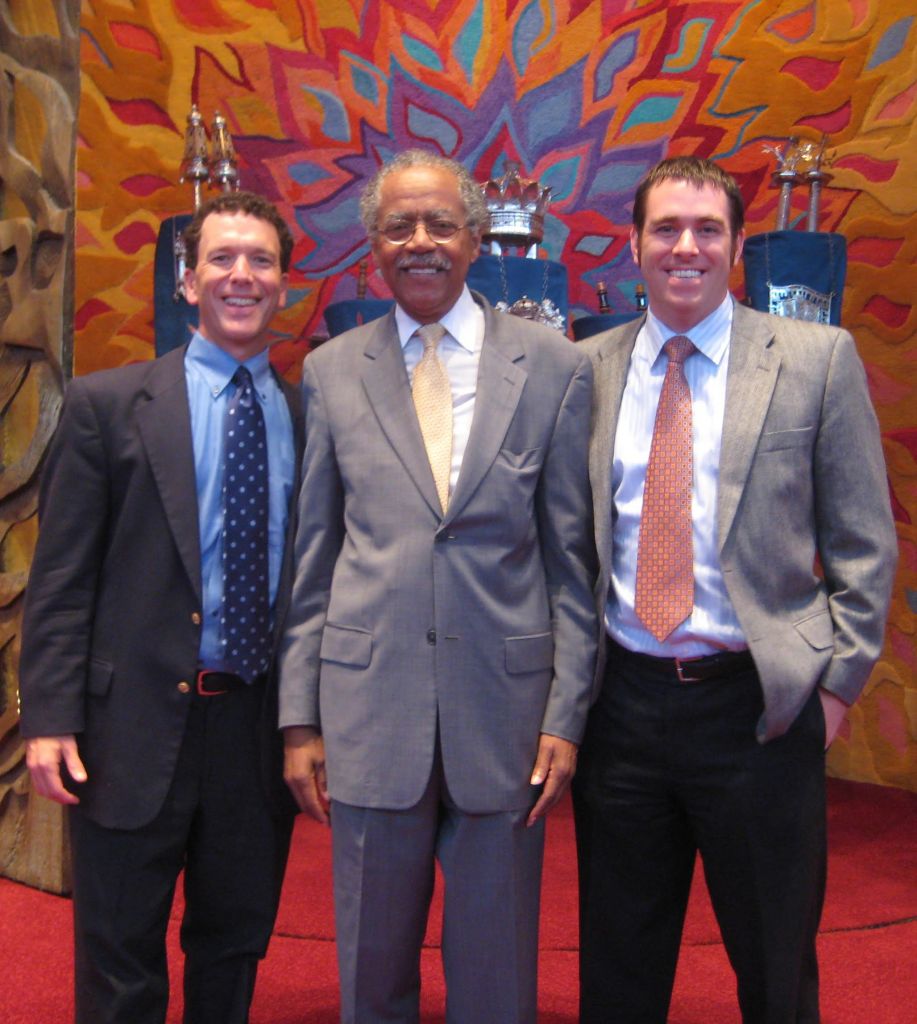
In fact the two call each other twins, even though “Micah is 5’6’’ with curly hair and white, and I’m like 6’5’’, bald, and black,” Norman said.
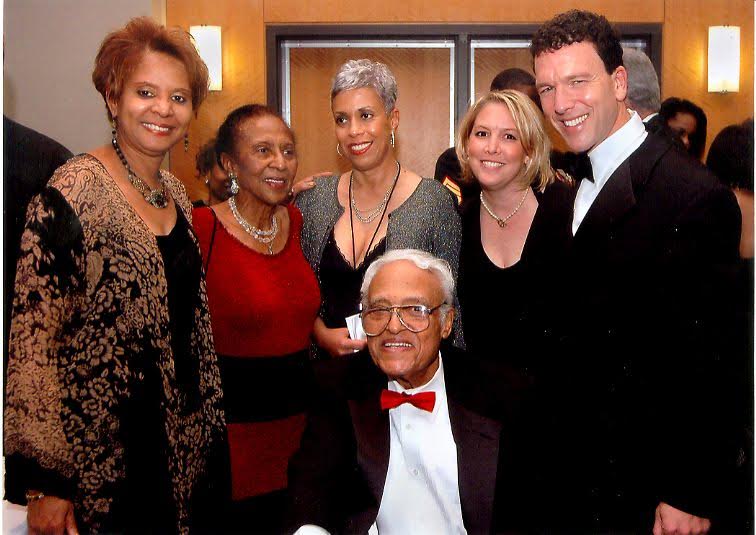
But in all seriousness, Norman said the two absolutely consider each other brothers who have “a healthy love and respect for one another.”
The two got to know each other in 2006 after six people, including two toddlers, were murdered in what came to be known as the Lester Street Massacre. Greenstein, who didn’t know Norman well at that time reached out and asked what he could do to help heal the city.
“We spoke and both said the narrative of our city can’t be about what’s bad. It has to be about men and women across different ecumenical lines coming together,” Norman said.
‘The breaking of bread and sharing of meals helps tear down walls’
Soon afterwards Greenstein invited Norman and his family to dinner at his home. The group has since grown to include several clergy across the city.
“The breaking of bread and sharing of meals helps tear down walls,” Norman said. “These fellowship meals have become about learning and loving together. They bridge the gap.”
A National Scholar at Cornell University and a Kennedy Fellow at Harvard’s John F. Kennedy School of Government, Newsweek magazine named Greenstein one of the Top 50 Most Influential Rabbis in America in 2012 and 2013.
Greenstein led Memphis’ first interfaith religious leaders mission to Israel and his synagogue participates in “Tear Down the Walls,” an annual multi-racial, multi-denominational, multi-cultural concert.
Greenstein’s dedication to civil rights started during his youth in Dayton, Ohio, and later Jacksonville, Florida, where his father, Rabbi Howard Greenstein, built a reputation for encouraging interfaith dialogue and community action.
“My father instilled a deep sense of justice in me,” he said.
Together the father and son penned “Then and Now: Southern Rabbis and Civil Rights,” a chapter that was included in a book “The Quiet Voices: Southern Rabbis and Black Civil Rights, 1880s to 1990s” by Mark Bauman and Berkley Kalin.
While Greenstein was only a child during the Civil Rights Movement, he was knew the stories of the Jewish activists who fought alongside African Americans throughout the Civil Rights Movement.
In 1964 the Union of American Hebrew Congregations advised affiliated rabbis to speak about civil rights in their sermons and encouraged members to press their elected officials to pass the Voting Rights Act. Later that year, scores of Jewish youth participated in the Mississippi Freedom Summer.
Perhaps one of the most iconic representations of Jewish involvement in the Civil Rights is the picture of Rabbi Abraham Joshua Heschel linking arms with Dr. Martin Luther King during his 1965 march on Selma.
Yet, as important and even transformative those overtures were, more is needed today, said Greenstein, who also serves on the board of the National Civil Rights Museum.
“The challenge in the ’60s was to change the law. Now, the challenge is to fix the systemic problems that remain the same,” Greenstein said. “Symbolic gestures of good will – locking arms and singing ‘We Shall Overcome,’ marching, taking pictures – makes us feel good, but it’s no longer transformative. To improve race relations you have to get proximate.”