Merkel admits she was unprepared for refugee flood
In gesture to critics after stinging defeat in Berlin election, chancellor says she would 'turn back time' to better prepare
AFP — German Chancellor Angela Merkel pledged Monday that there would be no repeat of last year’s “chaotic” border opening to refugees, after a stinging defeat for her party in a Berlin state election.
Even as she defended the “political and ethical” decision to let in one million asylum seekers in 2015 in the face of a potential humanitarian catastrophe, Merkel reached out to critics.
“If I could, I would turn back time many, many years to better prepare myself, the federal government and all those in positions of responsibility for the situation we were rather unprepared for in the late summer of 2015,” Merkel said.
Merkel, who has been in office since 2005, was speaking to reporters after a dismal showing for her conservative Christian Democrats (CDU) in Berlin, just two weeks after a drubbing for the party in another regional poll.
The right-wing populist Alternative for Germany (AfD) harnessed a wave of anger over the refugee influx to claim around 14 percent of the vote, poaching support from the venerable mainstream parties.
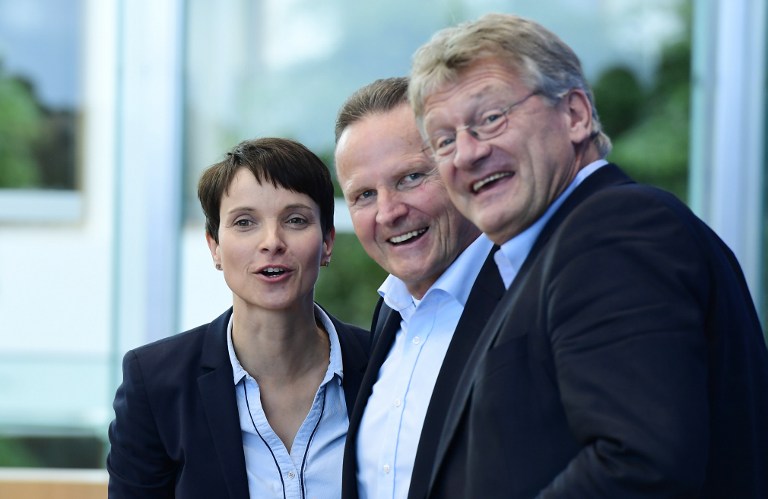
The strong AfD result, thanks to support especially in the vast tower block districts in Berlin’s former communist east, meant it has now won opposition seats in 10 of Germany’s 16 states.
Its success has mirrored the march of anti-migrant parties in France, Austria and the Netherlands as well as Republican maverick Donald Trump in the United States.
News website Spiegel Online noted that although the AfD had fallen short of its own goal of a second-place finish, “the right-wing populists — sad but true — now belong to the new normal in Germany.”
Merkel’s CDU slumped to just 18% — its worst result in the city since World War II — likely spelling the end of its term as junior coalition partner to the Social Democrats (SPD), who won just under 22%.
Analysts said the drubbing would force Merkel, widely seen as Europe’s most influential leader, to focus on German affairs at a time when the EU is facing sluggish economic growth, growing divisions over its migration policy and Britain’s impending exit.
In an unusually frank opening statement, Merkel said the errors of the past included a long-standing refusal to accept Germany’s transformation into a multicultural society.
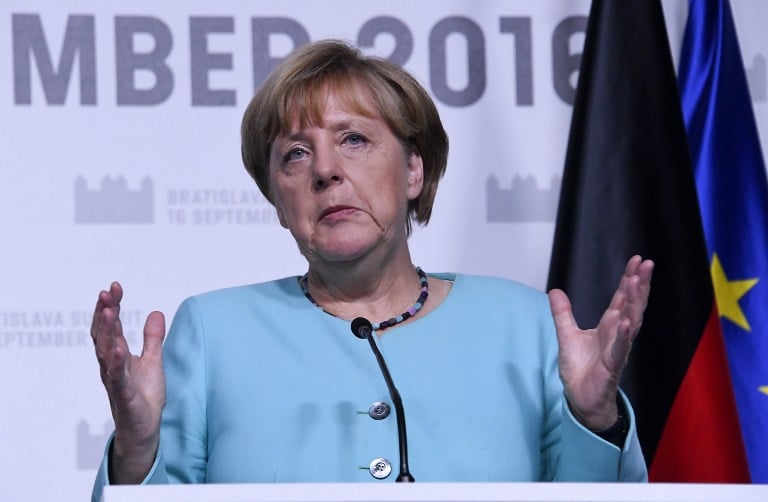
“We weren’t exactly the world champions in integration before the refugee influx,” she wryly admitted, noting that the infrastructure for getting newcomers into language and job training had to be ramped up overnight.
Merkel acknowledged that her “We can do it” rallying cry during the refugee crisis had become a provocation to many who felt it expressed a glibness about the challenges ahead and said she would now refrain from using it.
But she continued to resist calls from within her conservative bloc to set a formal upper limit for the number of asylum seekers admitted to Germany.
And she struck an optimistic note about the ability of Europe’s top economic power to eventually integrate tens of thousands of refugees who will remain in Germany, including many from war-ravaged Syria.
“I am absolutely certain that we will emerge from this admittedly complicated phase better than we went into it,” she said.
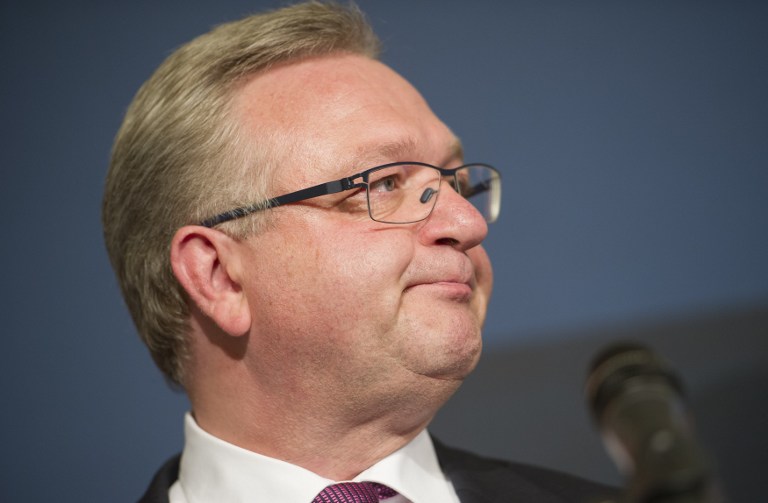
Berlin marked the fifth regional poll in a row showing losses for the CDU, as voter angst over the refugee influx shakes Merkel’s once firm standing with the electorate.
The AfD’s string of successes indicates that for the first time since World War II, a party to the right of the CDU has established a foothold in German politics.
AfD co-leader Frauke Petry said the Berlin poll marked the start of a “countdown” to the general election next September or October, when she predicted the party would clinch a “double-digit result.”
Political scientist Karl-Rudolf Korte of the University of Duisburg-Essen said the series of setbacks would force Merkel to focus on shoring up domestic support at the expense of international crisis management.
“Merkel will stay in Germany more and travel abroad less, to explain her policies to citizens and why they should vote for her again next year,” he told public broadcaster ZDF.