Minister Barlev reveals confidential information during debate on successor’s powers
Outgoing police minister says reveal of potentially sensitive info was intended to address Ben Gvir's 'far-fetched claims' on need to give him greater authorities
Outgoing Public Security Minister Omer Barlev on Wednesday revealed classified information on police policy during a live broadcast of a Knesset debate.
Barlev was participating in a panel discussion on legislation to give his replacement, far-right lawmaker Itamar Ben Gvir, expanded powers over the police.
The legislation sought by Ben Gvir would add a clause stipulating that the police commissioner is subject to the dictates of the minister and specifies that only the minister can determine “policy and general principles” for the police.
“The minister’s instruction is not to use stun grenades at the Temple Mount, unless having received explicit permission from the police district commander,” Barlev read from a summary of a meeting held before last year’s planned right-wing flag march in Jerusalem.
As he spoke, a legal counsel for the police attempted to protest, indicating the minister should not be reading such a document at a public forum, but Barlev went on.
“The situation in Jerusalem and the entire country is extremely volatile and we should thus not use capabilities that could kill Israeli citizens and residents of Jerusalem. In light of this, only ‘alpha’ capabilities should be used,” Barlev read, seemingly referring to nonlethal weapons.
Barlev was apparently seeking to make a point to Ben Gvir about the importance of setting policy alongside police officials, after taking various considerations into account.
Barlev said it was necessary in order to address “far-fetched claims that point to [Ben Gvir’s] lack of understanding of what policy is and what falls under policy.”
The outgoing minister said he felt it was fine to read excerpts from the secret document because “it’s a summary that was written by me.”
Others seemed to disagree with Barlev. Police legal counsel Elazar Kahana said the discussion over Ben Gvir’s proposed bill “was not worth revealing this information,” adding that he was “concerned.”
Barlev replied: “So be concerned.”
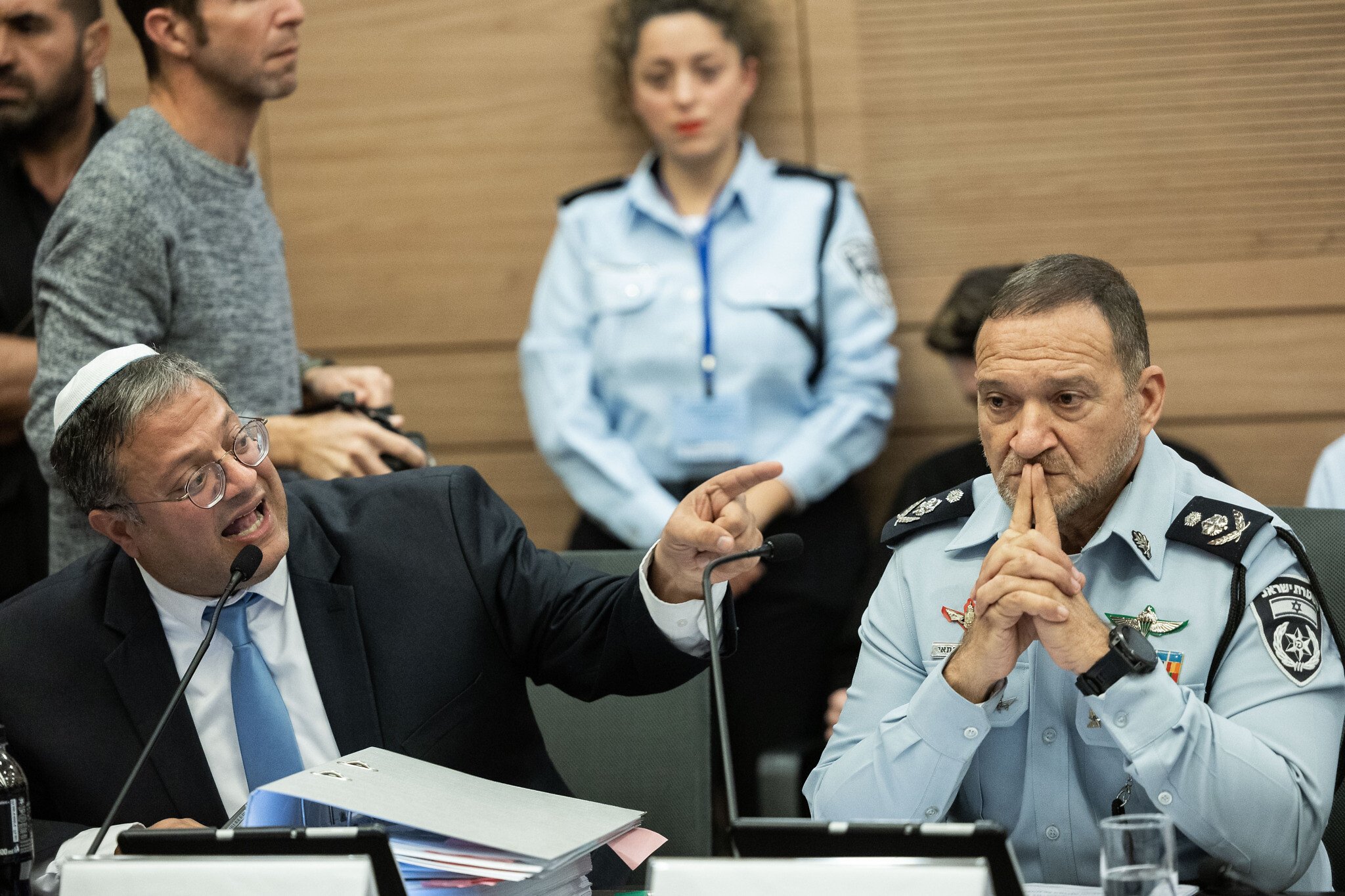
Police Commissioner Kobi Shabtai asked that video footage of Barlev’s remarks be deleted. Ben Gvir slammed Barlev for “revealing state secrets for political spin.”
Other police officials said “no damage was done” by the incident but criticized Barlev for revealing classified information.
“Barlev could have exposed intelligence that we don’t want the public to know about. The rule is that you don’t expose secret information. There are very strict guidelines for who is permitted to hold and be exposed to a secret document,” an unnamed police official told Ynet.
“No damage was done. The riot control tools that were revealed are known to everyone. And still, it’s best to keep police conduct, and especially on the Temple Mount, under wraps,” he added.
Ben Gvir, who demanded the legislative change as part of the coalition agreement between Likud and his far-right Otzma Yehudit party, asserted in the hearing that the law as it stands leaves the minister powerless to bring about true change in the operational effectiveness of the police.
Responding to Ben Gvir’s assertion during Wednesday’s heated debate, Shabtai said he was not opposed to change but asserted that the legislation would have “dramatic consequences” on police operations and needed to be thoroughly evaluated.
Shabtai said the proposed bill did not explain the problem with the law as it stands and why the changes it would bring about are necessary.
“I have served as a police commissioner under two ministers and I admit that I have as yet experienced a situation that illustrates the problem,” said the police commissioner.
On Tuesday, Barlev said the proposed bill would “destroy the police” if passed.
Currently, the police commissioner sets policies in consultation with the minister. Ben Gvir’s proposed bill will seemingly give the far-right activist with prior criminal convictions broad control over a police force he has long been at odds with.
Jeremy Sharon contributed to this report.