Army told soldiers to write farewell letters home before fighting in Gaza
MKs slam IDF for ordering troops to pen final thoughts to loved ones before war, sapping them of necessary fortitude
A Knesset oversight committee on Monday confirmed that army officers had ordered soldiers to write farewell letters to their loved ones before this summer’s operation in Gaza, and lambasted the IDF for not heeding a summons to send a representative to explain why such orders were given and to whom.
It is not clear how many soldiers were told to write letters home.
Col. (res.) MK Omer Bar-Lev (Labor Party), head of the Foreign Affairs and Defense Committee’s subcommittee on IDF Manpower, called the army’s failure to appear at the committee meeting convened to discuss the matter “doubly grave” because it demonstrated contempt for the Knesset and shows that the army has not “internalized the significance” of what such orders do to the psyche of a soldier on the cusp of combat.
During the 50-day operation in Gaza this summer, 67 soldiers were killed. In several instances, platoon mates and friends fished crumpled notes out of the soldiers’ gear and delivered them to the bereaved parents.
First Sgt. Shahar Dauber, a paratrooper killed in Khan Yunis on July 23, wrote that he was nervous, that he was excited to be doing something for his country, that he missed his family and his cat, Kitzy, and that he wished, above all, “to be remembered.”
His father, Boris, said he was surprised to receive the letter and that, “that thing, in essence, broke my heart.”
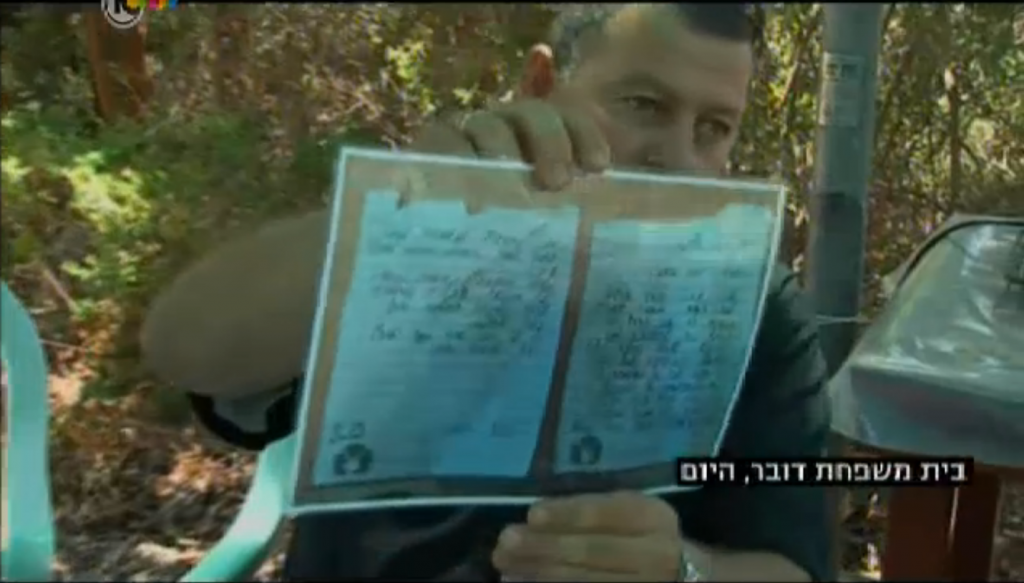
MK Elazar Stern (Hatnua), a member of the committee and a retired IDF general, said he had heard of tens of letters written on orders from junior officers and asserted that the decision was wrong because it asked a soldier, moments before entering combat, to pack an emotional last will and testament into a small slip of paper.
“What happens if he wrote it to the father and not the mother?” he asked.
Others addressed the effects of writing such a letter moments before engaging in combat, saying that it sapped the mental strength of a soldier at a critical time. Maj. Gen. (res) Yitzhak Brik, the IDF ombudsman and a recipient of the Medal of Courage, said that writing a farewell letter on the eve of war intensifies a soldier’s fears, makes him lose concentration, and punctures his faith that he will return safely home. He called the notion of issuing such an order “unfathomable” and said “I hope there is no such order.”
The sole active duty army representative present at the committee meeting was Col. Dr. Keren Ginat, a psychiatrist who heads the army’s mental health department. She said the army may have investigated the matter but that she was not aware of it, nor was she told that she would be representing the army at the meeting. Instead, she said, she thought she would be speaking about another matter entirely. Regarding the notes home, she said, “there is no way to think that this could strengthen a soldier…one minute before he heads out.”
Bar-Lev underscored that the army had been informed of the meeting three weeks in advance and that senior officers from the manpower and operations branches had been summoned.
MK Ofer Shelach (Yesh Atid) — who said he knew “unequivocally” of two cases in which soldiers were ordered to write farewell letters — noted he was not concerned about captains or lieutenants who issued such an order but rather about the army’s evident reluctance to investigate the matter.
Bar-Lev, a former commander of an elite army unit and the son of a chief of staff, claimed that the army brass all too often “distances itself” from all things that are not quantitative and that the commanders of today are reluctant to get involved in matters that relate to ethos and the fighting spirit.
Noting that the committee would summon Maj. Gen. Hagai Topolinski, the head of IDF Manpower Division, to a meeting on the matter in the near future, Bar-Lev said that, “I am concerned by the IDF’s lack of concern.”