More young Haredim leaving the fold than previously thought, study finds
Some 15.3% of ultra-Orthodox men and 11.9% of women secularize by age 30, according to a nonprofit helping Haredim integrate into broader society
Young ultra-Orthodox people are leaving Haredi society at a faster rate than expected, according to data published by the research and strategy division of the nonprofit Yotzim L’shinui.
An estimated 15.3 percent of young Haredi men and 11.9% of young Haredi women leave ultra-Orthodox society by the age of 30, the figures, based on data from Israel’s latest population census, showed.
Several months ago, Yotzim L’shinui, which provides resources for Haredim seeking to integrate into broader society, said in its annual report that the departure rate stood at 13.5% for men and 9.6% for women.
The earlier figure was based on an annual Social Survey conducted by the Central Bureau of Statistics based on a sample of several thousand people, while the updated number comes from more detailed data published in the national census, conducted once a decade and covering a sample of over 15% of the population, the organization said.
The data “serves as a wake-up call to all decision-makers regarding the scope of the phenomenon and the urgent need for a national program that will help this population integrate into society in the best possible way,” said Adar Anisman, head of Strategy and Research at Yotzim L’Shinui.
Yotzim L’Shinui, along with several other organizations, is calling on the government to adopt a comprehensive national program to help those leaving the community obtain education, enter the workforce, serve in the military and contribute to society.
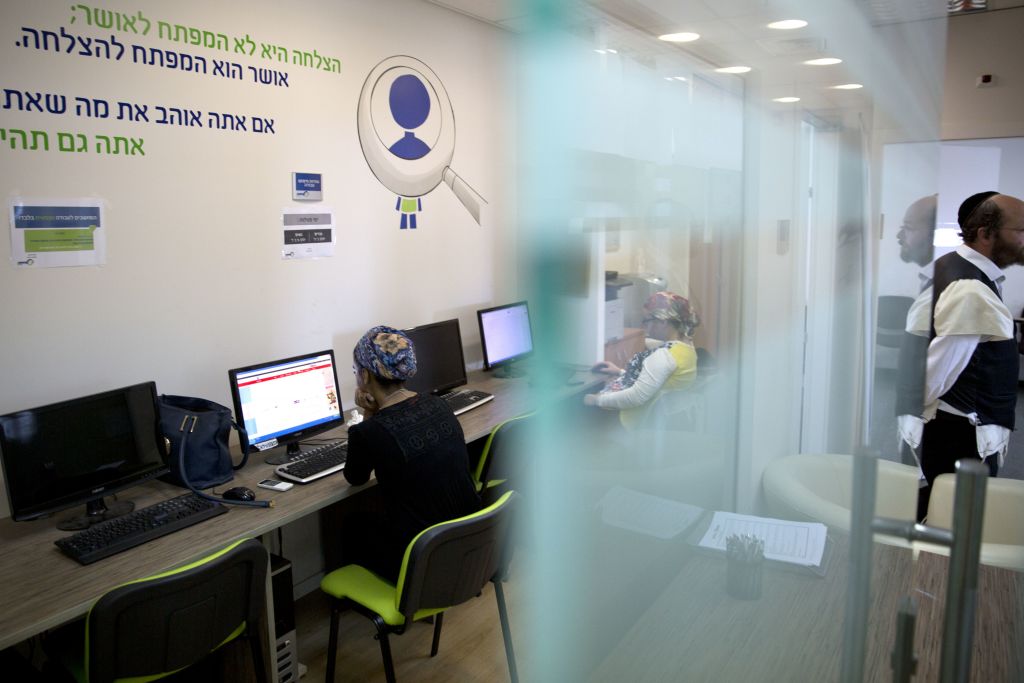
Those who leave ultra-Orthodox society, often referred to in Hebrew as yotzim (those who leave), can face significant challenges as they seek to build lives outside the community. The coalition says many former Haredim fall between existing government programs because they are not recognized as a distinct population.
Other obstacles include a lack of support in the community for those serving in the military, gaps in education and professional training, the cost of housing and education without family financial support, lower wages and the lack of a single government body coordinating assistance.
Studies, including those published by Yotzim L’Shinui, have found that leaving the ultra-Orthodox world is a complicated process, and that many former Haredim preserve some aspects of their former lives, including relationships with family members. About 66% of those leaving the community still identify as being on the spectrum of Haredi society, the organization said.
The issue has taken on added significance as Israel debates the ultra-Orthodox community’s integration into the broader economy and society, including military service, ahead of the upcoming Knesset elections. A new political party, The Haredi Public, is advocating for secular studies, greater workforce participation and military service for Haredim who are not studying full-time in yeshiva, positions that are at odds with those of established ultra-Orthodox factions. That slate is not expected to pass the electoral threshold.

In the coming days, Yotzim L’Shinui plans to approach political parties running for the Knesset and ask them to publicly support the development of a national program. Such a program would be supported by some 73% of the non-Haredi public, according to a survey of 500 non-Haredi Jewish respondents conducted in August.
“Investing in those who leave is first and foremost an investment in Israeli society,” said Nachi Pasikov, CEO of Yotzim L’shinui. “It is time for the State of Israel to see those leaving not simply as a population in need of assistance, but as young people who want to integrate, gain an education, work, serve and contribute.”