PM appoints panel to review south’s employment woes
Aryeh Deri to chair ministerial committee after three cities strike in solidarity with factory workers facing layoffs
Prime Minister Benjamin Netanyahu announced on Sunday that he would establish a special ministerial committee to focus on resolving employment problems in the south of the country, where three cities went on strike in solidarity with factory workers from Israel Chemicals who are facing layoffs.
The plan came after the prime minister met with Finance Minister Moshe Kahlon, Economy Minister Aryeh Deri and Dimona Mayor Benny Biton, the Hebrew-language Maariv website reported.
Newly installed minister Deri is to chair the panel, which will also include relevant ministry directors-general.
During the meeting Netanyahu also spoke by phone with Avi Nissenkorn, the head of the Histadrut labor union, who updated him on developments in talks between the factory management and the union.

Thousands of people showed their solidarity with the workers who are to lose their jobs and also to protest the bleak state of employment in the Negev region as a whole.
In Dimona, Arad and Yeruham, city services were shut down, some schools were closed, and businesses shuttered in solidarity.
An estimated 2,000 people — including a number of politicians — held a high-profile march in Dimona, which was the first to announce it would strike to protest the layoffs.
Demonstrators, chanting slogans and holding signs calling for government intervention, blocked Route 25, a main highway leading through the city, for a short time.
“Dimona is like a microcosm of everything that’s happening in the Negev and there’s nobody dealing with it,” Zionist Union party head Isaac Herzog said. “Today, they canceled the cabinet meeting; they should have held it here.”
Herzog’s own Knesset faction planned to hold its weekly meeting in Dimona in support of the workers’ action.
The protest was designed to draw national attention to what locals and others say is a worsening situation for the working-class towns, whose local economies were hobbled by a string of layoffs at nearby plants.
Workers at two subsidiaries of Israel Chemicals — Dead Sea Works in Sodom and Bromine Compounds in Neot Hovav — are facing layoffs, according to reports.
Union chairmen at both subsidiaries are pressing for agreements for voluntary retirement and early retirement for older workers instead of layoffs.
Nissenkorn met on Saturday night with Nir Gilad, board chairman of Israel Chemicals, to resolve the disagreement as to whether the company has the power to lay off workers as part of its efficiency plan.
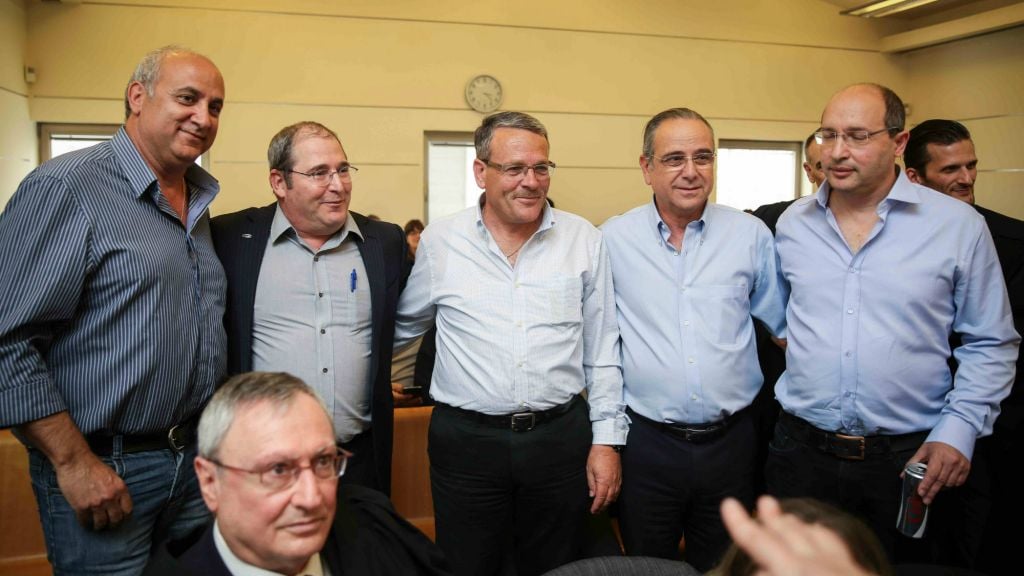
The mayors of cities in the south of Israel warn that the plan to lay off workers at Israel Chemicals could have long-term implications on employment throughout the south, since Israel Chemicals is considered a major employer in the Negev, the news outlet Ynet reported.
For years, politicians in the south have been calling on the government to invest more money in developing the region and creating more jobs in the area.
With so many factory closures over the past decade and the accompanying shortage of jobs requiring unskilled labor, those who lose their jobs have nowhere else to go, they say.
Dimona has an unemployment rate of 15 percent, according to the daily Yedioth Ahronoth, 95% of whom don’t hold a college degree.
Despite the government’s repeated promises to invest in the Negev and the Galilee, no government ministry — including the Ministry for the Development of the Negev and the Galilee — keeps track of the number of factories that were shut down and the resulting loss of jobs, Ynet reported.