Netanyahu-Herzog unity government could be back on, TV report says
Zionist Union leader said willing to join with almost all of his MKs if demands are met; PM, fuming at Naftali Bennett, reported ready to do a deal
Less than a week after Isaac Herzog insisted that he would not join Benjamin Netanyahu’s coalition, a TV report claimed Sunday that the opposition leader is willing to form a unity government if his Zionist Union party is offered an array of key ministerial jobs and assurances that such a government would make substantive efforts to solve the conflict with the Palestinians and advance regional peace.
This new reported shift came as Netanyahu’s coalition remains mired in crisis. On Sunday, the prime minister was forced to delay a telephone vote among ministers to approve the appointment of Avigdor Liberman as defense minister, and Monday’s scheduled Knesset vote on the same matter was postponed until Wednesday. These delays were necessitated because the right-wing coalition party Jewish Home is threatening to vote against Liberman’s appointment while it presses a demand for an overhaul of the way in which Israel’s key decision-making security cabinet functions.
Jewish Home leader Naftali Bennett said Sunday that his demand for a military attaché to coordinate the handling of information for ministers in times of war is critical to the saving of lives, and that he will not back down. Netanyahu was reported by Channel 2 on Sunday night to be ridiculing the ultimatum, and was said to have declared that Bennett “has blown a fuse.”
Against that background, and with an apparent readiness to consider jettisoning the 8-member Jewish Home from his coalition, the TV report said, Netanyahu is ready to offer the Foreign Ministry portfolio to Herzog and several other ministries to other Zionist Union MKs — including posts currently held by Bennett and his Jewish Home colleagues, with the exception of the Justice Ministry.
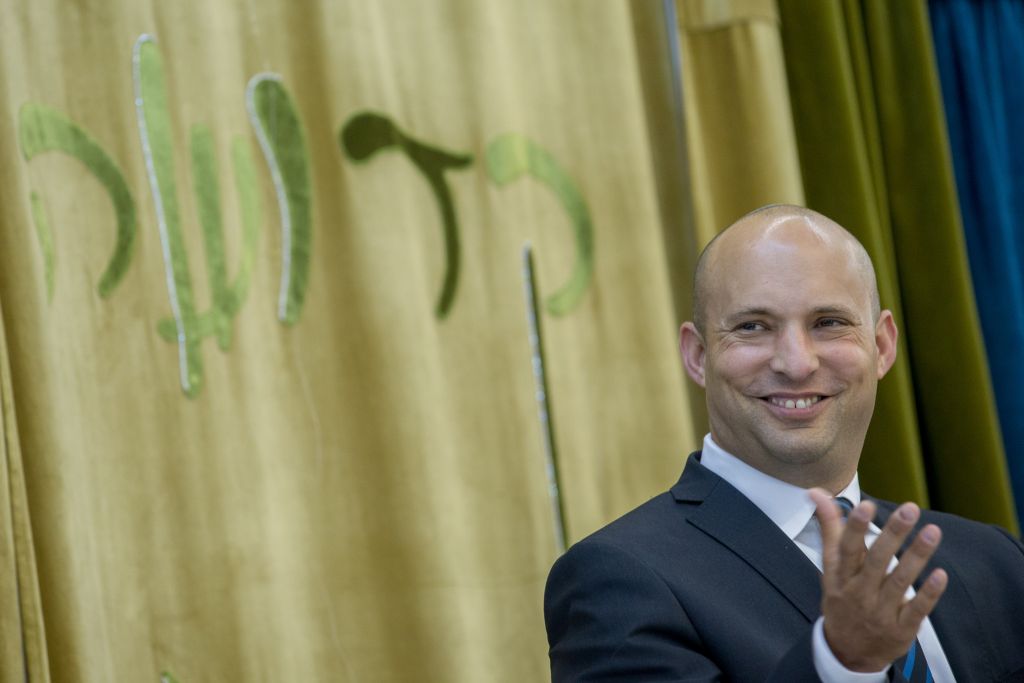
Channel 2 quoted Herzog as saying there had been “no official approach” from Netanyahu as of Sunday evening, but that he would join the coalition if his cabinet demands were met, and if he was given a veto on settlement building beyond the security barrier, and promises that Israel would support an international conference to advance regional peace efforts and would revive talks with the Palestinians. Not only would Herzog join the government in those circumstances, the TV report said, but he would be able to bring with him 18-20 members of his 24-strong Knesset faction.
People in “Netanyahu’s circle” were quoted as saying that the prime minister was indeed willing to meet Herzog’s terms, except for retaining the Justice Ministry.
There was no confirmation of the report. Speculation that Zionist Union might yet reopen talks on joining the government, however, had been aired all through Sunday by several political analysts.
Netanyahu and Bennett have long had a strained relationship. In last year’s election campaign, Netanyahu urged voters to forsake other right-wing parties such as Jewish Home and instead vote for his Likud to ensure that he was able to remain prime minister. The Channel 2 report claimed that Sara Netanyahu, often cited as a key influence on her husband, urged him after those elections to leave Bennett out of the coalition and instead turn to Herzog, but he chose not to do so at the time.
Herzog claimed last week that there was a “rare opportunity” for progress on the peace front, and that he had been willing to jeopardize his own political career in negotiating coalition terms with Netanyahu in order to seize that chance. But, Herzog lamented, Netanyahu “ran away” and instead brought Liberman’s five-strong Yisrael Beytenu faction into the coalition. The prime minister signed a coalition deal with Liberman last Wednesday.
In the Knesset last Monday, Netanyahu urged Herzog from the podium to reopen talks with him, but Herzog refused. However, the unexpected ultimatum from Bennett — seen by some analysts as the disappointed victim of Liberman’s scheduled appointment as defense minister — means that Netanyahu could choose to boot Jewish Home from the coalition, and bring in Zionist Union, giving his government a more dovish tone and possibly preempting international pressure, including from the Obama administration, for progress on the Palestinian front.
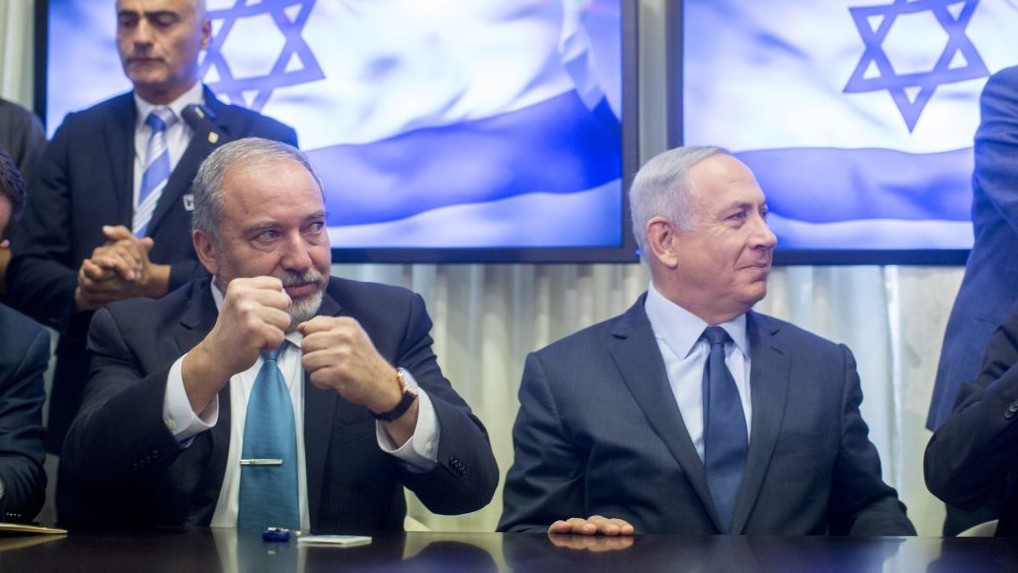
At their joint press conference on Wednesday, Liberman, who has in the past called Netanyahu a liar, inconsistent and incapable of protecting Israel, apologized for such criticisms, and joked that he had undergone “surgery to have my short fuse lengthened.” Channel 2 quoted Netanyahu on Sunday saying that Bennett might have to undergo the same surgery as Liberman.
Underlining Netanyahu’s apparent disinclination to compromise with Bennett, the TV report said that Bennett had accepted a suggestion earlier Sunday under which the head or deputy head of the National Security Council could serve as military attaché for the security cabinet — a proposal that could have resolved the crisis — but that Netanyahu had rejected it.
Israel’s political system, always volatile, has been rife with speculation and rumor for days about how Netanyahu will solve his various coalition crises — which have also seen the departure from political life of ousted defense minister Moshe Ya’alon, and the resignation of the Environmental Protection Minister, Avi Gabbay, in the past nine days. Both men, in their resignation speeches, accused the prime minister of presiding over an extremist government that endangers Israel.