Netanyahu promises to unite country in campaign video ahead of Tisha B’Av fast
After attacking rival Eisenkot with AI-generated content, PM urges the public to see beyond political disagreements; Religious Zionism, Yashar, Noam reveal new candidates
Prime Minister Benjamin Netanyahu promised on Wednesday to deepen national unity in Israel, in a pre-recorded statement published shortly before the start of the Tisha B’av fast — the Jewish day of mourning for the destruction of the Jerusalem temples and other calamities.
“On the eve of Tisha B’Av, we remember the destruction of the Temple,” he said in a video statement. “We remember the terrible price of hatred and division among ourselves.”
“Over the past three years, through our combined efforts, we prevented the destruction of the Third Temple,” he said, referring to the Jewish state.
“Instead of a civil war, we became brothers fighting shoulder-to-shoulder to repel those who seek our destruction,” the prime minister continued. “We joined forces, fought like lions, and together saved Israel.”
Netanyahu, whose government has spent the last four years passing numerous pieces of deeply divisive legislation, has made several appeals to public unity as his reelection campaign has ramped up in recent weeks, and promised last month to build a “broad national government” after the election in October.
In the same breath, however, he acknowledged that any such coalition would exclude Arab and Arab-majority parties, and disparaged any government that considers including them as “left-wing.”
The premier’s remarks about “brothers fighting shoulder-to-shoulder” also failed to reflect the current reality in Israel in which ultra-Orthodox men, by and large, do not serve in the military despite dire manpower shortages. Netanyahu’s government last week passed two contentious laws designed to maintain that broad exclusion, one of which — banning the arrests and prosecution of ultra-Orthodox draft dodgers — was frozen by the High Court of Justice.
בערב תשעה באב אנחנו זוכרים את חורבן הבית. אנחנו זוכרים את המחיר הנורא של השנאות והחרמות בתוכנו.
בשלוש השנים האחרונות, בכוחות משותפים, מנענו את
חורבן הבית השלישי.במקום מלחמת אחים, היינו לאחים שנלחמים שכם אל שכם כדי להדוף את מבקשי נפשנו.
איחדנו כוחות, לחמנו כאריות
ויחד הצלנו את… pic.twitter.com/JzEqn41Wu2— Benjamin Netanyahu – בנימין נתניהו (@netanyahu) July 22, 2026
He repeated his recent promises in Wednesday’s video, saying that he would “work to establish a broad national government.”
“As prime minister of Israel, I intend to deepen the unity among us,” he said.
“I know that during an election campaign there will be disagreements that make it difficult for us to see this, but I also know that we are far more united than it may seem,” added Netanyahu.
The statement came in the wake of a video published by President Isaac Herzog on Tuesday, in which the president warned of “violence rearing its head” and pleaded with Israelis not to “cross red lines” during the election campaign season.
Herzog issued the plea hours after Netanyahu shared an AI-generated campaign ad that depicted rival Yashar leader Gadi Eisenkot rejecting an embrace from a young man with a T-shirt proclaiming “Israeli unity,” in favor of Mansour Abbas of the Arab party Ra’am.

Critics have said the young man was heavily implied to be a stand-in for Eisenkot’s son, Gal, who was killed fighting in Gaza in December 2023.
Parties move to fill out electoral slates
With election season in full swing, Netanyahu was not the only party leader in campaign mode on Wednesday.
Finance Minister Bezalel Smotrich’s far-right Religious Zionism party announced the candidates who will compete for a spot on the party’s Knesset slate, pitting veteran lawmakers against a handful of new faces.
Voting in the primary is limited to those in the party’s central committee rather than being open to its full member rolls, and will not include a race for party leader, allowing Smotrich to remain in the post unchallenged.
The finance minister also controls the placement of two hand-picked candidates for the party’s top 10 spots.
Incumbent candidates include Settlements Minister Orit Strock and MKs Michal Woldiger, Ohad Tal, Simcha Rothman and Zvi Sukkot.
Also seeking slots are Omer Rahamim, who heads the Yesha Council, an umbrella organization representing West Bank settlements; Rosh Haayin Deputy Mayor Eitan Tam; Petah Tikva Deputy Mayor Tzvika Weizengrad; Rabbi Shmuel Sasson; and Natan Zaubman, who heads a program for the absorption of French immigrants.
Smotrich is expected to use one of his reserved slots for Tzvika Mor, the father of former hostage Eitan Mor, who joined the party in May.
After his son was kidnapped, Mor co-founded the Tikva Forum, a small group of hostages’ families who, unlike members of the larger Hostages and Missing Families Forum, consistently opposed partial hostage release agreements with Hamas that involved the release of Palestinian security prisoners and temporary ceasefires in Gaza.
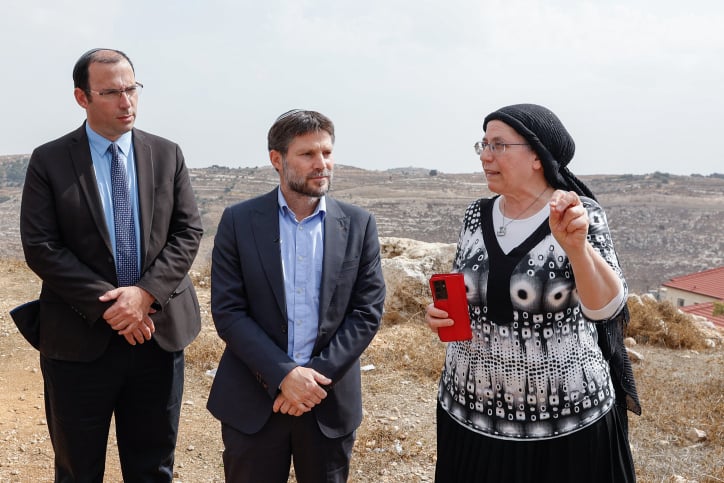
Two of the party’s incumbent lawmakers, Immigration and Absorption Minister Ofir Sofer and MK Moshe Solomon, announced last week that they would not seek reelection over the faction’s decision to support the series of laws enshrining exemptions to mandatory military service for Haredi yeshiva students.
Smotrich previously removed Solomon from all Knesset committees for breaking coalition discipline and voting against a quasi-constitutional government bill equating Torah study with military service.
Polls have consistently projected the party to win just four or five seats, or fail to cross the threshold altogether, unless it mounts a joint campaign with fellow far-right party Otzma Yehudit, which it did in the 2022 election.
The 2022 election slate also included the far-right anti-LGBTQ and misogynistic Noam party.
Otzma Yehudit chair Itamar Ben Gvir ruled out a joint run with Smotrich last month, saying their two parties must appeal to two different demographics to ensure the formation of a right-wing government.
Avi Maoz, the sole MK Noam party lawmaker, announced on Wednesday that bereaved father Eliyahu Libman would be joining his party’s slate ahead of the election.
Libman, the former head of the religious West Bank settlement of Kiryat Arba and ex-civilian security chief for Hebron’s Jewish community, lost his son, Elyakim Libman, 23, who was murdered by Hamas terrorists while working as a security guard at the Supernova music festival during the October 7, 2023, attack.
Libman co-founded the Tikva Forum along with Mor.
“All the people of Israel saw and were inspired by the strength of spirit of Eliyahu Libman and his family,” Maoz wrote on X to announce his candidacy.
“Beyond being a man of action, over the past two years he has also emerged as a leader with remarkable spirit, and I congratulate him on joining as a pioneer in Noam’s new team,” he added.
Maoz is an outspoken homophobe who has made misogynistic statements about women’s role in society. He has promised to cancel the Jerusalem Pride Parade and shut down the IDF unit in charge of promoting equal opportunities for women in the military, suggesting its existence was antithetical to the country’s “Jewish identity.” He has also denigrated non-Orthodox streams of Judaism.
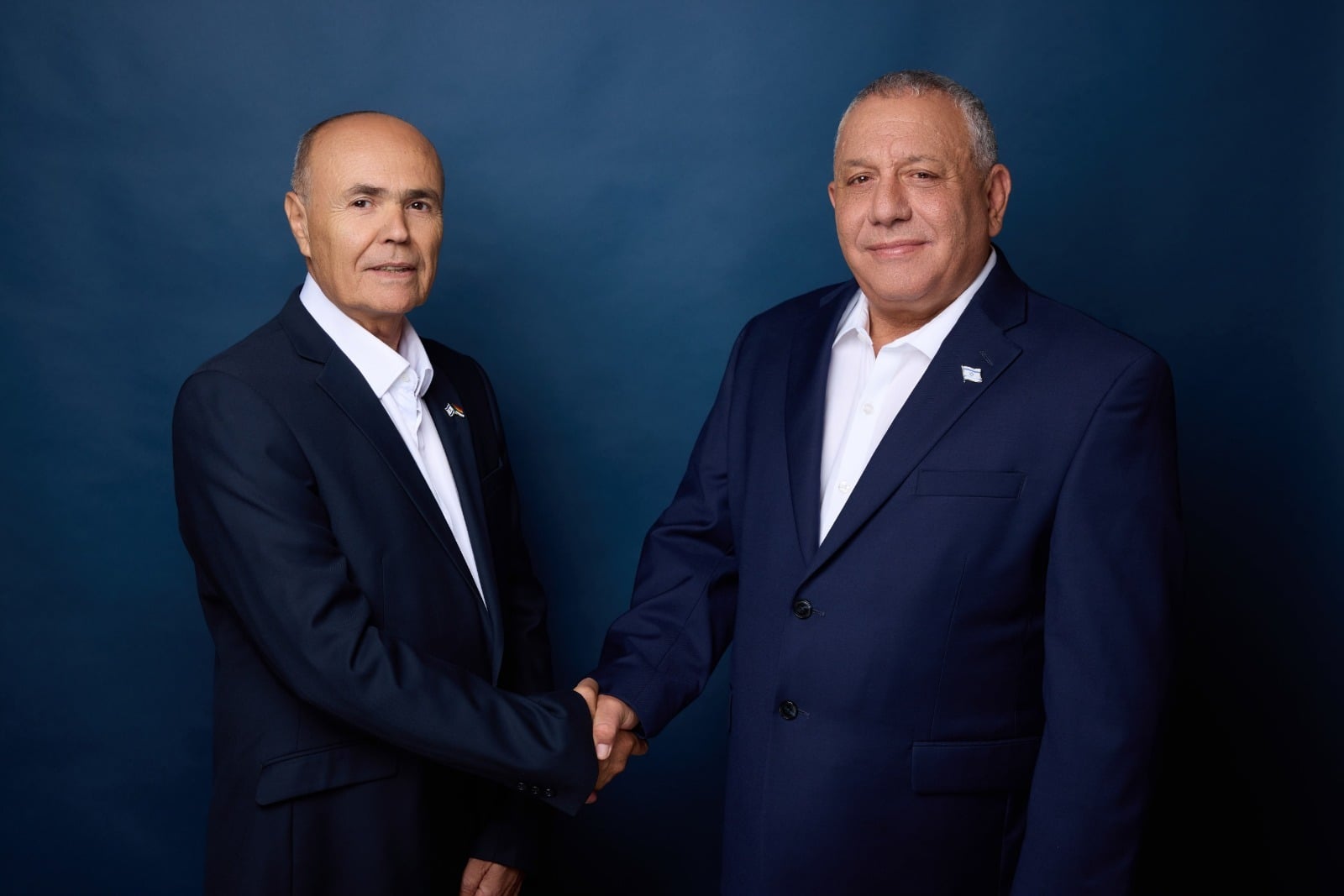
Across the aisle, Eisenkot’s Yashar announced on Wednesday that former COGAT chief Maj. Gen. (res.) Kamil Abu Rukun is joining its slate.
A resident of the Druze town of Isfiya, Abu Rukun served for four decades in senior security roles, including as head of COGAT — Israel’s military liaison to the Palestinians — from 2018 until his retirement in 2021.
In a statement, Eisenkot — a former IDF chief of staff — who has known Abu Rukun for more than 30 years, called him “an experienced security professional with an iron moral backbone” who was “an asset in every security role he held.”
“The Israeli covenant — Zionist and rooted in service — requires action,” Eisenkot said, adding that Israel’s 150,000 Druze citizens and others who serve the state “deserve broad recognition and meaningful rewards for their contribution.”
Abu Rukun said he was joining Yashar because of his confidence in Eisenkot’s ability “to restore solidarity and unity to the State of Israel.”
“I am committed to working alongside Gadi to address the challenges the Druze community has faced for decades, offer hope and secure a better future for the younger generation while strengthening the historic alliance between the Druze community and the State of Israel,” he said.
Eisenkot has pledged to place a Druze candidate in a realistic spot on the party’s slate, though it remained unclear where Abu Rukun will be ranked.
There are currently three Druze members of the Knesset: Likud’s Afif Abed, Yisrael Beytenu’s Hamad Amar, and Akram Hasson of Gideon Sa’ar’s New Hope faction, which merged into Likud last year.
Abu Rukun joins a slate that includes former Shin Bet chief Yoram Cohen, former Finance Ministry budget chief Shaul Meridor, former communications minister Matan Kahana, and former Mossad and Shin Bet official Dvora Sharfian Bachar.