Netanyahu, Sa’ar speak to Emirati counterparts, vow cooperation after flydubai attack
Foreign Ministry briefs Israeli diplomats that attemped hijacking was attack on Abraham Accords; US AG says Washington coordinating with Mideast counterparts; flydubai temporarily suspends route
Prime Minister Benjamin Netanyahu spoke with United Arab Emirates President Mohammed bin Zayed on Wednesday evening amid the fallout caused by the alleged attempted deliberate crashing of a flydubai flight FZ1073 to Tel Aviv by the copilot on Wednesday morning.
The copilot stabbed and seriously injured the pilot and sent the jet plunging nearly 14,000 feet in less than 30 seconds before being subdued and tied up by passengers. Two off-duty pilots who were aboard the flight took over the cockpit to make an emergency landing in Saudi Arabia.
The incident has left many questions unanswered, including how the copilot, an Omani national, received clearance to fly the plane and how he managed to get hold of a weapon. As investigations into these issues got underway, flydubai confirmed that flights to Israel had been temporarily suspended.
Foreign Minister Gideon Sa’ar also spoke to his Emirati counterpart, UAE Foreign Minister Abdullah bin Zayed Al Nahyan, on Wednesday evening about the attempted hijacking.
During the conversation, described as “warm” by the Foreign Ministry, the two expressed “a mutual determination to strengthen relations between the countries at all levels and to cooperate against extremist elements seeking to harm security and undermine stability in the region,” the ministry said in a statement.
Sa’ar updated his Emirati counterpart on the return of the Israeli passengers, and Nayhan told him he was pleased that they all had returned home safely, the ministry added.
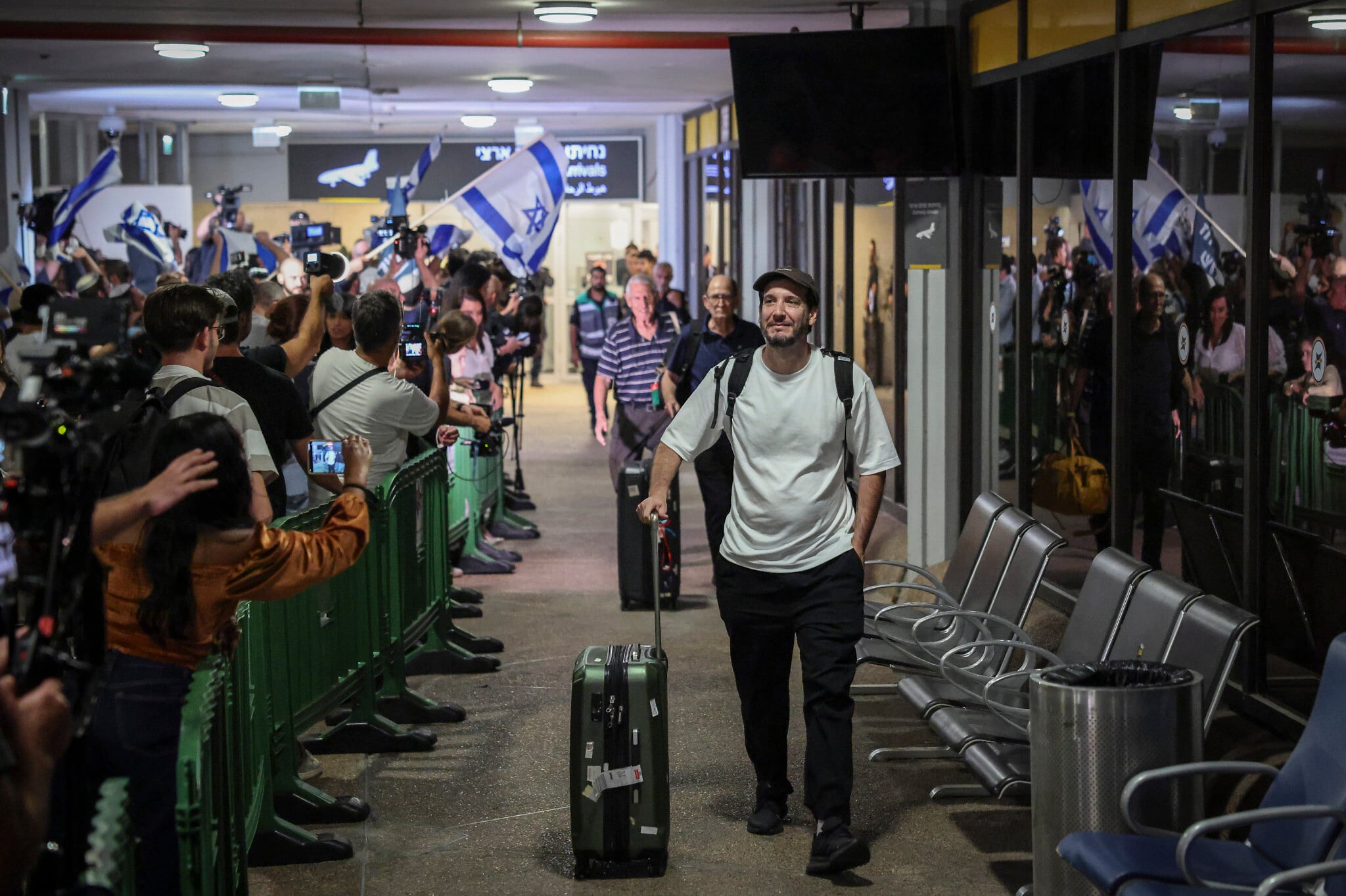
Separately, the Foreign Ministry told its diplomats that the incident was an attack aimed at undermining ties between Israel and its Abraham Accords partner, the UAE.
The ministry’s director general, Eden Bar Tal, briefed “all Israeli ambassadors and heads of representations around the world [during which] the message was emphasized that this was an attempted terrorist attack against Israelis, the United Arab Emirates and the Abraham Accords,” a ministry statement read, referring to the US-brokered normalization deal the two countries signed in 2020.
Netanyahu was also expected to speak to US President Donald Trump later on Wednesday night, according to an Israeli official cited by Channel 12, and US Attorney General Todd Blanche confirmed that Washington was coordinating “very closely” with counterparts overseas, including Israel, on the incident.
US Ambassador to Israel Mike Huckabee expressed relief that the incident had ended with the passengers safe.
“We thank God and breathe a deep sigh of relief that the passengers of flydubai FZ1073 are now safely in Israel,” the ambassador wrote on X.
“Their heroism in the face of terror averted catastrophe,” he wrote. “Israel endures because its people refuse to surrender. And tonight we are even more proud to call this extraordinary nation our true partner.”
There has been no public comment from the UAE on the incident, although its aviation regulator, the GCAA, said the flight “experienced a security incident that was brought under control.”
Riyadh reportedly refuses Israeli request to send planes
While communication between Israel and its Abraham Accords partner appeared to be open, any contact between the Jewish state and Saudi Arabia over the incident was likely being conducted in secret, as although the Gulf kingdom has deep intelligence ties with Israel, there is no formal diplomatic relationship.
According to the Ynet news outlet, Israel’s Mossad intelligence agency was in contact with Saudi authorities throughout the incident.
Passengers reported that they had been treated well by Saudi authorities upon landing at Tabuk airport and were offered food, drink, and medical care. One passenger told The Times of Israel that they were “really amazing and generous.”

But in parallel to the warm treatment of stranded passengers, Saudi Arabia reportedly refused a request by Israel to allow its military planes to bring them back, resulting in another flydubai plane being dispatched to fly the remainder of the route.
The Israeli air force was preparing to send Super Hercules planes to pick up Israeli passengers, one of the sources said, but was ultimately not allowed to.
Riyadh reportedly considered the possibility of allowing unmarked, unidentifiable Israeli planes into the country to pick up the passengers, Ynet alleged, but this ended up being unnecessary, as all stranded passengers ultimately agreed to take the replacement flydubai flight.
Some passengers said they were wary about getting aboard another flydubai plane, delaying their takeoff, but were reportedly reassured after Israeli authorities vetted the new crew.
Saudi Arabia’s government media office did not immediately respond to a request for comment.
Although the investigation into the incident was ongoing and a clear motive had yet to be established, Israel reportedly believed that the copilot was a “lone wolf” attacker.
There is currently no indication that the attacker was directed by Iran or another organized entity, Channel 12 stated.
A fellow pilot described the attacking pilot as a religious extremist, telling Israel’s Channel 16 that the Omani national joined flydubai just eight months ago.
“He prayed excessively throughout the day and refused to shake hands with women,” the pilot told the network.
El Al prepares to resume Dubai flights as flydubai hits pause
In the aftermath of the bloody incident, flydubai confirmed that it would be temporarily suspending its Tel Aviv route, which sees as many as eight flights per day.
“This temporary suspension will allow the relevant authorities to continue their work and establish all the facts surrounding the incident,” a flydubai spokesperson said. “We are fully committed to supporting the ongoing investigation and maintaining the highest safety standards across our network.”
“We remain in close coordination with government authorities, regulators and airport stakeholders and will review the suspension as more information becomes available,” the spokesperson added.
To fill the gap, Israel’s flag carrier El Al said it was preparing to resume flights to Dubai.
“El Al announces preparations to resume its operations on the Tel Aviv–Dubai route during the month of November,” the company wrote in a statement, noting that an eight-month suspension was due to the war the US and Israel launched against Iran in late February.
Budget airline Arkia also announced that it was gearing up to resume its Dubai route.
It said it would start operating two daily direct flights on the route as soon as operational and logistical conditions are met.
The resumption of operations is subject to obtaining all necessary approvals from state and security authorities, Arkia said.
Sharon Wrobel contributed to this report.