New York symphony pulls composition with Nazi anthem
Rising composer Jonas Tarm's 'March to Oblivion,' featuring quotation from 'Horst Wessel,' was to be performed in Carnegie Hall
A composition from a budding young composer set to be performed Sunday at New York’s Carnegie Hall was pulled because it contained a musical quotation from the Nazi anthem.
Estonian-born composer Jonas Tarm, 21, won a commission to write the piece from the prestigious New York Youth Symphony’s First Music composer’s contest. But Tarm’s nine-minute composition, entitled “Marsh u Nebuttya,” or “March to Oblivion” in Ukrainian, contained a 45-second musical quotation from “Horst-Wessel-Lied,” the Nazi anthem still banned in Germany and Austria.
The composition also featured a 45-second quotation from the anthem of the Ukrainian Soviet Socialist Republic.
NYYS Executive Director Shauna Quill told The New York Times that the move was “highly unusual,” but was undertaken “thoughtfully, but firmly, as soon as we learned the piece incorporated significant portions of music written by others that we determined were problematic for an orchestra such as ours to be asked to perform.”
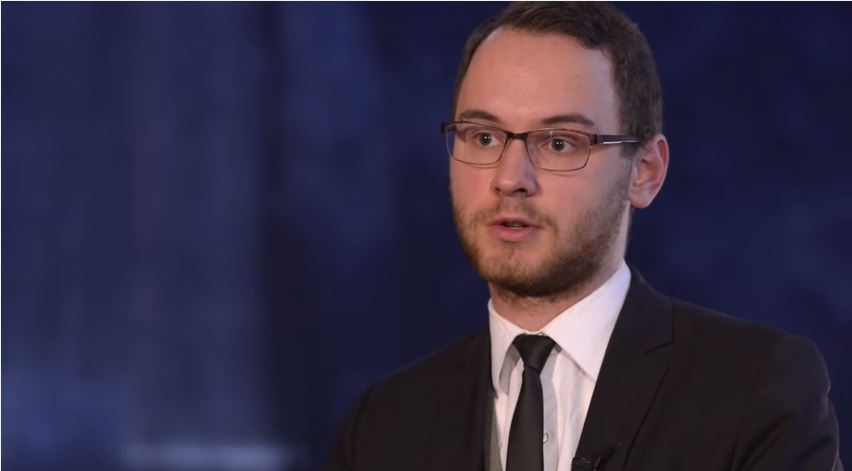
Quill said she spoke with Tarm last Monday before reaching a decision on the piece, but he did not explain why he included the anthem.
“Without this information and given the lack of transparency, we could not continue to feature his work on the program,” said Quill.
But Tarm, a junior at the New England Conservatory of Music, defended his decision, telling the Wall Street Journal that the “piece is not to provoke anyone. It’s to evoke, to make people think and feel.”
He also said a composer writes music to say things he can’t express in words.
Tarm told the New York Times the composition is about conflict, totalitarianism, and “polarizing nationalism.”
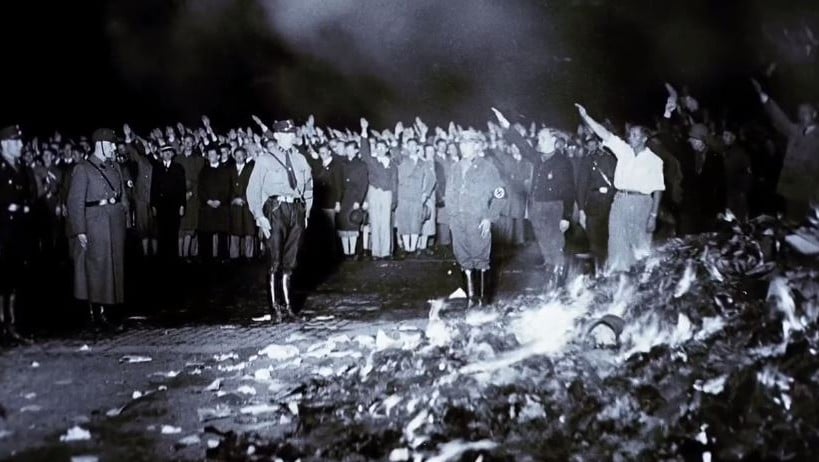
Other composers have quoted from the anthem, including German Karlheinz Stockhausen.
Adding to the controversy, Tarm’s program for the piece was simply a quotation from T.S. Eliot’s poem, “The Hollow Men,”:
Between the conception
And the creation
Between the emotion
And the response
Falls the Shadow.
Tarm told NPR that he was unaware of T.S. Eliot’s anti-Semitic tendencies.
The First Music competition has given 139 commissions to young composers since 1984. The composition was commissioned in April 2014, and submitted in September.
Rehearsals began in December.
Quill said she was not aware of the inclusion of the Nazi anthem until the piece’s February premiere at New York’s United Palace Theater. An anonymous letter from “a Nazi Survivor” complained about the quotation.
Tarm told The New York Times he was devastated. “It’s one thing to have a concert canceled because of weather, or financial issues; that’s kind of like death by natural causes. But canceling because of something that it’s saying — it feels almost like murder to me.”