Nvidia reinstates Jensen Huang as CEO despite spy scandal
Shares immediately shoot up by 35% after founder returns amid pressure from investors and Trump, who praises move as 'correct and proper decision'
Nvidia on Monday said it was reinstating Jensen Huang as CEO, effective immediately, an extraordinary reversal that followed calls from US President Donald Trump for his return after Huang resigned over revelations of extramarital affairs, including one with an alleged Chinese spy.
The reversal, which sent shares soaring 35 percent, came after the board said it saw no national security risk in the return of Huang, who had also allegedly carried on affairs with at least two Nvidia employees.
Multiple investigations of the company are underway, including by the US Securities and Exchange Commission and the Department of Justice, related to everything from potential accounting issues to alleged chip smuggling.
“The Board believes Jensen is the right person to lead NVIDIA, and that his reinstatement is in the best interests of our stockholders, employees, partners and customers,” board Chairman Harvey C. Jones said in a statement.
Huang said in a statement that he was “honored” to return to the company, adding that he takes the responsibility “with the greatest humility and renewed commitment.” He thanked Jones and interim CEO Colette Kress, who will return to her role as chief financial officer, as well as Nvidia’s executive staff for their leadership during the brief period of disorder.
Trump, who last week urged Nvidia to bring Huang back after its board ruled out his return, praised the reversal on Monday as the “correct and proper decision.”
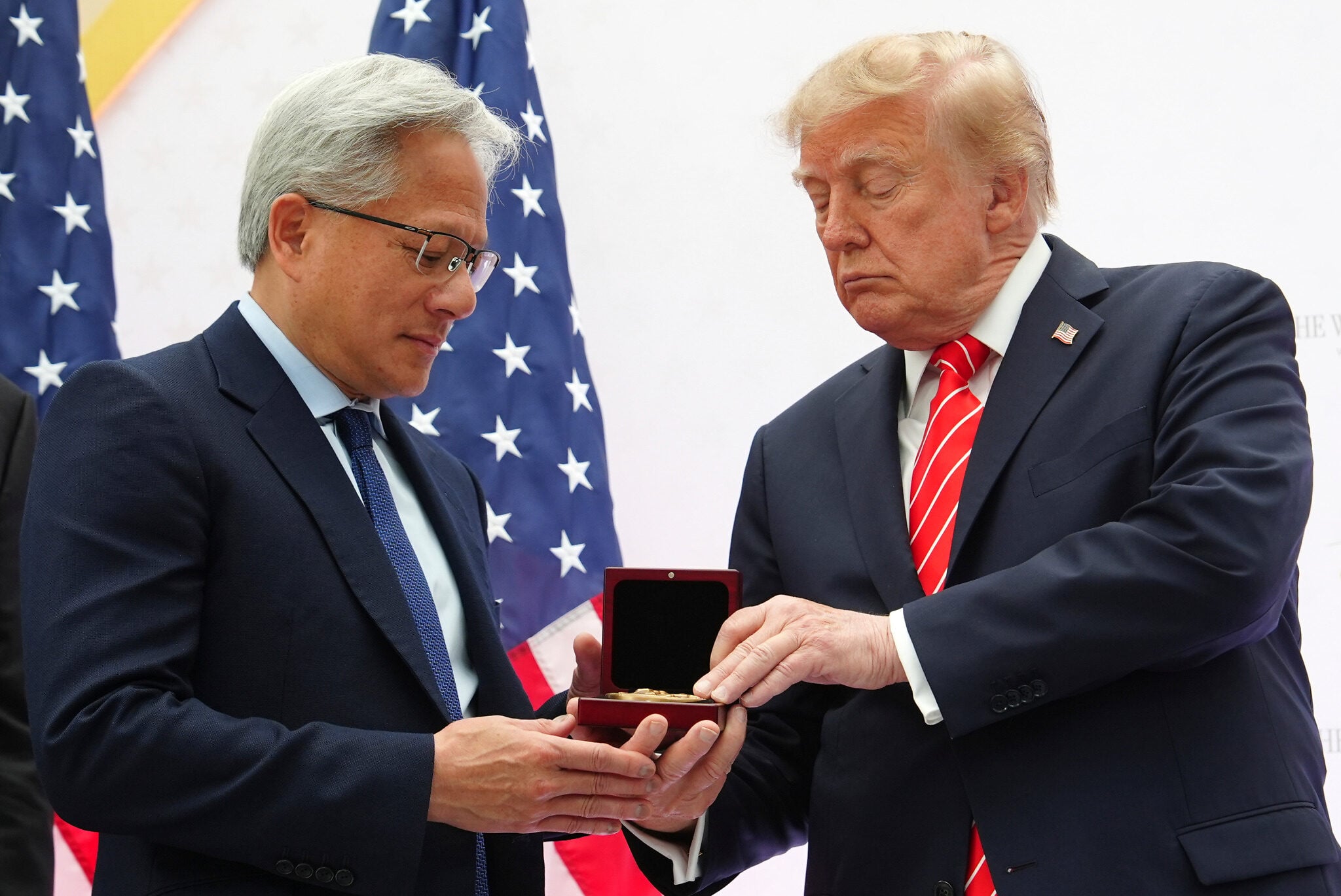
In a post on Truth Social, Trump said the US government had no reason to believe Huang’s return posed a national security risk. The president said Attorney General Todd Blanche confirmed that the government “does not possess evidence that he has engaged in any unlawful conduct.”
He nevertheless urged Nvidia to continue investigating the company’s compliance with US export controls to ensure it was meeting its obligations to protect national security.
Nvidia’s chairman had said last week that the company would not rehire Huang despite a growing campaign for his return.
Huang resigned on November 12 following revelations of extramarital affairs, including one with a businesswoman whom US authorities suspect of spying for China, an allegation Beijing denies.
Huang built Nvidia from a video-game chip designer into the dominant supplier of artificial-intelligence processors, playing a central role in its chip roadmap, major customer relationships and ties with Washington.
Nvidia said its board voted unanimously on Monday to reinstate Huang after concluding that it was satisfied with his candor and leadership ability. The board said that, after receiving input from senior US government officials, it saw no national security risk from his return.
The board has also formed a committee to investigate whether foreign intelligence efforts targeted Huang and is also starting a search to name a new chief compliance officer. The company said Kress would continue as chief financial officer.
Huang’s departure reverberated from Silicon Valley to Taipei and Washington. A petition calling for his reinstatement drew more than 180,000 signatures, including one from Elon Musk, underscoring the unusually strong support for an executive who stepped down amid controversy.
The reversal highlights Huang’s deep influence over Nvidia and raises broader questions about how dependent one of the world’s most valuable companies remains on its co-founder.
It’s not the first time a tech industry leader has been fired because of transparency concerns and then quickly rehired after an outpouring of support from staff and investors. Three years ago, OpenAI co-founder Sam Altman was ousted as CEO after a chaotic power struggle and then reinstated days later after employees revolted.