Olmert corruption verdict due March 31
Announcement by trial judge comes as prosecution continues talks with former PM's once-aide for her testimony
Former prime minister Ehud Olmert will learn his fate in the Holyland graft case, called one of the largest in the country’s history, on March 31, Tel Aviv District Court Judge David Rozen announced Monday.
The announcement came amid reports that state prosecutors are in the midst of working out a deal with former Olmert aide Shula Zaken that would hand her a reduced sentence of community service or a 16-month jail sentence, or possibly drop the charges against her, in exchange for testifying against her former boss. She had previously rejected a plea bargain offer that involved jail time.
Should an agreement be reached, Zaken would be expected to give the prosecution evidence that would incriminate her former boss. However, it remains unclear whether it is too late in the legal proceedings for the deal to be signed.
“This is not in accordance with the normal criminal procedure,” Olmert’s attorney Eli Zohar said last week.
The Holyland affair, billed as Israel’s largest corruption scandal, revolves around a real estate development project in which dozens of Jerusalem city officials, including Olmert, who formerly served as mayor, are accused of accepting bribes. The Holyland initiative spawned an extensive Jerusalem building project whose developers allegedly were able to far exceed their original mandate by paying off officials.

It is unclear if Rozen’s announcement bears any indication of how he would handle a deal between the prosecution and Zaken’s lawyers, but the parties would have to work quickly in order to have a chance to submit her testimony into evidence.
Rozen’s decision is in line with court procedures that dictate a verdict should be rendered 30 days after summaries have been submitted.
Advocates for Zaken dismissed claims last Tuesday that now-deceased state’s witness Shmuel Dachner had approached Zaken with bribes, instead insisting that Dachner attempted to bribe Olmert personally.
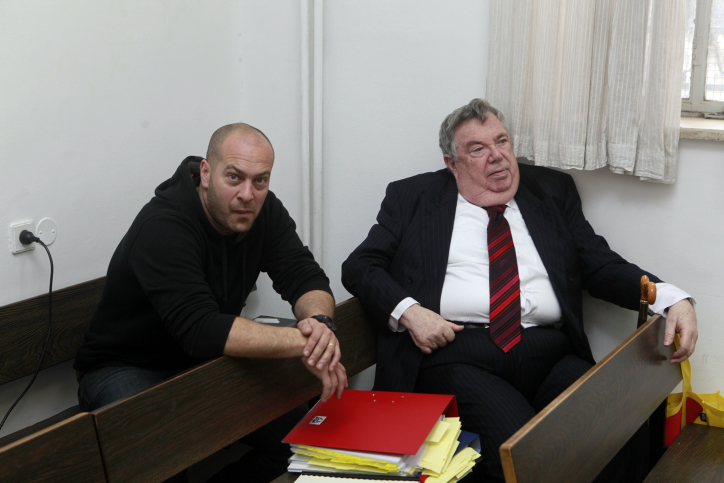
“Dachner was not in need of Zaken’s services, due to her lack of [political] power and the fact Dachner himself claimed that he paid bribes to Ehud Olmert — Zaken’s employer,” Zaken’s attorney Ofer Bartal said in a hearing at the Tel Aviv District Court.
“After you bribe the person who has the authority, to bribe Zaken would just be a waste of money,” he continued.
Olmert was sentenced in September 2012 to a suspended year-long jail term and a NIS 75,000 fine ($21,000) following his conviction for a separate, relatively minor breach of trust charge stemming from his time as a government minister, and was cleared in two other, major cases against him also unrelated to the Holyland affair.
According to allegations in the Holyland case, Dachner in 2004 gave Zaken NIS 100,000 (about $28,000) in the form of five checks. The prosecution asserted that the checks were given to Zaken in order to persuade her to help kickstart a project for one of Dachner’s companies.
For her part, Zaken claimed that she had a personal relationship with Dachner and received gifts from him, but not bribes. Zaken’s defense also stated that three of the five checks received from Dachner were used to pay back debt from Olmert’s election campaign.