On Shavuot, security forces on high alert throughout Israel
Thousands of cops patrol major population centers, as army deploys in force in West Bank, to prevent attacks over holiday
Security forces were on high alert throughout the country and in the West Bank Saturday evening as Israelis celebrated the start of the Shavuot holiday.
Thousands of police officers were deployed in all major cities and army troops bolstered patrols in the West Bank to prevent any attacks over the weekend and the holiday, days after Palestinian terrorists killed four people and wounded six in a shooting spree in the heart of Tel Aviv.
Israel sealed off the West Bank and the Gaza Strip on Thursday, as part of a series of initial responses to the attack as well as a preparation for the holiday. The closure began overnight Thursday-Friday and will last until late Sunday night, when the holiday ends.
The entry ban does not include “humanitarian and medical” cases or the entry of Palestinians to worship at Al-Aqsa mosque in Jerusalem.
Early on Saturday IDF forces, in cooperation with Border Police and Civil Administration officials, tore down the house belonging to the family of a Palestinian who murdered an Israeli mother of six in the West Bank settlement of Otniel in January.
Sixteen-year-old Morad Bader Abdullah Adais stabbed and killed Dafna Meir at the entrance to her home earlier this year. He fled the scene and was later arrested.
The house was located in the village of Yatta near Hebron, which is also home to the two terrorists who perpetrated the Tel Aviv attack earlier in the week.
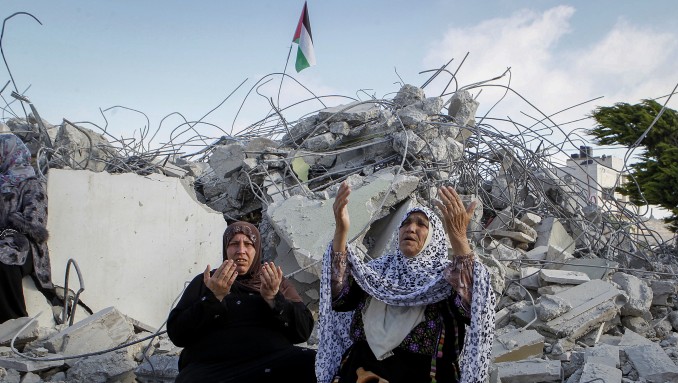
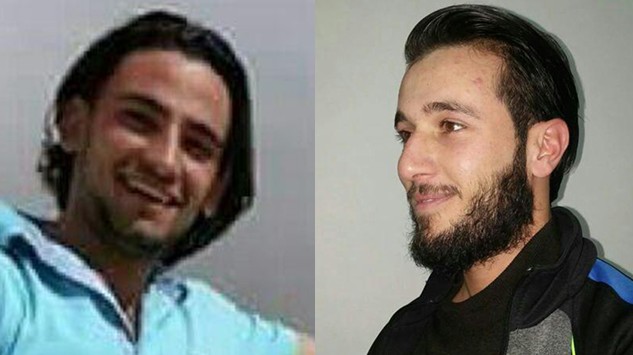
While in the village on Saturday, troops mapped out the homes of Tel Aviv gunmen Khalid and Muhammad Muhamra, in preparation for their likely future demolition.
Hamas condemned the demolition, as well as a wave of arrests of Hamas members and others in the West Bank following the terror attack at Tel Aviv’s Sarona Market on Wednesday.
The terror group threatened more violence, saying Israel’s crackdown would not deter Palestinians “determined to fight the occupation,” according to Israel Radio.
Hamas praised the Tel Aviv attack and said the two gunmen were members of the group. It dubbed the attack the “Ramadan operation” as it came two days after the Muslim holy month of Ramadan began on Monday.
However, Israeli security sources quoted by Channel 10 news on Saturday said the terrorists were not Hamas members, and nor were they members of any other terror group, but that they had “recently become radicalized.”
In an initial Israeli response to the Tel Aviv shooting, the Defense Ministry’s Civil Administration in the Palestinian territories said it had frozen 83,000 permits for Palestinians in the West Bank to visit relatives in Israel during Ramadan. Special Ramadan permits were also suspended for Palestinians in the Gaza Strip to travel out of the territory to attend prayers at the Al-Aqsa Mosque.
The United Nations High Commissioner for Human Rights Zeid Ra’ad Zeid Al-Hussein on Friday criticized the blanket ban on Palestinian entry into Israel, saying it could be classed as “collective punishment” and therefore illegal under international law.
While Hussein’s spokeswoman said he condemned the Tel Aviv attack, he stressed that the move by Israel “may amount to prohibited collective punishment and will only increase the sense of injustice and frustration felt by Palestinians,” Reuters reported.
France’s foreign minister also warned Friday that the Israeli closure following the “abominable” attack could escalate violence instead of focus attention on the need to pursue peace.
The first Friday prayers of the month-long Muslim holiday of Ramadan passed quietly in the Old City of Jerusalem. Tens of thousands of Palestinians attended Friday prayers at Al-Aqsa.
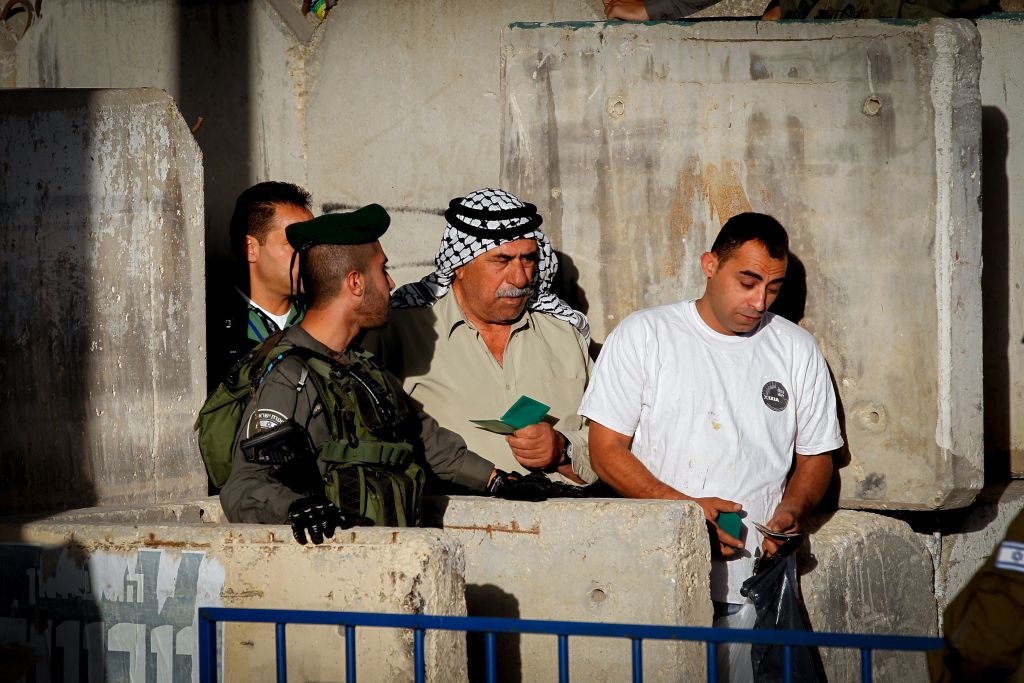
Despite the relative calm day, police are continuing with plans for bolstered security in the capital, Channel 2 reported. The plans include extra police on routes used by worshipers to reach the Western Wall, in particular during Shavuot.
According to Israel Police, the plans are intended to maintain public order while allowing freedom of worship.
comments